


QUICK TRANSFERS, Pay into this Account:
1481900827 | ACCESS BANK | EMMANUEL OLUWASEUN OTOBOR
Once your payment is successful kindly send the “PAST QUESTION” you need, your “ACCOUNT NAME” and “EMAIL ADDRESS” to 08039822082. or info@mannyspark.com


Midwifery Past Questions and Answers PDF
Midwifery stands as a cornerstone of healthcare in Nigeria, directly impacting maternal and infant mortality rates, which remain significant public health concerns. As Dr. Manny from Manny Spark, I have dedicated years to supporting aspiring midwives through high-quality educational resources. The profession involves not just delivering babies but also providing comprehensive care throughout pregnancy, labor, and postpartum periods, as well as promoting family planning and community health education.
In Nigeria, midwifery education is governed by the Nursing and Midwifery Council of Nigeria (NMCN), established under the Nursing and Midwifery (Registration, etc.) Act. This body ensures that training programs meet international standards while addressing local needs, such as managing high-risk pregnancies in resource-limited settings. Aspiring midwives typically enroll in basic midwifery programs lasting 18-24 months or post-basic programs for registered nurses seeking specialization.
The NMCN professional qualifying examinations are rigorous, comprising written, practical, and oral components. These exams assess competencies in clinical decision-making, ethical practices, and evidence-based care. Statistics from the NMCN indicate that pass rates hover around 60-70% in recent years, underscoring the need for thorough preparation. As Dr. Manny, I emphasize that success begins with understanding the exam structure and utilizing reliable study aids like past questions and answers.
Manny Spark, under my guidance as Dr. Manny, provides tailored PDF resources that compile authentic past questions from NMCN exams dating back to 2015, updated annually to reflect current trends. These materials are invaluable for students in urban centers like Lagos or remote areas in Borno State, ensuring equitable access to quality preparation tools.
Beyond exams, midwifery in Nigeria contributes to achieving Sustainable Development Goal 3 (Good Health and Well-Being). A quote from the Minister of Health highlights: “Trained midwives are the backbone of reducing Nigeria’s maternal mortality ratio from 512 per 100,000 live births.” This introduction sets the stage for exploring how past questions can transform your preparation journey.

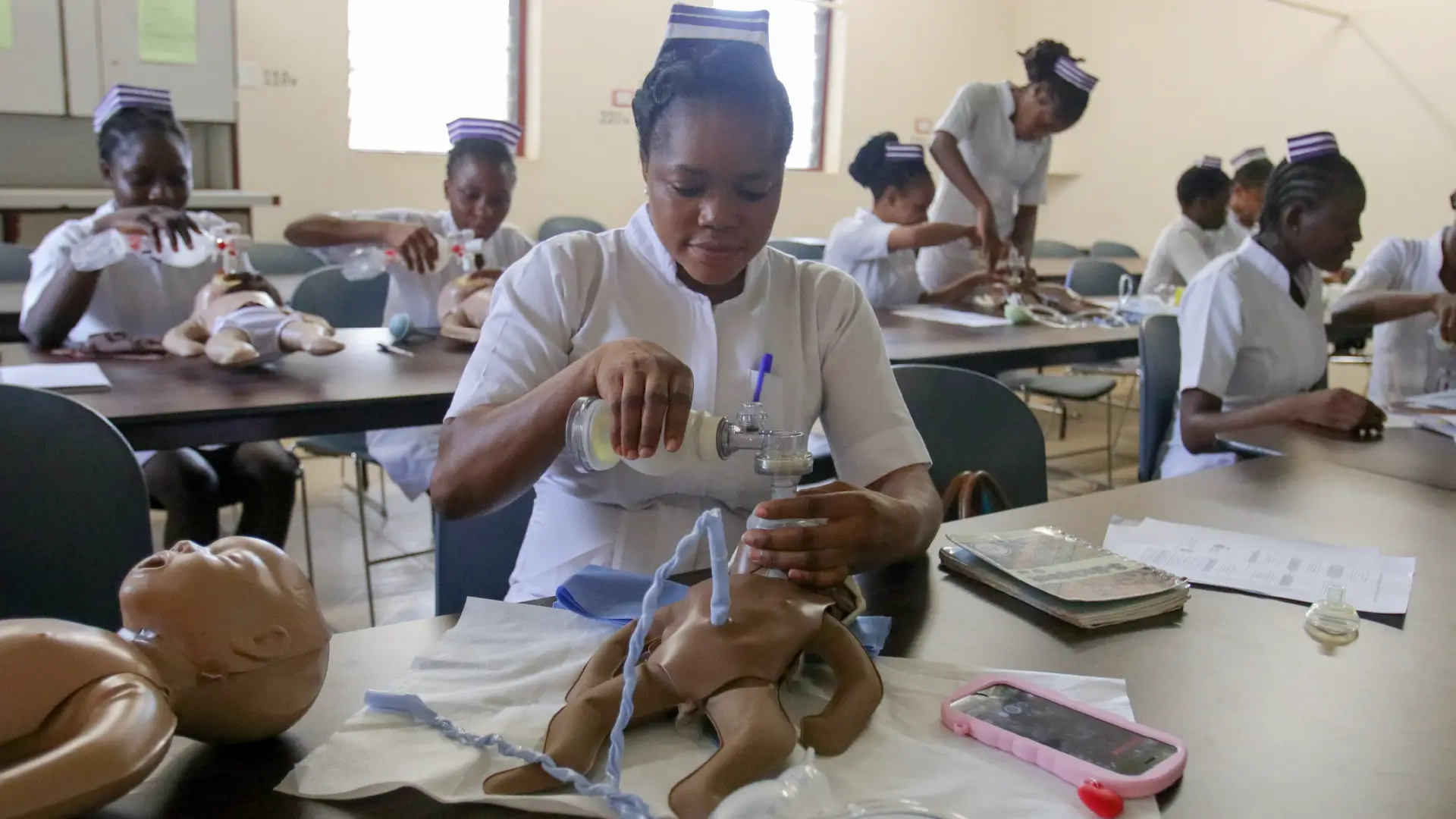
[Image: A diverse group of Nigerian midwifery students in white uniforms, engaged in a classroom discussion with anatomical models.]
The Importance of Past Questions in Midwifery Preparation

Past questions serve as a roadmap to exam success, revealing patterns in question types, emphasis on certain topics, and the level of detail expected. In the context of Nigerian midwifery exams, where questions often integrate real-world scenarios from diverse cultural and socioeconomic backgrounds, practicing with past papers builds critical thinking skills.
Bold insight: Research shows that students who regularly engage with past questions score 25-30% higher than those who rely solely on textbooks. As Dr. Manny from Manny Spark, I have seen countless students transform their performance through structured practice. These questions not only test knowledge but also application, such as managing eclampsia in a rural clinic with limited resources.
The benefits extend to time management during exams, familiarity with multiple-choice, short-answer, and essay formats, and self-evaluation through detailed answers. Manny Spark’s PDF includes explanatory notes, diagrams, and references to NMCN guidelines, making it a one-stop resource.
For those new to the field, past questions demystify complex topics. For instance, they often recur themes like antenatal care protocols, which are crucial in Nigeria’s high-fertility context. Integrating past questions into your study routine can reduce anxiety and enhance retention.
To learn more about effective study habits, visit our internal link: Study Techniques for Nursing Students.

Accredited Midwifery Training Institutions Across Nigeria
Nigeria’s midwifery training landscape is diverse, with institutions spread across geopolitical zones to address regional healthcare needs. As Dr. Manny from Manny Spark, I recommend choosing accredited schools for assured quality.
Starting in the southwest, the School of Midwifery, Lagos State University Teaching Hospital (LASUTH) is located in Ikeja, Lagos State, at 1-5 Oba Akinjobi Way. This bustling urban facility offers basic and post-basic midwifery programs, emphasizing urban maternal health challenges like traffic-related delays in emergencies. Additional offerings include workshops on HIV counseling and ultrasound training.
Nearby, the School of Midwifery, Military Hospital, Yaba, situated in Yaba, Lagos, provides military-standard discipline in training, with courses in trauma care and disaster response—vital for Nigeria’s occasional conflicts.
Moving north, the School of Midwifery, Ahmadu Bello University Teaching Hospital (ABUTH) in Zaria, Kaduna State, is along Sokoto Road. It specializes in Islamic-sensitive practices, offering community midwifery extensions and research in nomadic health. They also provide free immunization clinics and partnerships with NGOs for maternal nutrition programs.
In Abuja, the federal capital, the School of Midwifery, Federal Capital Territory (FCT) is in Gwagwalada, offering programs in advanced obstetrics and neonatal resuscitation. Located near the University of Abuja Teaching Hospital, it includes simulation labs and international exchange opportunities.
Eastern Nigeria features the School of Midwifery, University of Nigeria Teaching Hospital (UNTH) in Ituku-Ozalla, Enugu State, about 20km from Enugu city. This institution focuses on evidence-based research, with add-ons like mental health integration in midwifery and herbal medicine studies relevant to Igbo traditions.
In the south-south, the School of Midwifery, University of Benin Teaching Hospital (UBTH) in Benin City, Edo State, along Ugbowo-Lagos Road, addresses oil-pollution-related health issues, offering environmental health modules and emergency obstetric care certifications.
The southeast has the School of Midwifery, Imo State University Teaching Hospital in Orlu, Imo State, emphasizing community outreach in rural areas, with programs in family planning and adolescent reproductive health.
Northern institutions like the School of Midwifery, Usmanu Danfodiyo University Teaching Hospital in Sokoto integrate Hausa cultural practices, located in Sokoto city, offering desert-adapted health strategies.
These schools not only train but also offer continuing education, research opportunities, and community services like antenatal clinics. Manny Spark’s resources complement these by providing location-agnostic preparation.
Here’s a table of select institutions:

| Institution Name | Location | Key Offerings | Accreditation Body |
|---|---|---|---|
| LASUTH School of Midwifery | Ikeja, Lagos | Basic/Post-Basic Midwifery, Ultrasound Training | NMCN |
| ABUTH School of Midwifery | Zaria, Kaduna | Community Extensions, Nomadic Health Research | NMCN |
| UNTH School of Midwifery | Ituku-Ozalla, Enugu | Mental Health Integration, Herbal Studies | NMCN |
| UBTH School of Midwifery | Benin City, Edo | Environmental Health, Emergency Care | NMCN |
| FCT School of Midwifery | Gwagwalada, Abuja | Neonatal Resuscitation, Simulation Labs | NMCN |

Core Subjects in Nigerian Midwifery Curriculum
The NMCN curriculum encompasses interdisciplinary subjects to produce well-rounded midwives. Anatomy and Physiology forms the foundation, covering reproductive systems in detail. Midwifery Practice focuses on clinical skills, from palpation to suturing.
Community Health addresses public health, including epidemiology in Nigerian contexts like cholera outbreaks. Obstetrics and Gynecology delves into pregnancy complications, while Pediatric and Neonatal Care emphasizes newborn assessments.
Pharmacology and Nutrition teach safe drug administration and dietary interventions for malnourished populations. Manny Spark’s PDF covers all, with cross-references.
Table of curriculum breakdown:
| Subject | Duration in Program | Focus Areas |
|---|---|---|
| Anatomy & Physiology | 6 months | Reproductive, Endocrine Systems |
| Midwifery Practice | 12 months | Antenatal, Intrapartum Care |
| Community Health | 4 months | Immunization, Health Education |
| Obstetrics & Gynecology | 8 months | High-Risk Pregnancies, Surgeries |
| Pediatric Care | 3 months | APGAR, Resuscitation |
| Pharmacology & Nutrition | 3 months | Drug Interactions, Micronutrients |
In-Depth Sample Past Questions and Answers: Anatomy and Physiology
Dive deep with these samples from Manny Spark’s collection.
Question 1: Explain the hormonal changes during the menstrual cycle. Answer: The cycle involves FSH stimulating follicle growth, estrogen peaking for ovulation, LH surge, progesterone maintaining endometrium. If no pregnancy, levels drop, causing menstruation. Detailed in Nigerian contexts, consider cultural views on cycles.
Question 2: Describe the fetal skull bones and their significance in labor. Answer: Frontal, parietal, occipital, temporal; fontanelles allow molding during birth, reducing cephalo-pelvic disproportion risks.
Question 3: What is the function of the amniotic fluid? Answer: Cushions fetus, maintains temperature, allows movement, prevents cord compression.
Question 4: Outline the blood supply to the uterus. Answer: Uterine arteries from internal iliac, ovarian arteries; crucial for placental perfusion.
Question 5: Discuss the physiology of lactation. Answer: Prolactin stimulates milk production, oxytocin aids ejection; inhibited by dopamine.
Question 6: Identify differences between male and female pelvis. Answer: Female: wider inlet, shallower, for childbirth; male: narrower, heart-shaped.
Question 7: What role does the thyroid play in pregnancy? Answer: Increases metabolism; deficiency leads to cretinism in fetus.
Question 8: Explain renal changes in pregnancy. Answer: Increased GFR, hydronephrosis due to uterine pressure.
Question 9: Describe the cardiovascular adaptations in pregnancy. Answer: Cardiac output rises 40%, blood volume increases 50%.
Question 10: What is the embryological origin of the placenta? Answer: Trophoblast from blastocyst and decidua from endometrium.
In-Depth Sample Past Questions and Answers: Midwifery Practice and Clinical Skills
Question 1: Detail the steps in conducting an abdominal examination in pregnancy. Answer: Inspection, palpation (fundal height, fetal lie), auscultation; assess for abnormalities.
Question 2: How to manage shoulder dystocia? Answer: McRoberts maneuver, suprapubic pressure, episiotomy if needed.
Question 3: Describe partograph use in labor monitoring. Answer: Plots cervical dilation, fetal heart, contractions; alerts to prolonged labor.
Question 4: What are active management of third stage principles? Answer: Uterotonic administration, controlled cord traction, uterine massage.
Question 5: Explain episiotomy indications and care. Answer: Prevent tears; suture, hygiene post-repair.
Question 6: Role of midwife in family-centered care. Answer: Involve partners, respect cultural practices.
Question 7: Managing breech presentation vaginally. Answer: Lovset maneuver for arms, Mauriceau-Smellie-Veit for head.
Question 8: Postnatal visit schedule in Nigeria. Answer: Day 3, 7, 6 weeks; check for infection, breastfeeding.
Question 9: Ethical considerations in midwifery. Answer: Confidentiality, informed consent, non-maleficence.
Question 10: Simulation training benefits. Answer: Builds skills without risk; improves team coordination.
“Clinical practice is where theory meets reality.” – Dr. Manny.
In-Depth Sample Past Questions and Answers: Community Health and Public Health Nursing
Question 1: Strategies for reducing maternal mortality in Nigeria. Answer: Skilled attendance, emergency transport, education.
Question 2: Importance of immunization in child health. Answer: Prevents diseases like measles; follow NPI schedule.
Question 3: Community mobilization techniques. Answer: Town halls, religious leaders involvement.
Question 4: Addressing malnutrition in pregnant women. Answer: Iron/folate supplements, dietary counseling.
Question 5: Role in HIV prevention. Answer: PMTCT programs, counseling.
Question 6: Water sanitation promotion. Answer: Hygiene education, safe water sources.
Question 7: Family planning methods. Answer: Condoms, IUDs, implants; pros/cons.
Question 8: Epidemic response. Answer: Surveillance, isolation, vaccination.
Question 9: Health education models. Answer: Health Belief Model for behavior change.
Question 10: Rural-urban health disparities. Answer: Access issues; mobile clinics solutions.
In-Depth Sample Past Questions and Answers: Obstetrics and Gynecology
Question 1: Management of antepartum hemorrhage. Answer: Bed rest, blood transfusion, cesarean if placenta previa.
Question 2: Signs of preterm labor. Answer: Contractions, cervical changes before 37 weeks.
Question 3: Gestational hypertension diagnosis. Answer: BP >140/90 after 20 weeks, no proteinuria.
Question 4: Endometriosis symptoms and treatment. Answer: Pain, infertility; NSAIDs, surgery.
Question 5: Cervical cancer screening. Answer: Pap smear, HPV testing.
Question 6: Multiple pregnancy complications. Answer: Preterm birth, twin-twin transfusion.
Question 7: Postpartum infection management. Answer: Antibiotics, drainage if abscess.
Question 8: Infertility causes. Answer: Ovulatory disorders, tubal blockage.
Question 9: Menopause management. Answer: HRT, lifestyle changes.
Question 10: STD prevention in gynecology. Answer: Education, vaccination (HPV).
In-Depth Sample Past Questions and Answers: Pediatric and Neonatal Care
Question 1: APGAR score components. Answer: Appearance, Pulse, Grimace, Activity, Respiration; 7-10 normal.
Question 2: Neonatal jaundice types. Answer: Physiological, pathological; phototherapy.
Question 3: Kangaroo mother care benefits. Answer: Bonding, temperature regulation.
Question 4: Common congenital anomalies. Answer: Cleft lip, neural tube defects.
Question 5: Breastfeeding positions. Answer: Cradle, football hold.
Question 6: Growth monitoring tools. Answer: WHO charts, weight-for-age.
Question 7: Respiratory distress syndrome. Answer: Surfactant deficiency; CPAP.
Question 8: Immunization side effects. Answer: Fever, soreness; manage with paracetamol.
Question 9: Weaning guidelines. Answer: Start at 6 months, complementary foods.
Question 10: Child abuse recognition. Answer: Unexplained injuries, behavioral changes.
In-Depth Sample Past Questions and Answers: Pharmacology and Nutrition in Midwifery
Question 1: Uterotonics in labor. Answer: Oxytocin, ergometrine; indications.
Question 2: Antenatal supplements. Answer: Folic acid 400mcg, iron 60mg.
Question 3: Analgesics in pregnancy. Answer: Paracetamol safe; avoid NSAIDs.
Question 4: Nutrition for lactating mothers. Answer: +500 calories, high protein.
Question 5: Drug interactions in midwifery. Answer: Warfarin with vitamin K.
Question 6: Micronutrient deficiencies. Answer: Vitamin A for immunity.
Question 7: Herbal remedies safety. Answer: Ginger for nausea; consult evidence.
Question 8: Antibiotics in puerperium. Answer: Amoxicillin for endometritis.
Question 9: Contraceptive pharmacology. Answer: Combined pills: estrogen/progestin.
Question 10: Nutritional assessment tools. Answer: MUAC, BMI in pregnancy.
Advanced Preparation Strategies Using Past Questions
- Group studies: Discuss answers collaboratively.
- Mock exams: Simulate NMCN conditions.
- Daily quotas: 50 questions per day.
- Integrate apps for flashcards.
- Review trends: Focus on recurring topics like HIV in pregnancy.
“Preparation is the key to confidence.” – Experienced Midwife, Abuja.
Challenges in Midwifery Training in Nigeria and How Past Questions Help Overcome Them
Challenges include resource shortages, high student-teacher ratios, and cultural barriers. In rural areas, electricity issues hinder study. Past questions from Manny Spark offer offline PDFs, adaptable to low-tech environments.
Financial constraints: Affordable at N5,000. Language barriers: English with local explanations. Gender issues: Empowering female students.
Past questions build resilience by exposing to scenario-based queries, like managing deliveries in floods.
Overcoming these equips midwives for Nigeria’s diverse needs.
Key Takeaways for Nigerian Midwifery Students

- Master fundamentals: Anatomy underpins all.
- Practice clinically: Simulate skills.
- Community focus: Address local health.
- Use resources wisely: Manny Spark PDFs essential.
- Stay updated: Follow NMCN changes.
- Ethical practice: Prioritize patient rights.
Acquire the Complete Updated PDF from Dr. Manny at Manny Spark
Related posts:




 Message Dr. MANNY on WhatsApp
QUICK TRANSFERS, Pay into this Account:
1481900827 | ACCESS BANK | EMMANUEL OLUWASEUN OTOBOR
Once your payment is successful kindly send the “PAST QUESTION” you need, your “ACCOUNT NAME” and “EMAIL ADDRESS” to 08039822082. or info@mannyspark.com
