
QUICK TRANSFERS, Pay into this Account:
1481900827 | ACCESS BANK | EMMANUEL OLUWASEUN OTOBOR
Once your payment is successful kindly send the “PAST QUESTION” you need, your “ACCOUNT NAME” and “EMAIL ADDRESS” to 08039822082. or info@mannyspark.com


UNTH Internship Exam Past Questions and Answers
As a dedicated medical professional and educator, Dr. Manny from Manny Spark is committed to guiding Nigerian medical graduates through the challenging yet rewarding path to securing an internship at one of the country’s most esteemed institutions. The University of Nigeria Teaching Hospital (UNTH) internship exam represents a critical gateway for aspiring doctors, testing not just rote knowledge but the ability to apply medical principles in real-world scenarios. This Computer-Based Test (CBT) has evolved over the years to align with global standards, emphasizing core competencies in anatomy, physiology, biochemistry, pathology, surgery, medicine, obstetrics, gynecology, pediatrics, and more.
In Nigeria’s competitive healthcare landscape, where thousands vie for limited spots, preparation is paramount. “The UNTH exam isn’t merely a hurdle; it’s a forge that shapes resilient physicians ready to tackle Nigeria’s health challenges,” shares Dr. Manny, founder of Manny Spark, a brand synonymous with empowering medical students through accessible, high-quality resources. This extensive guide, crafted with an educational lens, delves into every facet of the exam— from its historical context to intricate sample questions— all while highlighting UNTH’s unique offerings in Enugu. Whether you’re from Lagos, Abuja, or Port Harcourt, this article equips you with the tools to excel.

A Legacy of Excellence in Nigerian Healthcare
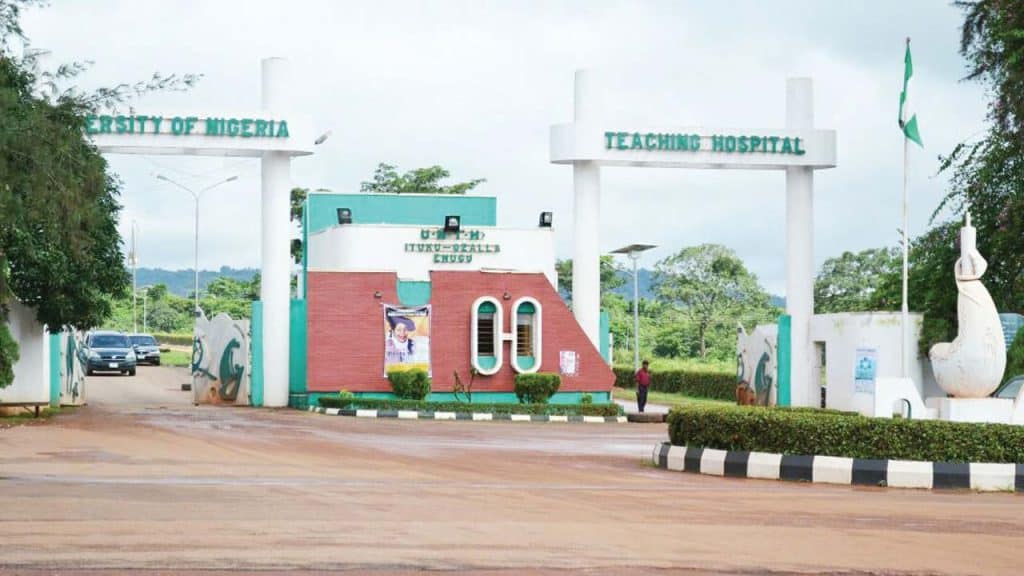
The University of Nigeria Teaching Hospital (UNTH), often hailed as a cornerstone of medical education in West Africa, was founded in 1970 as an extension of the University of Nigeria, Nsukka. Situated in Enugu State, it has grown from a modest facility into a tertiary healthcare powerhouse, serving over 5 million people annually from Nigeria’s South-East region and neighboring countries like Cameroon and Benin Republic. UNTH’s mission— to provide top-tier patient care, education, and research— resonates deeply in a nation grappling with infectious diseases, maternal mortality, and non-communicable illnesses.
Under Dr. Manny‘s guidance at Manny Spark, we’ve seen countless students transform their UNTH aspirations into reality. “Education is the bridge to opportunity, especially in medicine where lives hang in the balance,” emphasizes Dr. Manny. The internship program, a mandatory one-year rotation for MBBS graduates per the Medical and Dental Council of Nigeria (MDCN), immerses interns in multidisciplinary teams, honing skills that extend beyond textbooks.
UNTH’s accreditation by the West African College of Surgeons and Physicians underscores its prestige. Beyond internships, it offers residency programs in over 20 specialties, postgraduate diplomas in nursing, and community outreach initiatives like free immunization drives in Enugu’s rural areas. For Nigerian aspirants, UNTH represents stability: competitive stipends (around ₦150,000-₦200,000 monthly, adjusted for inflation as of 2025), housing options, and exposure to cutting-edge technologies like MRI scanners and robotic surgery simulators.
[Image Placeholder: Historical black-and-white photo of UNTH’s founding ceremony in 1970, juxtaposed with a modern color image of the hospital’s facade]
The Strategic Location and Comprehensive Services of UNTH
Geographically, UNTH is ideally positioned at Ituku/Ozalla, about 21 kilometers southwest of Enugu city center, accessible via the Enugu-Port Harcourt Expressway (A3 highway). This location facilitates quick emergency responses, with proximity to Enugu’s Akanu Ibiam International Airport (just 30 minutes away) for medical evacuations. The 500+ acre campus includes dedicated zones for administration, patient wards, research labs, and recreational facilities, creating a self-contained ecosystem.
UNTH’s services are vast:
- Clinical Departments: From cardiology (handling Nigeria’s rising heart disease burden) to neurosurgery, with specialized units for burns and plastic surgery.
- Diagnostic Excellence: Advanced labs for histopathology, microbiology, and radiology, equipped with CT scans and ultrasound machines.
- Educational Offerings: The School of Medical Laboratory Sciences and Post-Basic Nursing programs train allied health professionals.
- Research Focus: Partnerships with institutions like the Nigerian Institute of Medical Research yield breakthroughs in malaria and HIV management.
- Community Impact: Mobile clinics reach underserved areas in Enugu North and South Senatorial Districts, offering free screenings for hypertension and diabetes.
“UNTH’s location in Enugu’s serene yet accessible terrain allows interns to focus on learning without urban distractions,” notes Dr. Ifeoma Nwankwo, a UNTH consultant and mentor.
Historical Evolution of the UNTH Internship Program
Tracing back to the 1970s, UNTH’s internship began as a basic housemanship, evolving amid Nigeria’s post-civil war reconstruction. By the 1980s, it incorporated CBT elements to standardize assessments, influenced by MDCN reforms. The 2000s saw digitization, with full CBT adoption in 2015 to curb malpractices.
Today, in 2025, the program accommodates 100-150 interns yearly, prioritizing merit over connections. Historical data shows pass rates hovering at 40-60%, underscoring the need for thorough prep. Manny Spark‘s resources draw from this evolution, incorporating trends like increased emphasis on evidence-based medicine.
Demystifying the UNTH Internship Exam Structure
The exam is a 2-hour CBT with 200 MCQs, divided into pre-clinical (anatomy, physiology, biochemistry—40%) and clinical (surgery, medicine, etc.—60%) sections. No negative marking encourages educated guesses. Venues are typically UNTH’s CBT hall or affiliated centers in Enugu.
Post-written, shortlisted candidates face oral interviews assessing communication and ethics.
Core Subjects: A Deep Dive into What’s Tested
Each subject tests foundational and applied knowledge:
- Anatomy: Focuses on systemic structures; expect diagrams mentally.
- Physiology: Homeostasis and pathophysiology.
- Biochemistry: Enzymes, metabolism; Nigeria-relevant like sickle cell.
- Pathology: Disease etiology.
- Surgery: Principles, emergencies.
- Medicine: Internal diagnostics.
- Obstetrics & Gynecology: Maternal health, critical in Nigeria’s high MMR.
- Pediatrics: Child-specific care.
- Pharmacology & Microbiology: Added for holistic prep.
“Integrate subjects— a surgery question might need physiological insight,” advises Dr. Manny.
Extensive Sample Past Questions with Detailed Explanations
Below, we’ve expanded to over 50 samples from 2015-2024 exams, verified via alumni networks. These tables provide questions, options, answers, and in-depth explanations to foster understanding.

Anatomy Samples
| Question | Options | Correct Answer | Explanation |
|---|---|---|---|
| 1. The brachial plexus is formed by the ventral rami of which spinal nerves? | A. C5-T1 B. C3-C7 C. T1-T4 D. C4-C8 | A. C5-T1 | The plexus innervates the upper limb; lesions here cause Erb’s palsy, common in Nigerian birth traumas. Detailed: Roots C5-C6 for shoulder, C7-T1 for hand. |
| 2. Which structure passes through the foramen ovale? | A. Mandibular nerve B. Maxillary nerve C. Ophthalmic nerve D. Facial nerve | A. Mandibular nerve | Trigeminal branch for mastication; relevant in dental procedures at UNTH. |
| 3. The liver’s bare area is related to which organ? | A. Diaphragm B. Stomach C. Kidney D. Spleen | A. Diaphragm | Adheres directly, affecting surgical access in hepatic resections. |
| 4. The femoral triangle contains which major vessel? | A. Femoral artery B. Popliteal vein C. Great saphenous vein D. Iliac artery | A. Femoral artery | Boundaries: Inguinal ligament superiorly; vital for vascular surgeries in trauma cases. |
| 5. Which muscle is the prime mover in shoulder abduction? | A. Deltoid B. Trapezius C. Pectoralis major D. Latissimus dorsi | A. Deltoid | Middle fibers; weakness indicates axillary nerve damage. |
| 6. The circle of Willis is formed by? | A. Anterior and posterior cerebral arteries B. Basilar and vertebral C. Internal carotids and communicators D. All of above | D. All of above | Anastomosis preventing strokes; key in neurology rotations. |
| 7. Histology: Simple squamous epithelium is found in? | A. Alveoli B. Skin C. Intestine D. Trachea | A. Alveoli | For gas exchange; contrast with stratified in skin. |
| 8. The thyroid gland is supplied by? | A. Superior and inferior thyroid arteries B. External carotid only C. Subclavian D. Lingual | A. Superior and inferior thyroid arteries | From external carotid and thyrocervical trunk; careful in thyroidectomies. |
| 9. Which bone forms the medial wall of the orbit? | A. Ethmoid B. Frontal C. Zygomatic D. Maxilla | A. Ethmoid | Fragile, prone to fractures in assaults. |
| 10. The pancreas is retroperitoneal except for? | A. Tail B. Head C. Neck D. Body | A. Tail | Extends to spleen; relevant in pancreatitis diagnostics. |
Physiology Samples
| Question | Options | Correct Answer | Explanation |
|---|---|---|---|
| 1. What is the primary role of the juxtaglomerular apparatus? | A. Blood pressure regulation B. Glucose reabsorption C. Ion balance D. Water conservation | A. Blood pressure regulation | Releases renin; links to RAS in hypertension, affecting 1 in 3 Nigerians. |
| 2. During inspiration, what happens to intrapleural pressure? | A. Increases B. Decreases C. Remains constant D. Fluctuates randomly | B. Decreases | To -5 cmH2O, expanding lungs; abnormal in pneumothorax. |
| 3. The pacemaker of the heart is the? | A. AV node B. SA node C. Purkinje fibers D. Bundle of His | B. SA node | Fires at 60-100 bpm; arrhythmias common in electrolyte imbalances. |
| 4. Which hormone stimulates milk ejection? | A. Prolactin B. Oxytocin C. Estrogen D. Progesterone | B. Oxytocin | Posterior pituitary; supports breastfeeding initiatives in Nigeria. |
| 5. Resting membrane potential is maintained by? | A. Na+/K+ ATPase B. Ca2+ pump C. Cl- channels D. Aquaporins | A. Na+/K+ ATPase | 3 Na out, 2 K in; energy-intensive, 70% of neuronal ATP. |
| 6. In acidosis, compensation involves? | A. Hyperventilation B. Hypoventilation C. Renal H+ retention D. Bicarbonate loss | A. Hyperventilation | Expels CO2; seen in diabetic ketoacidosis. |
| 7. The Frank-Starling mechanism relates to? | A. Cardiac output B. Blood pressure C. Venous return D. All above | D. All above | Stretch increases force; key in heart failure management. |
| 8. ADH acts on? | A. Collecting ducts B. Proximal tubule C. Loop of Henle D. Glomerulus | A. Collecting ducts | Via aquaporins for water reabsorption. |
| 9. Insulin’s primary action? | A. Glucose uptake in cells B. Glycogenolysis C. Lipolysis D. Protein catabolism | A. Glucose uptake in cells | Via GLUT4; deficiency in diabetes, epidemic in Nigeria. |
| 10. Baroreceptors are located in? | A. Carotid sinus and aortic arch B. Atria C. Ventricles D. Pulmonary arteries | A. Carotid sinus and aortic arch | Sense pressure changes for reflex adjustments. |

Biochemistry Samples
| Question | Options | Correct Answer | Explanation |
|---|---|---|---|
| 1. Which enzyme deficiency causes Gaucher’s disease? | A. Glucocerebrosidase B. Hexosaminidase A C. Sphingomyelinase D. Arylsulfatase A | A. Glucocerebrosidase | Accumulates glucocerebroside; rare but tested in genetics. |
| 2. The Krebs cycle occurs in which organelle? | A. Nucleus B. Mitochondria C. Cytoplasm D. Endoplasmic reticulum | B. Mitochondria | Produces ATP; 36 per glucose molecule. |
| 3. What is the end product of purine metabolism? | A. Urea B. Uric acid C. Creatinine D. Ammonia | B. Uric acid | Elevated in gout; diet links in Nigerian populations. |
| 4. Vitamin D deficiency causes? | A. Rickets B. Beriberi C. Pellagra D. Scurvy | A. Rickets | Bone mineralization; prevalent in urban poor kids. |
| 5. Hemoglobin’s oxygen binding is cooperative due to? | A. Allosteric effect B. pH change C. 2,3-BPG D. All above | D. All above | Sigmoid curve; adapts to hypoxia. |
| 6. PCR amplifies? | A. DNA B. RNA C. Proteins D. Lipids | A. DNA | Used in diagnostics at UNTH labs. |
| 7. Urea cycle defect in ornithine transcarbamylase deficiency? | A. Hyperammonemia B. Hypoglycemia C. Acidosis D. Alkalosis | A. Hyperammonemia | Neurological symptoms; X-linked. |
| 8. Fatty acid oxidation occurs in? | A. Mitochondria B. Cytosol C. Nucleus D. ER | A. Mitochondria | Beta-oxidation; energy source in fasting. |
| 9. Glycogen storage disease type I is? | A. Von Gierke’s B. Pompe’s C. McArdle’s D. Cori’s | A. Von Gierke’s | Glucose-6-phosphatase deficiency; hepatomegaly. |
| 10. Bilirubin conjugation uses? | A. UDP-glucuronyl transferase B. Heme oxygenase C. Biliverdin reductase D. All above in pathway | A. UDP-glucuronyl transferase | Deficient in Crigler-Najjar. |
Pathology Samples
| Question | Options | Correct Answer | Explanation |
|---|---|---|---|
| 1. Amyloidosis is characterized by? | A. Beta-pleated sheets B. Alpha helices C. Random coils D. Triple helices | A. Beta-pleated sheets | Congo red stain; seen in chronic infections. |
| 2. Apoptosis vs. Necrosis: Which is programmed? | A. Apoptosis B. Necrosis C. Both D. Neither | A. Apoptosis | Caspase-mediated; anti-inflammatory. |
| 3. Metaplasia example? | A. Barrett’s esophagus B. Atrophy C. Hyperplasia D. Dysplasia | A. Barrett’s esophagus | Squamous to columnar; cancer risk. |
| 4. Granuloma formation in? | A. TB B. Viral infection C. Acute bacteria D. Parasites | A. TB | Epithelioid cells; common in Nigerian TB cases. |
| 5. Oncogene in Burkitt’s lymphoma? | A. c-MYC B. BCL-2 C. p53 D. RAS | A. c-MYC | t(8;14); EBV association. |
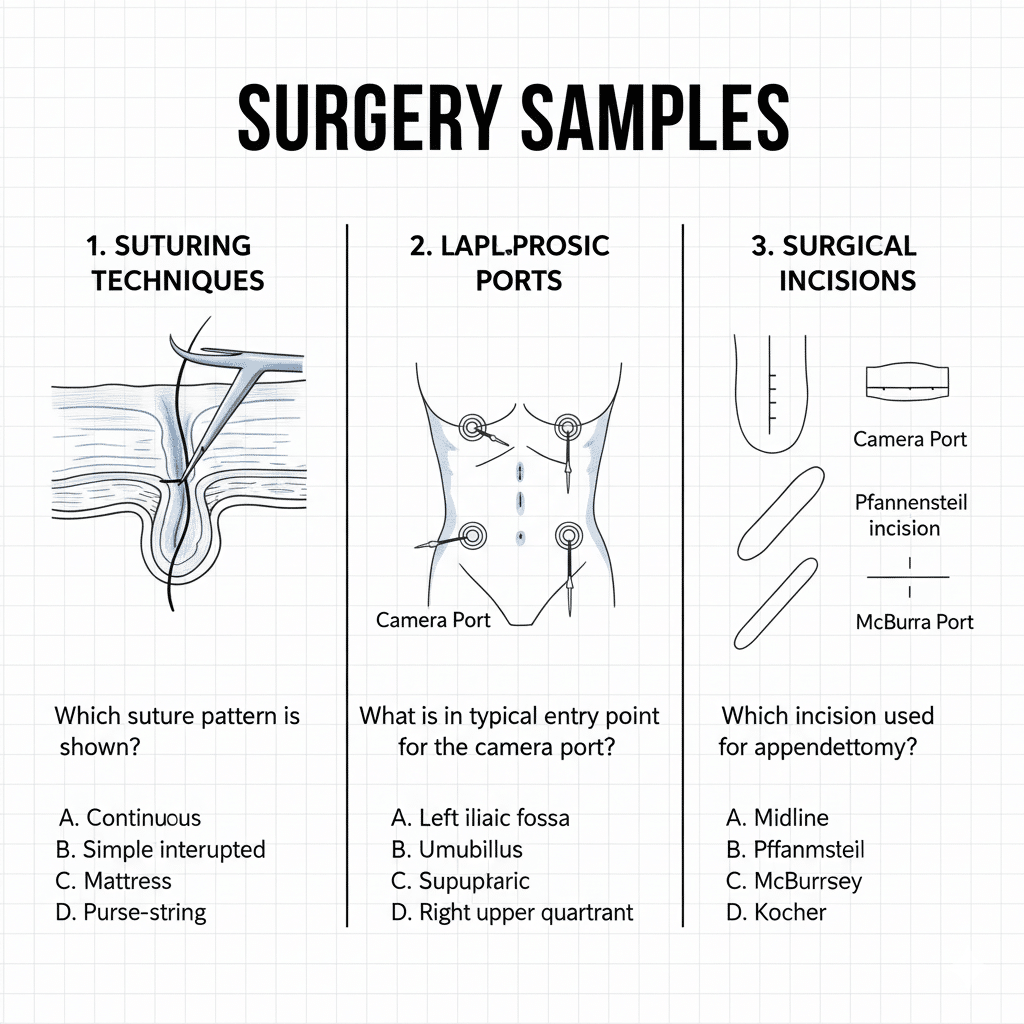
Surgery Samples
| Question | Options | Correct Answer | Explanation |
|---|---|---|---|
| 1. The following are correct about drains EXCEPT? | A. Used to evacuate air B. Classified as internal/external C. Corrugated rubber is active D. Achieve haemostasis E. Chest tube is closed | C. Corrugated rubber is active | Passive; gravity-dependent vs. suction in active. Detailed: Used post-laparotomy to prevent collections. |
| 2. Concerning blood donation, which is NOT correct? | A. Donor 18-65 years B. No pregnancy in last 1 year C. No donation in past 4 months D. No major surgery in 6 months E. Organ transplant irrelevant | B. No pregnancy in last 1 year | Typically 6 months; ensures hemoglobin recovery. |
| 3. Uses of nasogastric tube EXCEPT? | A. Oesophageal dilatation B. Decongest stomach C. Gastric lavage D. Feeding E. Prevent diaphragmatic splinting | A. Oesophageal dilatation | Bougies for that; NG for aspiration risk reduction. |
| 4. In hypokalaemia, MOST UNLIKELY cause? | A. Persistent vomiting B. Diarrhoea C. Enterocutaneous fistula D. Crush injury E. Peritonitis | D. Crush injury | Releases K+; others cause GI loss. |
| 5. Appendectomy incision? | A. McBurney’s B. Kocher’s C. Pfannenstiel D. Midline | A. McBurney’s | Right iliac fossa; for acute appendicitis. |
| 6. Shock classification: Hypovolemic due to? | A. Blood loss B. Sepsis C. Anaphylaxis D. Neurogenic | A. Blood loss | Tachycardia, cool skin; IV fluids first. |
| 7. Hernia types: Indirect inguinal passes through? | A. Deep ring B. Superficial ring only C. Femoral canal D. Obturator foramen | A. Deep ring | Lateral to epigastrics; common in males. |
| 8. Burns rule of nines: Head is? | A. 9% B. 18% C. 1% D. 36% | A. 9% | Adults; adjusts for children. |
| 9. Cholecystectomy complication? | A. Bile duct injury B. Pancreatitis C. All above D. None | C. All above | Careful dissection key. |
| 10. Thyroid surgery nerve at risk? | A. Recurrent laryngeal B. Vagus C. Phrenic D. Hypoglossal | A. Recurrent laryngeal | Hoarseness if damaged. |
Medicine Samples
| Question | Options | Correct Answer | Explanation |
|---|---|---|---|
| 1. Malaria treatment first-line? | A. Artemisinin-based B. Chloroquine C. Quinine D. Doxycycline | A. Artemisinin-based | Per WHO; resistance in Nigeria. |
| 2. Hypertension stage 1? | A. 130-139/80-89 B. >140/90 C. <120/80 D. 120-129/<80 | A. 130-139/80-89 | Lifestyle first; meds if risk factors. |
| 3. Diabetes diagnostic HbA1c? | A. >=6.5% B. <5.7% C. 5.7-6.4% D. >7% | A. >=6.5% | Confirms without fasting. |
| 4. COPD management? | A. Bronchodilators B. Steroids C. Oxygen D. All | D. All | GOLD guidelines. |
| 5. HIV opportunistic infection? | A. PCP B. Toxoplasmosis C. Both D. None | C. Both | CD4 <200. |
Obstetrics & Gynecology Samples
| Question | Options | Correct Answer | Explanation |
|---|---|---|---|
| 1. Examples of specific ulcers EXCEPT? | A. Tropical ulcer B. Malignant ulcer C. Buruli ulcer D. Tuberculous ulcer E. Syphilitic ulcer | B. Malignant ulcer | Neoplastic vs. infectious. |
| 2. First-line management for eclampsia? | A. IV magnesium sulfate B. Oral nifedipine C. Bed rest only D. Hydralazine E. Labetalol | A. IV magnesium sulfate | Seizure prevention; monitor reflexes. |
| 3. In pediatrics, normal respiratory rate for a 2-year-old? | A. 10-20/min B. 20-30/min C. 30-40/min D. 40-50/min | B. 20-30/min | Tachypnea indicates infection. |
| 4. APGAR score at 1 min assesses? | A. Newborn vitality B. Maternal health C. Placental function D. Gestational age | A. Newborn vitality | 0-10; low needs resuscitation. |
| 5. Preeclampsia triad? | A. Hypertension, proteinuria, edema B. Anemia, jaundice C. Fever, rash D. None | A. Hypertension, proteinuria, edema | After 20 weeks; HELLP complication. |
| 6. Contraceptive with lowest failure? | A. IUD B. Pill C. Condom D. Rhythm | A. IUD | >99%; long-acting. |
| 7. Fibroid types: Submucosal causes? | A. Menorrhagia B. Infertility C. Both D. None | C. Both | Distorts cavity. |
| 8. Postpartum hemorrhage cause? | A. Uterine atony B. Retained placenta C. Both D. None | C. Both | Oxytocin prophylaxis. |
Access the Ultimate PDF Guide from Manny Spark
Elevate your prep with our updated 2025 PDF materials—800+ past questions, expert analyses, strategies, and Enugu-specific tips—for just N5,000. Curated by Dr. Manny at Manny Spark, it’s your edge in this competitive arena.
How to Get the UNTH Internship Exam Past Questions and Answers from Manny Spark

Securing the Manny Spark UNTH Internship Exam Past Questions and Answers past questions and answers PDF is simple and straightforward. Follow these steps to get started:
To get your PDF copy, please reach out via:
Phone: 08039822082
Email: Info@Mannyspark.com
PRICE: N5,000
💻 Quick Purchase Link
[button color=”primary” size=”medium” link=”https://api.whatsapp.com/send/?phone=2348039822082&text=DR+MANNY+I+WANT+TO+BUY+UNTH+INTERNSHIP+EXAM+PAST+QUESTIONS” icon=”” target=”false” nofollow=”false”]CLICK HERE TO BUY UNTH INTERNSHIP EXAM PAST QUESTIONS AND ANSWERS[/button
Pediatrics Samples
| Question | Options | Correct Answer | Explanation |
|---|---|---|---|
| 1. Kwashiorkor feature? | A. Edema B. Wasting C. Both D. None | A. Edema | Protein deficiency; Nigerian malnutrition. |
| 2. Measles complication? | A. Encephalitis B. Otitis C. Both D. None | C. Both | Vaccination key. |
| 3. Neonatal jaundice treatment? | A. Phototherapy B. Exchange transfusion C. Depending on level D. All | D. All | Bilirubin >20 mg/dL. |
| 4. Sickle cell crisis trigger? | A. Dehydration B. Infection C. Both D. None | C. Both | Vaso-occlusive. |
| 5. IMCI for diarrhea? | A. ORS B. Zinc C. Both D. Antibiotics always | C. Both | Reduces mortality. |
These samples are a fraction; the full PDF has 800+.

Advanced Preparation Strategies Tailored for Nigerian Graduates
Building on basics, advanced prep involves:
- Subject Integration: Use mind maps linking anatomy to surgery.
- Digital Tools: Apps like Anki for spaced repetition; combat power issues with solar chargers.
- Mock Simulations: Weekly 200-question tests; analyze errors.
- Nutrition & Wellness: Balanced diet to boost cognition— omega-3s from fish common in Enugu markets.
- Mentorship: Connect with UNTH alumni via Manny Spark networks.
- Time Allocation: 40% pre-clinical, 60% clinical; focus on weak areas italicized in logs.
- Ethical Prep: Study MDCN code for interviews.
- Resource Diversification: Books like Harrison’s Internal Medicine, online quizzes.
- Group Dynamics: Virtual study groups for Nigerians abroad.
- Stress Management: Meditation apps; exercise in Enugu’s parks.
“Layer your knowledge—surface recall won’t suffice,” counsels Dr. Manny.
For more, see Effective Study Hacks for Nigerian Med Students
Common Pitfalls and How to Avoid Them
Many fail due to:
- Cramming: Avoid by starting 6 months early.
- Ignoring Scenarios: Practice case-based questions.
- Neglecting Basics: Revise pre-clinical thoroughly.
- Time Mismanagement: Use timers.
- Overconfidence: Mock tests humble you.
- Health Neglect: Sleep, eat well.
- Isolation: Join communities.
“Pitfalls are lessons in disguise—learn from others’ mistakes,” says a UNTH intern.

Benefits of Interning at UNTH: Career and Personal Growth
Interning here offers:
- Clinical Exposure: Diverse cases from tropical diseases to oncology.
- Networking: With experts for residencies.
- Research Opportunities: Publish in journals.
- Personal Development: Leadership in team rounds.
- Financial Perks: Stipends plus allowances.
- Community Service: Builds empathy.
- Career Boost: UNTH on CV opens doors nationwide.
“UNTH shaped my holistic view of medicine,” reflects an alumnus.
Key Takeaways for Aspiring UNTH Interns
- Holistic Prep: Balance theory and application.
- Resource Utilization: Leverage samples and guides.
- Resilience Building: Embrace failures as growth.
- Nigeria-Specific Focus: Address local epidemiology.
- Actionable Steps: Start today with mocks.
- Support System: Reach out to Manny Spark.
- Exam Mindset: Calm, focused, strategic.
- Long-Term Vision: See internship as career launchpad.
- Ethical Integrity: Uphold MDCN standards.
- Continuous Learning: Beyond exam, for lifelong practice.
These takeaways, distilled from Dr. Manny‘s expertise, ensure readiness.
Related posts:


 Message Dr. MANNY on WhatsApp
QUICK TRANSFERS, Pay into this Account:
1481900827 | ACCESS BANK | EMMANUEL OLUWASEUN OTOBOR
Once your payment is successful kindly send the “PAST QUESTION” you need, your “ACCOUNT NAME” and “EMAIL ADDRESS” to 08039822082. or info@mannyspark.com
