


QUICK TRANSFERS, Pay into this Account:
1481900827 | ACCESS BANK | EMMANUEL OLUWASEUN OTOBOR
Once your payment is successful kindly send the “PAST QUESTION” you need, your “ACCOUNT NAME” and “EMAIL ADDRESS” to 08039822082. or info@mannyspark.com


OAU Direct Entry Past Questions and Answers
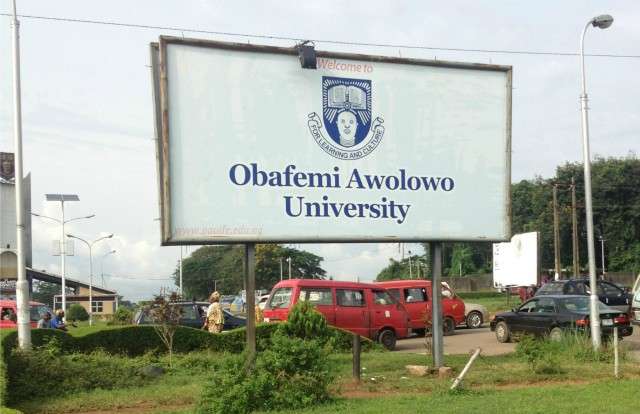
In the dynamic landscape of Nigerian tertiary education, where competition for spots in top universities like Obafemi Awolowo University (OAU) is fiercer than ever, the Direct Entry (DE) program stands out as a strategic route for advanced learners. Designed for holders of higher qualifications such as National Diploma (ND), Higher National Diploma (HND), Advanced Level (A-Level), or equivalent, DE allows you to bypass the 100-level and dive straight into 200-level studies. This not only saves time but also leverages your prior knowledge, making it ideal for polytechnic graduates, JUPEB participants, or those with international certifications seeking admission into prestigious programs at OAU.
As we approach the 2025/2026 academic session—amidst Nigeria’s evolving educational policies influenced by the Joint Admissions and Matriculation Board (JAMB)—thousands of candidates from states like Lagos, Abuja, Kano, and Rivers are vying for limited slots. According to recent JAMB statistics, over 1.5 million students registered for UTME/DE in 2025, with OAU attracting a significant portion due to its reputation for academic rigor and innovation. At Manny Spark, led by Dr. Manny, a seasoned education consultant with over 5 years of experience in Nigerian admissions coaching, we understand the stakes. Our mission is to equip you with tools that demystify the process, turning potential anxiety into assured success.
This comprehensive guide, curated by Dr. Manny Spark, explores everything from OAU’s rich heritage to free sample past questions across key subjects. Whether you’re aiming for Medicine in the College of Health Sciences or Engineering in the Faculty of Technology, these insights—drawn from years of analyzing screening patterns—will help you prepare effectively. Remember, success in OAU DE isn’t just about your qualifications; it’s about mastering the screening exam, which tests subject-specific knowledge aligned with your chosen field.

For those new to DE, the process begins with JAMB registration, followed by OAU’s post-DE screening. As per the latest 2025 updates from OAU’s admissions portal, candidates must score at least 200 in UTME (if applicable) or meet aggregate requirements, alongside five O’Level credits including Mathematics and English in no more than two sittings. Dr. Manny emphasizes, “The DE route is a golden opportunity for mature learners, but without targeted preparation, even the brightest can falter.” Let’s delve deeper into what makes OAU a top choice.
The Legacy of Obafemi Awolowo University: Location, History, and Diverse Academic Offerings
Situated in the ancient city of Ile-Ife, Osun State, southwestern Nigeria, OAU is more than a university—it’s a cultural and intellectual hub. Ile-Ife, often called the “source” or cradle of Yoruba civilization, is located approximately 218 kilometers northeast of Lagos, 30 kilometers from Osogbo (the state capital), and easily accessible via the Ife-Ibadan Expressway. This strategic position makes it convenient for students from major cities like Ibadan (about 70 km away) or Abuja (via a 6-7 hour drive).
The town’s rich history, featuring landmarks such as the Ooni’s Palace, the National Museum of Ife with its famous bronze heads, and the sacred Oduduwa Grove, infuses campus life with a sense of heritage. Imagine studying amid rolling hills and tropical greenery, where ancient myths meet modern academia.
Founded in 1961 as the University of Ife by the Western Region government, OAU was renamed in 1987 to honor Chief Obafemi Awolowo, a pivotal figure in Nigeria’s independence. Spanning over 13,000 acres, the campus is a architectural marvel with iconic structures like the Oduduwa Hall (a massive amphitheater for lectures and events), the Hezekiah Oluwasanmi Library (housing over 500,000 volumes and digital resources), and the Faculty of Arts building inspired by traditional Yoruba designs. OAU’s commitment to sustainability is evident in its solar-powered facilities and vast botanical gardens, which support research in agriculture and environmental science.
Academically, OAU offers a plethora of programs across 13 faculties and two colleges, catering to over 35,000 students. For DE candidates, entry into faculties like Administration (for Accounting and Business Admin), Agriculture (Crop Production, Animal Science), Arts (English, History, Philosophy), Education (Guidance and Counseling), Environmental Design and Management (Architecture, Urban Planning), Law, Pharmacy, Sciences (Biochemistry, Computer Science), Social Sciences (Economics, Political Science), Technology (Civil Engineering, Electronics), and the College of Health Sciences (Medicine, Dentistry, Nursing) is highly sought. Beyond core degrees, OAU provides interdisciplinary options like the Institute of Entrepreneurship and Development Studies, where students can pursue certificates in innovation alongside their majors.
Student life at OAU is vibrant and holistic. Hostels such as Moremi Hall for females and Fajuyi Hall for males offer affordable accommodation with amenities like Wi-Fi and cafeterias. Extracurriculars include over 100 clubs— from the Literary and Debating Society to tech hubs like the OAU Innovation Lab—fostering skills in AI, robotics, and startups. Sports facilities, including the university stadium that hosts NUGA games, promote physical wellness. Notable alumni like Wole Soyinka (Nobel Laureate), Chimamanda Ngozi Adichie (author), and Babatunde Fashola (former Lagos Governor) underscore OAU’s impact on Nigeria’s leadership landscape.
“OAU’s blend of tradition and modernity equips students not just for careers, but for nation-building,” shares Dr. Manny Spark, drawing from his own experiences mentoring OAU aspirants. For DE students, the university’s part-time and distance learning options add flexibility, especially for working professionals in Nigeria’s bustling economy.

Why OAU Direct Entry Past Questions Are Indispensable for Nigerian Candidates
In Nigeria’s competitive admission system, where OAU’s DE acceptance rate hovers around 15-20% due to high applicant volumes, past questions aren’t optional—they’re essential. These materials reveal exam trends: for instance, English comprehension passages often draw from contemporary Nigerian issues like climate change or economic policies, while Science questions emphasize practical applications. A study by the Nigerian Universities Commission (NUC) indicates that candidates using past papers improve scores by up to 30%, as they familiarize themselves with question styles and time management.
At Manny Spark, Dr. Manny has compiled resources from 2010-2025 screenings, noting that 60-70% of questions recur in varied forms. Consider the 2024 DE cycle: Many candidates struggled with Biology’s ecology section because they overlooked patterns from prior years. “Past questions bridge the gap between theory and exam reality,” explains Dr. Manny. They also help in building confidence, reducing anxiety common among Nigerian students balancing work or family.
Moreover, in a country where educational resources vary by region—urban centers like Lagos have better access than rural areas—affordable tools like our PDF democratize preparation. JAMB reports show DE candidates with structured prep are twice as likely to meet cutoffs (typically 50-60% aggregate for competitive courses). Internal link: Check our JAMB DE Registration Guide for seamless application tips.
Decoding the OAU Direct Entry Exam Format, Subjects, and 2025/2026 Updates
OAU’s DE screening for 2025/2026 is a computer-based test (CBT) or online assessment, lasting 60-120 minutes with 100-200 questions, depending on your faculty. As per the July 2025 announcement, registration opened on July 21 and closed August 24, with a N2,000 screening fee paid via the portal. Eligible qualifications include upper credit ND/HND, 8+ points in A-Levels/IJMB, or BSc for some programs. The exam combines subject tests with aptitude, weighted as: Subjects (70%), O’Levels/JAMB aggregate (30%).
Core subjects vary by faculty:
| Faculty/Group | Key Subjects | Focus Areas | Weightage |
|---|---|---|---|
| Sciences/Health | English, Math, Biology, Chemistry, Physics | Lab-based concepts, calculations | 60-70% |
| Social Sciences | English, Economics, Government, Math | Policy analysis, data interpretation | 50-60% |
| Arts/Humanities | English, Literature, History, Government | Critical thinking, essays | 40-50% |
| Engineering/Tech | English, Math, Physics, Chemistry | Problem-solving, diagrams | 70% |
Updates for 2025: Emphasis on digital literacy questions; screening might include virtual proctoring due to post-COVID norms. Cutoffs: Medicine (70+), Engineering (65+), Arts (55+). Always verify on the portal.

In-Depth Sample OAU Direct Entry Past Questions:
English Language
English is foundational, assessing vocabulary, grammar, and comprehension—crucial for all candidates. Here are 15 samples from 2020-2025, with explanations.
| Question No. | Question | Options | Correct Answer & Explanation |
|---|---|---|---|
| 1 | Synonym for “ubiquitous”: | A. Rare B. Omnipresent C. Limited D. Scarce | B. Omnipresent – Means present everywhere, common in tech contexts like “ubiquitous computing.” |
| 2 | Antonym of “alleviate”: | A. Ease B. Aggravate C. Mitigate D. Relieve | B. Aggravate – Opposite of reduce; often in passages on Nigerian poverty. |
| 3 | Fill in: “The news _____ shocking.” | A. Was B. Were C. Is D. Are | A. Was – “News” is singular; grammar rule for collective nouns. |
| 4 | Comprehension: “Nigeria’s oil boom led to dutch disease.” What is “dutch disease”? | A. Health epidemic B. Economic overreliance C. Political corruption D. Agricultural decline | B. Economic overreliance – Refers to resource curse; explain via context clues. |
| 5 | Error: “He don’t like apples.” | A. He B. Don’t C. Like D. Apples | B. Don’t – Should be “doesn’t” for subject-verb agreement. |
| 6 | Idiom: “Break the ice” means: | A. Cause harm B. Start conversation C. End friendship D. Freeze water | B. Start conversation – Social English, vital for interviews. |
| 7 | Closest to “meticulous”: | A. Careless B. Detailed C. Hasty D. Vague | B. Detailed – Precision in descriptions. |
| 8 | Passive voice: “The teacher taught the lesson” becomes: | A. The lesson was taught B. Teacher teaches lesson C. Lesson teaches teacher D. Was taught lesson | A. The lesson was taught – Structure shift. |
| 9 | Synonym “ephemeral”: | A. Eternal B. Transient C. Permanent D. Robust | B. Transient – Short-lived, like trends. |
| 10 | Antonym “benevolent”: | A. Kind B. Malevolent C. Generous D. Charitable | B. Malevolent – Evil intent. |
| 11 | Fill in: “Either the boys or the girl _____ responsible.” | A. Is B. Are C. Was D. Were | A. Is – Proximity rule. |
| 12 | Comprehension: “Climate change impacts Sahel.” Impact means: | A. Benefit B. Affect adversely C. Ignore D. Enhance | B. Affect adversely – Contextual inference. |
| 13 | Error: “The childrens’ toys.” | A. Childrens’ B. Toys C. The D. None | A. Childrens’ – Should be “children’s.” |
| 14 | Idiom: “Hit the books” | A. Attack texts B. Study hard C. Read novels D. Sell books | B. Study hard – Student slang. |
| 15 | Passive: “They built the bridge.” | A. Bridge was built B. They build bridge C. Was built bridge D. Built the bridge | A. Bridge was built – Object to subject. |
These build reading speed; practice daily.
Mathematics
Math tests analytical skills. 15 samples with solutions.
| Question No. | Question | Options | Correct Answer & Explanation |
|---|---|---|---|
| 1 | Solve 3x – 5 = 16 | A. 6 B. 7 C. 8 D. 9 | B. 7 – Add 5: 3x=21; divide by 3: x=7. |
| 2 | Factor x² – 9 | A. (x-3)(x+3) B. (x-9)(x+1) C. x(x-9) D. (x-3)² | A. (x-3)(x+3) – Difference of squares. |
| 3 | Sin 30° = | A. 1/2 B. √3/2 C. 1 D. 0 | A. 1/2 – Trig basics. |
| 4 | Integrate ∫2x dx | A. x² + C B. 2x² + C C. x²/2 + C D. 2x + C | A. x² + C – Antiderivative. |
| 5 | Probability: 2 heads in 3 coin tosses | A. 3/8 B. 1/2 C. 1/8 D. 3/4 | A. 3/8 – Binomial: C(3,2)(0.5)^3. |
| 6 | Matrix det [[1,2],[3,4]] | A. -2 B. 2 C. -1 D. 1 | A. -2 – 14 – 23 = 4-6. |
| 7 | Log10 100 = | A. 1 B. 2 C. 0 D. 10 | B. 2 – Base 10. |
| 8 | Quadratic: Roots of x² – 5x + 6=0 | A. 2,3 B. 1,6 C. -2,-3 D. 5,1 | A. 2,3 – Factors (x-2)(x-3). |
| 9 | Area circle r=7 | A. 49π B. 14π C. 7π D. 154 | A. 49π – πr². |
| 10 | Cosθ if sinθ=3/5 | A. 4/5 B. 3/4 C. 5/4 D. 5/3 | A. 4/5 – Pythagoras. |
| 11 | Sequence: 2,4,6… nth term | A. 2n B. n+2 C. 2n-1 D. n² | A. 2n – Arithmetic. |
| 12 | Derivative 3x² | A. 6x B. 3x C. x² D. 6 | A. 6x – Power rule. |
| 13 | Permutation P(5,2) | A. 10 B. 20 C. 25 D. 5 | B. 20 – 5*4. |
| 14 | Vector dot [1,2]·[3,4] | A. 11 B. 7 C. 5 D. 12 | A. 11 – 13 + 24. |
| 15 | Limit x→0 sinx/x | A. 0 B. 1 C. ∞ D. -1 | B. 1 – Standard limit. |
For math, show work to avoid errors.
Biology for Science Aspirants
15 Biology samples.
| Question No. | Question | Options | Correct Answer & Explanation |
|---|---|---|---|
| 1 | Cell theory proponent: | A. Hooke B. Schleiden C. Darwin D. Mendel | B. Schleiden – Plant cells. |
| 2 | Photosynthesis site: | A. Mitochondria B. Chloroplast C. Nucleus D. Ribosome | B. Chloroplast – Green pigment. |
| 3 | DNA base pairs: | A. A-T, G-C B. A-G, T-C C. A-C, G-T D. All same | A. A-T, G-C – Watson-Crick. |
| 4 | Ecosystem pyramid base: | A. Producers B. Consumers C. Decomposers D. Apex | A. Producers – Energy flow. |
| 5 | Human respiration organ: | A. Lungs B. Gills C. Skin D. Trachea | A. Lungs – Gas exchange. |
| 6 | Mendel’s ratio dihybrid: | A. 9:3:3:1 B. 3:1 C. 1:1 D. 1:2:1 | A. 9:3:3:1 – Independent assortment. |
| 7 | Enzyme function: | A. Catalyst B. Inhibitor C. Substrate D. Product | A. Catalyst – Speed reactions. |
| 8 | Blood type universal donor: | A. O B. AB C. A D. B | A. O – No antigens. |
| 9 | Evolution theory: | A. Lamarck B. Darwin C. Wallace D. All | B. Darwin – Natural selection. |
| 10 | Plant hormone growth: | A. Auxin B. Cytokinin C. Gibberellin D. All | D. All – Various roles. |
| 11 | Nervous system part: | A. Brain B. Heart C. Liver D. Kidney | A. Brain – Central. |
| 12 | Osmosis definition: | A. Water diffusion B. Gas exchange C. Active transport D. Phagocytosis | A. Water diffusion – Semi-permeable. |
| 13 | Virus characteristic: | A. Living B. Non-cellular C. Bacterial D. Fungal | B. Non-cellular – Obligate parasite. |
| 14 | Ecology succession: | A. Primary B. Secondary C. Both D. None | C. Both – Community change. |
| 15 | Hormone insulin: | A. Blood sugar B. Growth C. Reproduction D. Stress | A. Blood sugar – Pancreas. |
Focus on diagrams for visuals.

Chemistry
15 Chemistry samples.
| Question No. | Question | Options | Correct Answer & Explanation |
|---|---|---|---|
| 1 | Atomic mass H: | A. 1 B. 2 C. 3 D. 0 | A. 1 – Proton. |
| 2 | pH acid: | A. <7 B. >7 C. =7 D. 0 | A. <7 – H+ concentration. |
| 3 | Oxidation loss: | A. Electrons B. Protons C. Neutrons D. Mass | A. Electrons – Redox. |
| 4 | Mole 44g CO2: | A. 1 B. 2 C. 0.5 D. 44 | A. 1 – Molar mass. |
| 5 | Alkane general: | A. CnH2n+2 B. CnH2n C. CnH2n-2 D. CnHn | A. CnH2n+2 – Saturated. |
| 6 | Electrolysis water: | A. H2 O2 B. NaCl C. Acid D. Base | A. H2 O2 – Gases. |
| 7 | Periodic table groups: | A. Vertical B. Horizontal C. Diagonal D. None | A. Vertical – Similar properties. |
| 8 | Bond ionic: | A. Electron share B. Transfer C. Covalent D. Metallic | B. Transfer – Metals non-metals. |
| 9 | Catalyst effect: | A. Speed B. Slow C. Stop D. Reverse | A. Speed – Activation energy. |
| 10 | Isotope same: | A. Protons B. Neutrons C. Electrons D. Mass | A. Protons – Diff neutrons. |
| 11 | Equilibrium Le Chatelier: | A. Shift favor B. No change C. Reverse D. Stop | A. Shift favor – Stress response. |
| 12 | Organic functional alcohol: | A. -OH B. -COOH C. -NH2 D. -CHO | A. -OH – Hydroxyl. |
| 13 | Gas law PV= | A. nRT B. m/V C. P/T D. V/T | A. nRT – Ideal. |
| 14 | Acid base salt: | A. Neutralization B. Oxidation C. Reduction D. Combustion | A. Neutralization – Reaction. |
| 15 | Polymer example: | A. Polythene B. Glucose C. Methane D. Ethanol | A. Polythene – Chain. |
Physics
15 Physics samples.
| Question No. | Question | Options | Correct Answer & Explanation |
|---|---|---|---|
| 1 | Force unit: | A. Newton B. Joule C. Watt D. Volt | A. Newton – Kg m/s². |
| 2 | Acceleration gravity: | A. 9.8 m/s² B. 10 m/s C. 0 D. 1 | A. 9.8 m/s² – Earth. |
| 3 | Energy work: | A. Force distance B. Mass velocity C. Power time D. All | A. Force distance – Joules. |
| 4 | Wave types: | A. Transverse B. Longitudinal C. Both D. None | C. Both – Medium. |
| 5 | Ohm law V= | A. IR B. P/I C. E/t D. Q/t | A. IR – Resistance. |
| 6 | Lens convex: | A. Converge B. Diverge C. Reflect D. Refract only | A. Converge – Real image. |
| 7 | Momentum mass velocity: | A. mv B. m/v C. m a D. F t | A. mv – Conservation. |
| 8 | Heat transfer conduction: | A. Solids B. Fluids C. Vacuum D. All | A. Solids – Contact. |
| 9 | Nuclear fission: | A. Split B. Fuse C. Decay D. Emit | A. Split – Energy release. |
| 10 | Capacitor store: | A. Charge B. Current C. Voltage D. Power | A. Charge – Farads. |
| 11 | Projectile angle max range: | A. 45° B. 30° C. 60° D. 90° | A. 45° – Sin2θ. |
| 12 | Relativity Einstein: | A. E=mc² B. F=ma C. PV=nRT D. hν | A. E=mc² – Mass energy. |
| 13 | Sound speed air: | A. 340 m/s B. 1500 m/s C. 3e8 m/s D. 0 | A. 340 m/s – Approx. |
| 14 | Magnet field lines: | A. N to S B. S to N C. Closed D. Open | A. N to S – Outside. |
| 15 | Thermodynamics first law: | A. Energy conserve B. Entropy increase C. Zero absolute D. All | A. Energy conserve – ΔU=Q-W. |
Economics for Social Sciences
15 Economics samples for Social Sciences DE.
| Question No. | Question | Options | Correct Answer & Explanation |
|---|---|---|---|
| 1 | Demand curve slope: | A. Downward B. Upward C. Horizontal D. Vertical | A. Downward – Inverse price quantity. |
| 2 | GDP measure: | A. Output B. Income C. Expenditure D. All | D. All – National. |
| 3 | Inflation type demand-pull: | A. Excess demand B. Cost push C. Structural D. Imported | A. Excess demand – Money supply. |
| 4 | Monopoly characteristic: | A. Single seller B. Many buyers C. Barriers D. All | D. All – No competition. |
| 5 | Fiscal policy tool: | A. Tax B. Interest rate C. Reserve D. Exchange | A. Tax – Government. |
| 6 | Opportunity cost: | A. Next best B. Actual cost C. Fixed D. Variable | A. Next best – Choice. |
| 7 | Elasticity >1: | A. Elastic B. Inelastic C. Unitary D. Zero | A. Elastic – Responsive. |
| 8 | Balance of payment: | A. Current capital B. Trade C. Services D. All | A. Current capital – Accounts. |
| 9 | Money function: | A. Medium exchange B. Store value C. Unit account D. All | D. All – Roles. |
| 10 | Unemployment frictional: | A. Job search B. Structural C. Cyclical D. Seasonal | A. Job search – Temporary. |
| 11 | Comparative advantage: | A. Lower cost B. Absolute C. Equal D. None | A. Lower cost – Trade theory. |
| 12 | Budget deficit: | A. Expenditure > revenue B. < revenue C. = revenue D. Surplus | A. Expenditure > revenue – Borrowing. |
| 13 | Market equilibrium: | A. Demand=supply B. >supply C. <supply D. None | A. Demand=supply – Price. |
| 14 | WTO role: | A. Trade liberalization B. Aid C. Currency D. Labor | A. Trade liberalization – Global. |
| 15 | Phillips curve: | A. Inflation unemployment inverse B. Direct C. No relation D. Positive | A. Inflation unemployment inverse – Trade-off. |
Secure Your Edge: Get the Full Updated PDF from Dr. Manny Spark
Elevate your preparation with Dr. Manny Spark’s comprehensive OAU Direct Entry Past Questions and Answers PDF (2010-2025), featuring 1,000+ questions, detailed solutions, mocks, and faculty-specific tips. For just N5,000, gain the advantage Nigerian toppers swear by.
How to Get the OAU Direct Entry Past Questions and Answers from Manny Spark

Securing the Manny Spark OAU Direct Entry Past Questions and Answers past questions and answers PDF is simple and straightforward. Follow these steps to get started:
To get your PDF copy, please reach out via:
Phone: 08039822082
Email: Info@Mannyspark.com
PRICE: N5,000
💻 Quick Purchase Link
[button color=”primary” size=”medium” link=”https://api.whatsapp.com/send/?phone=2348039822082&text=DR+MANNY+I+WANT+TO+BUY+OAU+DIRECT+ENTRY+PAST+QUESTIONS” icon=”” target=”false” nofollow=”false”]CLICK HERE TO BUY OAU DIRECT ENTRY PAST QUESTIONS AND ANSWERS[/button
Government and Civic Knowledge
15 Government samples.
| Question No. | Question | Options | Correct Answer & Explanation |
|---|---|---|---|
| 1 | Nigeria constitution year: | A. 1999 B. 1960 C. 1979 D. 1989 | A. 1999 – Current. |
| 2 | Federalism division: | A. Power share B. Central all C. State all D. None | A. Power share – Levels. |
| 3 | Democracy type direct: | A. Referendum B. Representative C. Monarchy D. Dictator | A. Referendum – People vote. |
| 4 | UN organ security: | A. Council B. Assembly C. Secretariat D. Court | A. Council – Peace. |
| 5 | Separation powers: | A. Executive legislative judicial B. All one C. Two D. None | A. Executive legislative judicial – Checks. |
| 6 | Voting age Nigeria: | A. 18 B. 21 C. 16 D. 25 | A. 18 – Citizenship. |
| 7 | ECOWAS aim: | A. Economic integration B. Military C. Cultural D. Political | A. Economic integration – West Africa. |
| 8 | Bill to law: | A. Assent B. Veto C. Debate D. All | A. Assent – President. |
| 9 | Human rights universal: | A. Declaration 1948 B. 1960 C. 1979 D. 1999 | A. Declaration 1948 – UN. |
| 10 | Pressure group: | A. Influence policy B. Contest election C. Govern D. Judge | A. Influence policy – Lobby. |
| 11 | Confederal system: | A. Loose union B. Strong center C. Unitary D. Federal | A. Loose union – States dominant. |
| 12 | INEC function: | A. Elections B. Census C. Budget D. Defense | A. Elections – Independent. |
| 13 | Rule of law: | A. Equality B. Supremacy law C. Both D. None | C. Both – No arbitrary. |
| 14 | AU predecessor: | A. OAU B. UN C. ECOWAS D. NATO | A. OAU – African Union. |
| 15 | Citizenship by: | A. Birth registration marriage B. All C. None D. Only birth | B. All – Ways. |

Proven Strategies to Master Your OAU Direct Entry Screening: A Step-by-Step Study Plan
Success demands structure. Dr. Manny recommends a 12-week plan:
Weeks 1-4: Foundation Building – Review O’Levels, focus on weak subjects. Dedicate 3 hours daily: 1 hour English, 1 Math/Sciences, 1 revision.
Weeks 5-8: Intensive Practice – Tackle 50 questions/day from samples. Time yourself; analyze mistakes. Use flashcards for formulas.
Weeks 9-12: Mocks and Refinement – Simulate CBT with timers. Join online forums for peer discussions. Incorporate rest days to avoid burnout.
Read Nigerian news for comprehension; use apps like Quizlet. “Consistency trumps cramming,” advises Dr. Manny. Track progress in a journal.

Common Pitfalls in OAU Direct Entry Preparation and How to Avoid Them
Many fail due to misconceptions. Pitfall 1: Ignoring patterns—solution: Study 10+ years’ papers. Pitfall 2: Poor time management—practice under 1 min/question. Pitfall 3: Neglecting health—balance with exercise, sleep. Pitfall 4: Solo study—form groups. Pitfall 5: Outdated materials—use Manny Spark’s updated PDF.
“Avoiding these saved my admission,” quotes a 2024 DE admittee.
Testimonials from Successful Nigerian DE Candidates Using Manny Spark Resources
“Dr. Manny’s past questions were spot-on; 80% matched my screening!” – Adeola from Lagos, Medicine admittee.
“As a working mom, the PDF’s explanations fit my schedule perfectly.” – Chinedu from Abuja, Engineering.
“From failing mocks to 68% aggregate—thanks to Manny Spark!” – Fatima from Kano, Social Sciences.
These stories highlight real impact.
Key Takeaways for Aspiring OAU Direct Entry Students in Nigeria
- Embrace Patterns: Recycle rates high—master high-frequency topics like redox in Chemistry.
- Holistic Prep: Balance subjects; English boosts overall.
- Tech-Savvy Study: Use digital tools, but offline PDFs for reliability.
- Stay Informed: Monitor JAMB/OAU sites for 2025 changes.
- Mindset Matters: Positive attitude, consistent effort key.
- Leverage Experts: Dr. Manny’s guidance personalizes your journey.
- Cultural Integration: OAU’s Ile-Ife vibe enriches learning.
- Financial Planning: Budget for fees, materials like our N5,000 PDF.
- Network Early: Join alumni groups for insights.
- Sustainability: Prep ethically, avoid malpractices.
Related posts:




 Message Dr. MANNY on WhatsApp
QUICK TRANSFERS, Pay into this Account:
1481900827 | ACCESS BANK | EMMANUEL OLUWASEUN OTOBOR
Once your payment is successful kindly send the “PAST QUESTION” you need, your “ACCOUNT NAME” and “EMAIL ADDRESS” to 08039822082. or info@mannyspark.com
