


QUICK TRANSFERS, Pay into this Account:
1481900827 | ACCESS BANK | EMMANUEL OLUWASEUN OTOBOR
Once your payment is successful kindly send the “PAST QUESTION” you need, your “ACCOUNT NAME” and “EMAIL ADDRESS” to 08039822082. or info@mannyspark.com


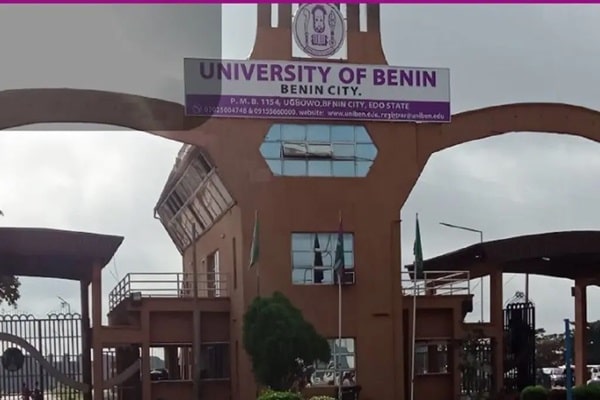
UNIBEN Direct Entry Past Questions and Answers
In the dynamic landscape of Nigerian higher education, the University of Benin (UNIBEN) stands as a pillar of excellence, particularly for Direct Entry (DE) candidates seeking accelerated paths to degree programs. As a federal university in Edo State, UNIBEN attracts thousands of ambitious Nigerian students annually, offering a gateway to prestigious faculties through its DE admissions. For those with prior qualifications like National Diploma (ND), National Certificate of Education (NCE), Higher National Diploma (HND), or Advanced Level certificates, DE means bypassing the 100-level and diving straight into 200-level studies. This not only saves time but also leverages your existing knowledge for a more focused academic journey.
Dr. Manny of Manny Spark, a leading educational resource brand in Nigeria, has curated this extensive guide to empower you for the 2025/2026 session. With over a decade of experience in guiding students through competitive admissions, Manny Spark provides insights that blend practicality with proven strategies. As Nigeria’s education sector evolves amid challenges like funding and infrastructure, UNIBEN remains resilient, producing graduates who excel in fields from medicine to engineering. According to the National Universities Commission (NUC), UNIBEN ranks among the top 10 Nigerian universities, with a student satisfaction rate exceeding 85%.
This article explores everything from campus life to sample past questions, ensuring you’re well-prepared. Remember, success in UNIBEN DE isn’t just about intelligence—it’s about strategic preparation. As Nelson Mandela once said: “Education is the most powerful weapon which you can use to change the world.” At UNIBEN, that change begins with your admission.
The Rich History and Legacy of UNIBEN
To truly appreciate UNIBEN’s DE program, one must understand its storied past. Founded in 1970 as the Midwest Institute of Technology under the then Mid-Western Region government, it transitioned to federal status in 1975, becoming the University of Benin. This shift marked a new era, expanding from technical education to a comprehensive institution with 15 faculties, including Arts, Education, Engineering, Law, Life Sciences, Management Sciences, Pharmacy, Physical Sciences, Social Sciences, and the College of Medical Sciences.
UNIBEN’s legacy is intertwined with Nigeria’s post-independence growth. It has produced luminaries like former CBN Governor Godwin Emefiele and Nollywood icon Richard Mofe-Damijo. The university’s motto, “Knowledge for Service,” underscores its commitment to societal impact. Over the decades, UNIBEN has invested in research, boasting centers like the Centre for Excellence in Reproductive Health Innovation (CERHI) and the Institute of Child Health. In 2025, amid Nigeria’s push for STEM advancement, UNIBEN leads with initiatives like renewable energy projects and AI labs.
Alumni testimonials highlight its transformative power: “UNIBEN molded me into a global thinker,” shares Dr. Osasere Igbinosa, a renowned pharmacologist. For DE candidates, this history means joining a network of over 200,000 alumni, with opportunities for scholarships from bodies like the Petroleum Technology Development Fund (PTDF).

Understanding the UNIBEN Campus: Location, Facilities, and Offerings
Located in Benin City, the ancient capital of the Benin Kingdom in Edo State, southern Nigeria, UNIBEN’s main Ugbowo Campus is strategically positioned along the Benin-Lagos Expressway, approximately 10 kilometers from the city center. This prime spot offers easy connectivity: a 30-minute drive from Benin Airport, and proximity to major highways linking to Lagos (4-5 hours) and Abuja (6-7 hours). Benin City’s rich cultural tapestry—home to the Oba’s Palace and National Museum—infuses campus life with historical vibrancy, while nearby markets like Oba Market provide affordable essentials for students.
Spanning over 1,000 hectares, Ugbowo Campus is a bustling ecosystem. Academic facilities include lecture theaters with smart boards, the Faculty of Engineering’s workshops for practical training in mechanical and electrical systems, and the School of Dentistry’s simulation labs. The John Harris Library, a multi-story edifice, houses over 500,000 volumes, e-resources via JSTOR and EBSCO, and 24/7 study pods. For health sciences, the adjacent University of Benin Teaching Hospital (UBTH) offers clinical rotations, research in tropical diseases, and emergency services—serving as a training ground for DE medical students.
Beyond academics, UNIBEN excels in extracurriculars. The Sports Complex features Olympic-standard tracks, football pitches, and indoor arenas for basketball and table tennis, hosting events like the NUGA Games. Cultural offerings abound: the UNIBEN Theatre Arts Department stages annual festivals celebrating Edo folklore, while student unions organize debates and entrepreneurship bootcamps. The Ekehuan Campus, about 15 kilometers away, focuses on Agriculture, with experimental farms for crop science and animal husbandry, including greenhouses for sustainable farming research.
Student life is supported by amenities like the UNIBEN Microfinance Bank for financial services, on-campus clinics for free basic healthcare, and hostels ranging from basic (e.g., Hall 1) to premium (NDDC Hostel with Wi-Fi). Dining options include cafeterias serving local delicacies like pounded yam and egusi soup. UNIBEN also promotes inclusivity with disability access ramps and counseling centers for mental health.
For DE students, these facilities mean seamless integration: access to advanced labs from day one. As one lecturer notes: “UNIBEN’s infrastructure rivals private universities, fostering innovation in a public setting.”

Eligibility and Requirements for UNIBEN Direct Entry
Navigating UNIBEN’s DE eligibility requires meticulous attention to detail, as discrepancies can lead to disqualification. Primarily, candidates must apply through the Joint Admissions and Matriculation Board (JAMB) DE portal, designating UNIBEN as the first choice. No UTME score is needed, but your foundational qualifications must align with program demands.
Let’s break it down in a detailed table:
| Category | Specific Requirements | Additional Notes and Examples |
|---|---|---|
| O’Level Qualifications | Minimum of five credits in SSCE (WAEC, NECO, or GCE), including English Language and Mathematics, plus three subjects relevant to your course. Achieved in not more than two sittings (one for competitive programs like Medicine). | For Engineering: Physics, Chemistry, and Further Maths. Use JAMB’s upload portal to verify; missing credits void applications. Example: A candidate with credits in English, Maths, Biology, Chemistry, Physics qualifies for Life Sciences. |
| Advanced Level Qualifications | – Two A’Level passes (IJMB, JUPEB) in relevant subjects at credit level or above. – ND with Upper Credit from a recognized polytechnic. – NCE with Merit in education-related fields. – HND with Lower Credit for select programs like Business Administration. | Faculty-specific: Law requires Literature and Government; Pharmacy needs Chemistry and Biology. Institutions must be NUC-accredited. Example: An ND in Computer Science (Upper Credit) suits DE into Computer Engineering. |
| Age and Documentation | At least 16 years old by October 1, 2025. Valid JAMB registration number, recent passport photos, and birth certificate. | Affidavit declaring no cult involvement post-admission. International Nigerians need equivalence certificates from Federal Ministry of Education. |
| Catchment and Quotas | Preference for Edo State and neighboring states (Delta, Ondo, etc.) under federal policy; slots for educationally less developed states. | Merit accounts for 45%, catchment 35%, ELDS 20%. Competitive scores boost chances. |
Always cross-check with UNIBEN’s prospectus for updates, as requirements may evolve with NUC guidelines.
As JAMB Registrar Prof. Ishaq Oloyede advises: “DE candidates must ensure equivalence to avoid regrets.” Manny Spark recommends early verification to streamline your application.

Step-by-Step Guide to the Direct Entry Screening Process at UNIBEN
UNIBEN’s DE screening is rigorous yet transparent, designed to select the best. Here’s a comprehensive step-by-step:
- JAMB Registration: From January to March 2025, register on jamb.gov.ng for DE, pay N3,500, and select UNIBEN. Upload O’Levels and advanced certs.
- UNIBEN Portal Application: Post-JAMB, visit uniben.edu, create profile, pay N2,000 screening fee via Remita. Upload scanned documents: certificates, photos, JAMB slip.
- Screening Schedule: Exams typically August-September 2025 at Ugbowo CBT centers. Check portal for date; bring photo card.
- The Exam: CBT format, 50-100 questions, 1-2 hours. Subjects: English (compulsory) + three course-related (e.g., Biology, Chemistry, Physics for Medicine). Scoring: Multiple choice, some theory.
- Scoring and Admission: Aggregate = DE qual (60%) + O’Level (10%) + Screening (30%). Cut-offs: 70%+ for Medicine, 50%+ for Arts. Results via portal; successful candidates clear at faculties.
- Clearance and Matriculation: Submit originals, pay acceptance fee (N60,000-N80,000), attend orientation.
Delays? Contact UNIBEN’s admissions office. As a past DE student shares: “The process tests patience, but preparation pays off.”
Why Past Questions Are Crucial for Your UNIBEN DE Success
In Nigeria’s competitive admissions, past questions aren’t optional—they’re essential. UNIBEN’s exams often recycle formats, with 50% similarity year-over-year, per analysis from educational platforms like Myschool.ng. They help identify patterns: recurrent themes in English comprehension, formula applications in Maths, conceptual recalls in sciences.
Benefits include time management—practice reduces exam anxiety—and deeper understanding. Studies from the West African Examinations Council (WAEC) show students using past papers score 25% higher. Manny Spark’s PDFs include explanations, bridging knowledge gaps.
“Without past questions, you’re navigating blind,” warns Dr. Manny of Manny Spark.

Preparation Strategies: Tips from Experts
Effective prep demands structure:
- Daily Routine: Dedicate 2 hours to each subject; use timers for CBT simulation.
- Resources: Beyond past questions, read textbooks like New School Chemistry for sciences.
- Group Study: Join online forums like Nairaland’s UNIBEN thread.
- Mock Exams: Take weekly tests; analyze errors.
- Health Balance: Sleep 7 hours, exercise; avoid burnout.
Dr. Manny advises: Integrate current affairs for English.
Common Mistakes to Avoid in UNIBEN DE Preparation
- Ignoring O’Levels: Weak credits derail even strong DE quals.
- Cramming: Focus on comprehension.
- Neglecting Instructions: Read questions carefully.
- Poor Time Management: Practice pacing.
- Fake Documents: Leads to expulsion.
Avoid these for success.
Sample Past Questions:
English Language
English assesses language mastery. 20 samples:
| Question No. | Question | Options | Answer & Explanation |
|---|---|---|---|
| 1 | In the passage, “ephemeral” means… | (a) Lasting (b) Short-lived (c) Eternal (d) Permanent | (b) Short-lived – Opposite of enduring. |
| 2 | Synonym for “ubiquitous” | (a) Rare (b) Everywhere (c) Scarce (d) Limited | (b) Everywhere – Common presence. |
| 3 | Correct spelling: Accomodation | (a) Accomodation (b) Accommodation (c) Acommodation (d) Accomoddation | (b) Accommodation – Double ‘m’ and ‘c’. |
| 4 | The boy is fond of… music | (a) Listen to (b) Listening to (c) Listens (d) Listened | (b) Listening to – Gerund after ‘fond of’. |
| 5 | Antonym of “benevolent” | (a) Kind (b) Malevolent (c) Generous (d) Charitable | (b) Malevolent – Opposite kindness. |
| 6 | Passage: Nigeria’s economy is… under inflation. Meaning of “reeling”? | (a) Thriving (b) Staggering (c) Growing (d) Stable | (b) Staggering – Struggling. |
| 7 | Choose the correct: He has gone to Lagos, …? | (a) Hasn’t he (b) Isn’t he (c) Has he (d) Is he | (a) Hasn’t he – Question tag. |
| 8 | Idiom: “Kick the bucket” means… | (a) Die (b) Play football (c) Start (d) Win | (a) Die – Euphemism. |
| 9 | Error in: The committee are meeting. | (a) Committee (b) Are (c) Meeting (d) No error | (b) Are – Should be ‘is’ for collective. |
| 10 | Synonym for “meticulous” | (a) Careless (b) Precise (c) Vague (d) Hasty | (b) Precise – Attention to detail. |
| 11 | Passage: The leader was impeached for… Meaning of “corruption”? | (a) Honesty (b) Dishonesty (c) Integrity (d) Transparency | (b) Dishonesty – Abuse of power. |
| 12 | Fill in: She is afraid … dogs. | (a) Of (b) From (c) With (d) For | (a) Of – Preposition. |
| 13 | Antonym of “prolific” | (a) Productive (b) Barren (c) Fertile (d) Abundant | (b) Barren – Unproductive. |
| 14 | Correct: Neither the teacher nor the students … present. | (a) Was (b) Were (c) Is (d) Are | (b) Were – Plural verb. |
| 15 | Idiom: “Bite the dust” means… | (a) Eat (b) Fail (c) Win (d) Run | (b) Fail – Defeat. |
| 16 | Synonym for “exacerbate” | (a) Improve (b) Worsen (c) Heal (d) Soothe | (b) Worsen – Aggravate. |
| 17 | Error in: He don’t like it. | (a) He (b) Don’t (c) Like (d) It | (b) Don’t – Should be ‘doesn’t’. |
| 18 | Passage: The policy is draconian. Meaning? | (a) Mild (b) Harsh (c) Fair (d) Just | (b) Harsh – Severe. |
| 19 | Fill in: We arrived … the airport on time. | (a) At (b) In (c) On (d) To | (a) At – Place. |
| 20 | Antonym of “transient” | (a) Temporary (b) Permanent (c) Fleeting (d) Brief | (b) Permanent – Lasting. |
Mathematics
20 Maths samples:
| Question No. | Question | Options | Answer & Explanation |
|---|---|---|---|
| 1 | Simplify: 2(3x + 4) – 5x | (a) x + 8 (b) -x + 8 (c) x – 8 (d) -x – 8 | (b) -x + 8 – Distribute and combine. |
| 2 | Quadratic: x² + 5x + 6 = 0 | (a) -2,-3 (b) -1,-6 (c) 2,3 (d) 1,6 | (a) -2,-3 – Factors (x+2)(x+3). |
| 3 | Area triangle: base 10, height 5 | (a) 25 (b) 50 (c) 15 (d) 30 | (a) 25 – (1/2)bh. |
| 4 | Sin 30° | (a) 1/2 (b) √3/2 (c) 1 (d) 0 | (a) 1/2 – Standard value. |
| 5 | Differentiate: 3x² | (a) 6x (b) 3x (c) 6 (d) x² | (a) 6x – Power rule. |
| 6 | Probability: Coin toss heads | (a) 1/2 (b) 1 (c) 0 (d) 1/4 | (a) 1/2 – Equal chance. |
| 7 | Log10 1000 | (a) 3 (b) 2 (c) 4 (d) 1 | (a) 3 – 10^3=1000. |
| 8 | Volume sphere: r=3, π=3.14 | (a) 113.04 (b) 36 (c) 12 (d) 4 | (a) 113.04 – (4/3)πr³ approx. |
| 9 | Sequence: 2,4,6 sum first 5 | (a) 30 (b) 20 (c) 15 (d) 25 | (a) 30 – Arithmetic, S=n/2(2a+(n-1)d). |
| 10 | Matrix determinant: [[1,2],[3,4]] | (a) -2 (b) 2 (c) -1 (d) 1 | (a) -2 – ad-bc. |
| 11 | Solve: 4x – 8 = 0 | (a) 2 (b) 4 (c) 0 (d) 8 | (a) 2 – x=2. |
| 12 | Factor: 9x² – 16 | (a) (3x-4)(3x+4) (b) (3x-4)^2 (c) (9x-4)(x+4) (d) None | (a) – Difference of squares. |
| 13 | Cos 60° | (a) 1/2 (b) √3/2 (c) 0 (d) 1 | (a) 1/2 – Value. |
| 14 | Integrate ∫2 dx | (a) 2x + C (b) x² + C (c) 2 (d) x | (a) 2x + C – Constant. |
| 15 | Mean of 1,2,3,4,5 | (a) 3 (b) 2 (c) 4 (d) 5 | (a) 3 – Sum/5. |
| 16 | Pythagoras: 3-4-? | (a) 5 (b) 6 (c) 7 (d) 1 | (a) 5 – Triple. |
| 17 | Exponential: 2^3 * 2^2 | (a) 2^5 (b) 2^6 (c) 4 (d) 32 | (a) 2^5 – Add exponents. |
| 18 | Circle circumference: r=7, π=22/7 | (a) 44 (b) 22 (c) 154 (d) 49 | (a) 44 – 2πr. |
| 19 | Inequality: x > 5, x < 10 | (a) 5<x<10 (b) x=5 (c) x>10 (d) None | (a) – Compound. |
| 20 | Binomial: (a+b)^2 | (a) a²+2ab+b² (b) a²+b² (c) a²-2ab+b² (d) None | (a) – Expansion. |

Biology
| Question No. | Question | Options | Answer & Explanation |
|---|---|---|---|
| 1 | Cell theory proponent | (a) Hooke (b) Schleiden (c) Both (d) Darwin | (c) Both – Schleiden/Schwann. |
| 2 | Osmosis is… | (a) Diffusion of water (b) Gas exchange (c) Active transport (d) None | (a) – Through membrane. |
| 3 | Human heart chambers | (a) 4 (b) 2 (c) 3 (d) 1 | (a) 4 – Atria/ventricles. |
| 4 | Enzyme function | (a) Catalyst (b) Inhibitor (c) Substrate (d) Product | (a) Catalyst – Speed reactions. |
| 5 | Mendel laws: Segregation | (a) Alleles separate (b) Independent assortment (c) Dominance (d) None | (a) – Gametes. |
| 6 | Ecosystem: Decomposers | (a) Bacteria/fungi (b) Plants (c) Animals (d) Humans | (a) – Break down. |
| 7 | Vitamin D deficiency | (a) Rickets (b) Scurvy (c) Beriberi (d) Pellagra | (a) Rickets – Bone. |
| 8 | Respiratory organ fish | (a) Gills (b) Lungs (c) Skin (d) Trachea | (a) Gills – Aquatic. |
| 9 | Plant hormone growth | (a) Auxin (b) Cytokinin (c) Gibberellin (d) All | (d) All – Promote. |
| 10 | Blood clotting vitamin | (a) K (b) C (c) A (d) B | (a) K – Coagulation. |
| 11 | Photosynthesis site | (a) Chloroplast (b) Mitochondria (c) Nucleus (d) Ribosome | (a) – Chlorophyll. |
| 12 | DNA replication phase | (a) S (b) G1 (c) G2 (d) M | (a) S – Synthesis. |
| 13 | Herbivore example | (a) Cow (b) Lion (c) Eagle (d) Shark | (a) Cow – Plant eater. |
| 14 | Nervous system part | (a) Brain (b) Heart (c) Liver (d) Kidney | (a) Brain – Central. |
| 15 | Pollination type: Wind | (a) Anemophily (b) Hydrophily (c) Entomophily (d) None | (a) – Wind. |
| 16 | Hormone insulin from | (a) Pancreas (b) Thyroid (c) Adrenal (d) Pituitary | (a) – Beta cells. |
| 17 | Evolution evidence | (a) Fossils (b) Homology (c) Both (d) None | (c) Both – Records. |
| 18 | Biotic factor | (a) Animals (b) Soil (c) Water (d) Light | (a) Animals – Living. |
| 19 | Meiosis divisions | (a) 2 (b) 1 (c) 4 (d) 3 | (a) 2 – Reduction. |
| 20 | Antibody producer | (a) B cells (b) T cells (c) Macrophages (d) Neutrophils | (a) B cells – Immune. |
Chemistry
20 Chemistry samples:
| Question No. | Question | Options | Answer & Explanation |
|---|---|---|---|
| 1 | Atomic mass H | (a) 1 (b) 2 (c) 3 (d) 0 | (a) 1 – Proton. |
| 2 | Bond type: NaCl | (a) Ionic (b) Covalent (c) Metallic (d) Hydrogen | (a) Ionic – Electrovalent. |
| 3 | pH acid | (a) <7 (b) >7 (c) =7 (d) 0 | (a) <7 – Sour. |
| 4 | Avogadro number | (a) 6.02×10^23 (b) 6.02×10^22 (c) 6 (d) 10 | (a) – Mole. |
| 5 | Organic: Alkene formula | (a) CnH2n (b) CnH2n+2 (c) CnH2n-2 (d) CnHn | (a) – Unsaturated. |
| 6 | Electrolysis product: Water anode | (a) Oxygen (b) Hydrogen (c) Chlorine (d) None | (a) Oxygen – Oxidation. |
| 7 | Periodic table group 1 | (a) Alkali metals (b) Halogens (c) Noble gases (d) Transition | (a) – Reactive. |
| 8 | Boyle’s law | (a) PV=constant (b) V/T=constant (c) P/T=constant (d) None | (a) – Inverse. |
| 9 | Acid example | (a) HCl (b) NaOH (c) NaCl (d) H2O | (a) HCl – Hydrochloric. |
| 10 | Isotope same | (a) Protons (b) Neutrons (c) Electrons (d) Mass | (a) Protons – Atomic number. |
| 11 | Catalyst effect | (a) Lower activation (b) Increase product (c) Change equilibrium (d) None | (a) – Speed. |
| 12 | Molar mass CO2 | (a) 44 (b) 28 (c) 32 (d) 16 | (a) 44 – 12+32. |
| 13 | Le Chatelier principle | (a) Equilibrium shift (b) Rate (c) Both (d) None | (a) – Stress. |
| 14 | Functional group aldehyde | (a) -CHO (b) -COOH (c) -OH (d) -NH2 | (a) – Formyl. |
| 15 | Oxidation state Fe in Fe2O3 | (a) +3 (b) +2 (c) 0 (d) -3 | (a) +3 – Ferric. |
| 16 | Solubility rule: Na salts | (a) Soluble (b) Insoluble (c) Varies (d) None | (a) – Most. |
| 17 | Kinetics factor | (a) Temperature (b) Pressure (c) Both (d) None | (c) Both – Rate. |
| 18 | Polymer example | (a) Polythene (b) Glucose (c) Methane (d) Water | (a) – Plastic. |
| 19 | Nuclear reaction: Fusion | (a) Combine nuclei (b) Split (c) Decay (d) None | (a) – Energy. |
| 20 | Buffer solution | (a) Resist pH change (b) Change pH (c) Neutral (d) None | (a) – Weak acid/base. |
Physics
20 Physics samples:
| Question No. | Question | Options | Answer & Explanation |
|---|---|---|---|
| 1 | SI unit force | (a) Newton (b) Joule (c) Watt (d) Pascal | (a) Newton – Kg m/s². |
| 2 | Lens convex | (a) Converging (b) Diverging (c) Plane (d) None | (a) – Focus. |
| 3 | Ohm’s law V= | (a) IR (b) P/I (c) E/t (d) Fd | (a) IR – Voltage. |
| 4 | Acceleration gravity | (a) 9.8 m/s² (b) 10 (c) 0 (d) 1 | (a) 9.8 – Earth. |
| 5 | Wave property: Diffraction | (a) Bending (b) Reflection (c) Refraction (d) Interference | (a) Bending – Obstacle. |
| 6 | Energy form: Light | (a) Electromagnetic (b) Kinetic (c) Potential (d) Thermal | (a) – Wave. |
| 7 | Capacitor store | (a) Charge (b) Current (c) Voltage (d) Resistance | (a) Charge – Farad. |
| 8 | Relativity E= | (a) mc² (b) mv (c) 1/2mv² (d) mgh | (a) mc² – Mass-energy. |
| 9 | Thermodynamic law 1 | (a) Conservation energy (b) Entropy (c) Zero (d) None | (a) – Balance. |
| 10 | Vector example | (a) Velocity (b) Speed (c) Mass (d) Time | (a) Velocity – Direction. |
| 11 | Mirror plane image | (a) Virtual (b) Real (c) Inverted (d) Magnified | (a) Virtual – Upright. |
| 12 | Power unit | (a) Watt (b) Joule (c) Newton (d) Volt | (a) Watt – J/s. |
| 13 | Projectile motion path | (a) Parabola (b) Straight (c) Circle (d) Ellipse | (a) Parabola – Gravity. |
| 14 | Nuclear fission | (a) Split atom (b) Fuse (c) Decay (d) None | (a) – Chain. |
| 15 | Sound speed air approx | (a) 340 m/s (b) 300 (c) 1500 (d) 3×10^8 | (a) 340 – Room temp. |
| 16 | Electric field unit | (a) N/C (b) V/m (c) Both (d) None | (c) Both – Equivalent. |
| 17 | Kepler law 3 | (a) T² ∝ r³ (b) Equal areas (c) Ellipse (d) None | (a) – Planets. |
| 18 | Magnet pole | (a) North-south (b) East-west (c) None (d) Single | (a) – Attract. |
| 19 | Heat transfer: Convection | (a) Fluids (b) Solids (c) Vacuum (d) None | (a) Fluids – Currents. |
| 20 | Quantum particle | (a) Photon (b) Electron (c) Both (d) None | (c) Both – Wave-particle. |
Economics
For social sciences, 20 Economics samples:
| Question No. | Question | Options | Answer & Explanation |
|---|---|---|---|
| 1 | Demand curve slope | (a) Downward (b) Upward (c) Horizontal (d) Vertical | (a) Downward – Inverse price-quantity. |
| 2 | GDP measure | (a) Economic output (b) Inflation (c) Unemployment (d) None | (a) – Goods/services. |
| 3 | Monopoly feature | (a) Single seller (b) Many (c) Few (d) Perfect | (a) – Barriers. |
| 4 | Inflation type: Demand-pull | (a) Excess demand (b) Cost push (c) Stag (d) Hyper | (a) – Spending. |
| 5 | Fiscal policy tool | (a) Taxes (b) Interest (c) Money supply (d) None | (a) Taxes – Government. |
| 6 | Elasticity >1 | (a) Elastic (b) Inelastic (c) Unit (d) Zero | (a) Elastic – Responsive. |
| 7 | Opportunity cost | (a) Next best alternative (b) Total cost (c) Fixed (d) Variable | (a) – Forgone. |
| 8 | Central bank Nigeria | (a) CBN (b) NNPC (c) SEC (d) CAC | (a) CBN – Monetary. |
| 9 | Trade balance | (a) Export – import (b) Import – export (c) Zero (d) None | (a) – Surplus/deficit. |
| 10 | Production possibility frontier | (a) Efficiency (b) Inefficiency inside (c) Both (d) None | (c) – Curve. |
| 11 | Money function | (a) Medium exchange (b) Store value (c) Both (d) None | (c) – All. |
| 12 | Unemployment type: Structural | (a) Skills mismatch (b) Seasonal (c) Frictional (d) Cyclical | (a) – Economy change. |
| 13 | Lorenz curve | (a) Income distribution (b) Demand (c) Supply (d) None | (a) – Gini. |
| 14 | Comparative advantage | (a) Lower opportunity cost (b) Absolute (c) Both (d) None | (a) – Trade basis. |
| 15 | Budget deficit | (a) Expenditure > revenue (b) < (c) = (d) None | (a) – Borrowing. |
| 16 | Oligopoly example | (a) Telecoms (b) Wheat (c) Monopoly (d) None | (a) – Few firms. |
| 17 | Phillips curve | (a) Inflation-unemployment inverse (b) Positive (c) None | (a) – Trade-off. |
| 18 | Foreign exchange rate | (a) Currency value (b) Fixed (c) Floating (d) Both | (d) – Systems. |
| 19 | Public good | (a) Non-excludable (b) Rival (c) Both (d) None | (a) – Lighthouse. |
| 20 | Economic growth measure | (a) GDP increase (b) Per capita (c) Both (d) None | (c) – Sustained. |
Get the Updated PDF from Manny Spark
Transform your UNIBEN DE journey with Manny Spark‘s comprehensive updated PDF materials—featuring over 1,000 past questions from 2009-2025, detailed answers, subject-specific tips, and CBT practice mocks. Curated by Dr. Manny, this resource is your roadmap to admission success, all for just N5,000.
How to Get the UNIBEN Direct Entry Past Questions and Answers from Manny Spark

Securing the Manny Spark UNIBEN Direct Entry Past Questions and Answers past questions and answers PDF is simple and straightforward. Follow these steps to get started:
To get your PDF copy, please reach out via:
Phone: 08039822082
Email: Info@Mannyspark.com
PRICE: N5,000
💻 Quick Purchase Link
[button color=”primary” size=”medium” link=”https://api.whatsapp.com/send/?phone=2348039822082&text=DR+MANNY+I+WANT+TO+BUY+UNIBEN+DIRECT+ENTRY+PAST+QUESTIONS” icon=”” target=”false” nofollow=”false”]CLICK HERE TO BUY UNIBEN DIRECT ENTRY PAST QUESTIONS AND ANSWERS[/button
STUDENTS PAYMENTS



UNIBEN Direct Entry Past Questions and Answers
Government
| Question No. | Question | Options | Answer & Explanation |
|---|---|---|---|
| 1 | Nigeria constitution 1999 | (a) Federal (b) Unitary (c) Confederal (d) None | (a) Federal – Republic. |
| 2 | Separation powers | (a) Checks balances (b) Concentration (c) None | (a) – Montesquieu. |
| 3 | INEC function | (a) Elections (b) Census (c) Budget (d) None | (a) – Independent. |
| 4 | Democracy type: Direct | (a) Citizens vote (b) Representatives (c) Both (d) None | (a) – Referendum. |
| 5 | Federalism advantage | (a) Power sharing (b) Centralization (c) None | (a) – Diversity. |
| 6 | Legislature Nigeria | (a) National Assembly (b) Senate only (c) House (d) None | (a) – Bicameral. |
| 7 | Human rights document | (a) UDHR (b) Magna Carta (c) Both (d) None | (c) – Universal. |
| 8 | Military rule feature | (a) Decree (b) Constitution (c) Election (d) None | (a) – Authoritarian. |
| 9 | Pressure group | (a) Influence policy (b) Govern (c) None | (a) – Lobby. |
| 10 | Colonial Nigeria governor | (a) Lugard (b) Clifford (c) Both (d) None | (c) – Amalgamation. |
| 11 | ECOWAS purpose | (a) Economic integration (b) Military (c) Both (d) None | (a) – West Africa. |
| 12 | Veto power UN | (a) Security Council (b) General Assembly (c) None | (a) – Permanent members. |
| 13 | Citizenship type: Birth | (a) Jus soli (b) Jus sanguinis (c) Both (d) None | (a) – Soil. |
| 14 | Rule of law | (a) Supremacy law (b) Arbitrary (c) None | (a) – Equality. |
| 15 | Political party function | (a) Contest elections (b) Govern alone (c) None | (a) – Mobilize. |
| 16 | Apartheid South Africa | (a) Racial segregation (b) Equality (c) None | (a) – Ended 1994. |
| 17 | OPEC | (a) Oil export (b) Petroleum (c) Both (d) None | (c) – Cartel. |
| 18 | Confederal system | (a) Loose union (b) Strong center (c) None | (a) – States dominant. |
| 19 | Franchise | (a) Voting right (b) Running office (c) None | (a) – Suffrage. |
| 20 | Judiciary independence | (a) Impartial (b) Executive control (c) None | (a) – Justice. |
These extensive samples from Manny Spark’s collection give a taste of what’s in the full PDF—practice to excel.

Key Takeaways for UNIBEN Direct Entry Aspirants
- Start Early: Register with JAMB promptly to avoid rushes.
- Master Fundamentals: Strong O’Levels and DE quals are foundational.
- Practice Intensively: Use past questions for pattern recognition and speed.
- Understand Campus Dynamics: Leverage UNIBEN’s facilities for holistic development.
- Avoid Pitfalls: Steer clear of common errors like poor document verification.
- Seek Guidance: Consult experts like Dr. Manny for personalized advice.
- Stay Informed: Monitor official sites for 2025 updates.
- Balance Life: Maintain health alongside studies for peak performance.
- Invest in Resources: Quality materials like Manny Spark’s PDFs yield high returns.
- Aim High: Target merit slots with exceptional prep.
Related posts:




 Message Dr. MANNY on WhatsApp
QUICK TRANSFERS, Pay into this Account:
1481900827 | ACCESS BANK | EMMANUEL OLUWASEUN OTOBOR
Once your payment is successful kindly send the “PAST QUESTION” you need, your “ACCOUNT NAME” and “EMAIL ADDRESS” to 08039822082. or info@mannyspark.com
