

QUICK TRANSFERS, Pay into this Account:
1481900827 | ACCESS BANK | EMMANUEL OLUWASEUN OTOBOR
Once your payment is successful kindly send the “PAST QUESTION” you need, your “ACCOUNT NAME” and “EMAIL ADDRESS” to 08039822082. or info@mannyspark.com


How to Choose the Right Course for JAMB UTME
As Dr. Manny from Manny Spark, your dedicated expert in Nigerian education and career guidance, I understand the weight of decisions that shape your academic and professional life. With over 5 years of experience advising thousands of students across Nigeria, I’ve witnessed the transformative power of choosing the right course. The Joint Admissions and Matriculation Board (JAMB) Unified Tertiary Matriculation Examination (UTME) is more than just an exam—it’s the launchpad for your dreams.
In this comprehensive guide, tailored for Nigerian students, parents, and educators, we’ll delve deep into every aspect of course selection for the 2025 session. Whether you’re aiming for a high-demand field like Medicine or exploring emerging opportunities in tech, this article will provide actionable insights to help you make informed choices. For personalized consultations, reach out to me at 08039822082 or 09051720414—I’m here to spark your success.

The Nigerian education landscape is evolving rapidly. With unemployment rates fluctuating and industries like technology, healthcare, and agriculture gaining momentum, selecting a course isn’t just about passing exams—it’s about aligning with economic realities. According to recent data, over 1.8 million candidates registered for the 2025 UTME, highlighting the fierce competition. This guide, optimized for searches like “best courses for JAMB 2025” and “how to choose university course in Nigeria,” will equip you with tools to navigate this process effectively.
Understanding JAMB UTME: History, Structure, and 2025 Updates
The Joint Admissions and Matriculation Board (JAMB) was established in 1978 to standardize admissions into Nigerian tertiary institutions, addressing the chaos of multiple entrance exams by individual universities. Over the decades, it has evolved from paper-based tests to a computer-based examination (CBT) introduced in 2013, enhancing efficiency and reducing malpractices. Today, JAMB oversees admissions for universities, polytechnics, colleges of education, and innovative enterprise institutions, ensuring merit-based placements. How to Choose the Right Course for JAMB UTME
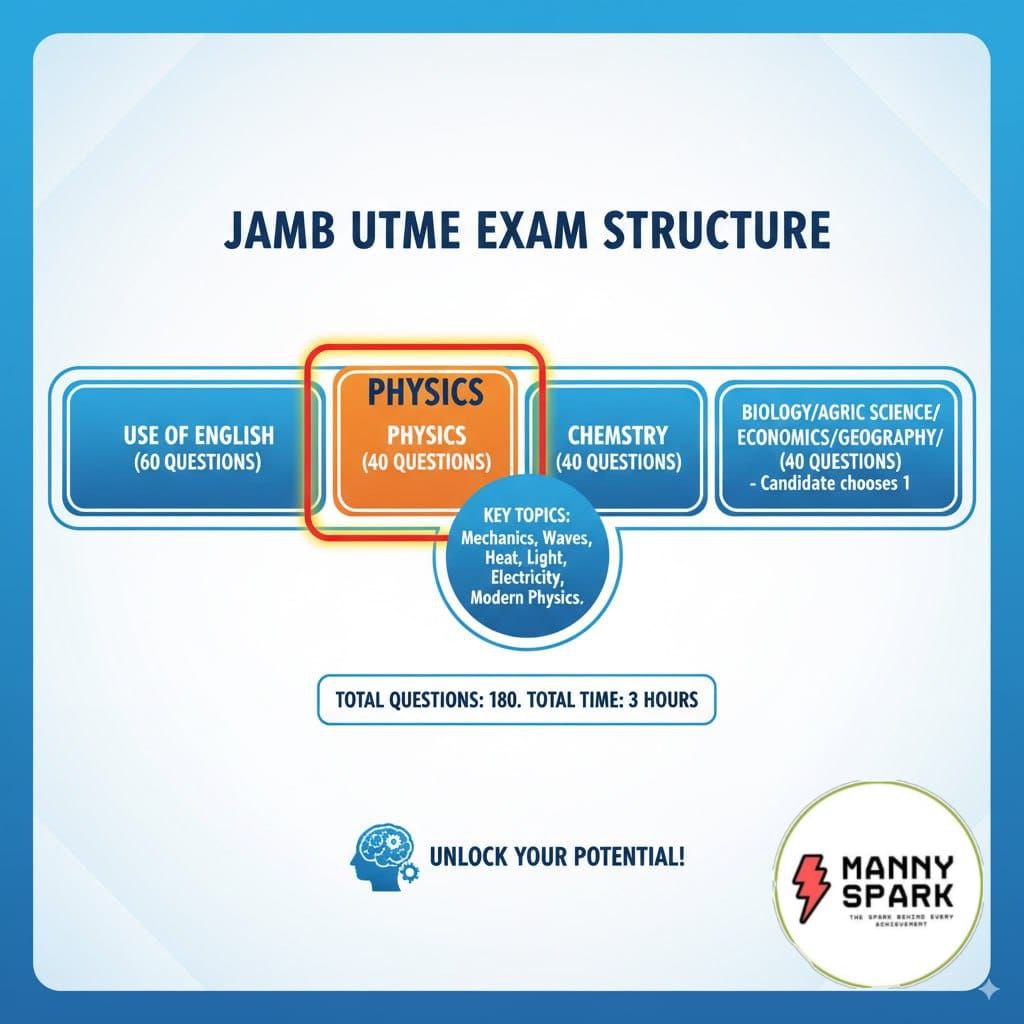
The UTME structure remains consistent: candidates sit for four subjects, with Use of English compulsory, and three others relevant to their chosen course. The exam duration is two hours, with 180 questions totaling 400 marks. Post-UTME screenings by institutions further refine selections. For 2025, key updates include a minimum admission age of 16 years, emphasizing maturity for higher education. Cut-off marks have been set at 150 for universities, 140 for colleges of nursing, and 100 for polytechnics and similar institutions. A new “Profiled Email” service helps candidates recover lost SIMs for registration, streamlining the process.
Registration for 2025 typically begins in January, requiring a National Identification Number (NIN), O’Level results, and payment via approved channels. Candidates must create a profile on the JAMB portal, select institutions, and choose courses carefully. Errors here can lead to disqualification. As Dr. Manny from Manny Spark, I advise starting preparations early—review past questions and mock exams available on the site.
[Image Placeholder: Timeline infographic of JAMB’s history from 1978 to 2025]
This foundational knowledge sets the stage for why course choice is pivotal. In Nigeria, where tertiary enrollment exceeds 2 million annually, the right selection can mean the difference between thriving and struggling in the job market.
The Importance of Strategic Course Selection in Nigeria’s Economy
Nigeria’s economy, Africa’s largest, is diversifying beyond oil, with sectors like ICT contributing 18% to GDP and agriculture employing 35% of the workforce. Youth unemployment stands at 42%, making strategic education choices essential. Choosing a course aligned with market demands—such as renewable energy or digital marketing—boosts employability.
Economic Shifts Influencing Course Choices: The AfCFTA opens doors for export-oriented fields like agribusiness. Tech hubs in Lagos and Abuja demand skills in AI and cybersecurity. Healthcare gaps, with a doctor-patient ratio of 1:5,000, underscore the need for medical professionals. Conversely, oversaturated areas like some humanities may lead to underemployment.
Long-Term Benefits: A well-chosen course fosters job satisfaction, higher earnings, and entrepreneurial opportunities. For instance, engineering graduates often start businesses in infrastructure. As Dr. Manny from Manny Spark, I’ve seen students pivot from mismatched courses to thriving careers through informed switches. Explore our internal resource on Nigeria’s Job Market Trends for more.
Self-Assessment: Uncovering Your Strengths, Interests, and Potential
Self-assessment is the bedrock of career success. Without it, you risk pursuing a path that drains rather than energizes you. Begin by evaluating your academic performance: Review O’Level results to identify strong subjects. If you scored A1 in Mathematics and Physics, STEM fields beckon.
Step-by-Step Self-Assessment Guide:
- Interest Inventory: List activities you enjoy—coding, debating, or helping others? Tools like the Holland Code (RIASEC) categorize personalities: Realistic (hands-on), Investigative (analytical), Artistic (creative), Social (helping), Enterprising (leading), Conventional (organized).
- Strengths Analysis: Use SWOT (Strengths, Weaknesses, Opportunities, Threats). Strengths: Quick learner? Weaknesses: Poor in memorization?
- Aptitude Tests: Free online tests from Manny Spark or local Nigerian platforms.
- Values and Goals: What matters—financial stability, societal impact? Envision your life in 10 years.
- Seek Feedback: Consult teachers, parents, or professionals. Shadowing a day in a field provides real insights.
A student passionate about technology but weak in math might opt for Information Technology over Pure Engineering. In Nigeria, where cultural pressures often push towards “prestigious” courses, resist—authenticity leads to excellence.

Incorporate psychometric tests used in Nigerian schools for deeper insights. Remember, interests can evolve; reassess annually.
Popular and Competitive Courses in Nigeria for 2025
Based on 2025 UTME data, competition is intense, with Medicine attracting over 100,000 applicants. Here’s an expanded list of top 20 courses, ranked by demand and cut-offs.
| Rank | Course | Why Popular? | Expected Cut-Off | Competitiveness Level |
|---|---|---|---|---|
| 1 | Medicine and Surgery | Addresses healthcare shortages; prestigious and lucrative. | 280+ | Very High |
| 2 | Law | Versatile for corporate, politics; high societal status. | 250+ | High |
| 3 | Pharmacy | Growing pharmaceutical industry; export opportunities. | 240+ | High |
| 4 | Nursing Science | Global migration; nursing shortage in Nigeria. | 200-240 | High |
| 5 | Computer Science | Tech boom; AI, software jobs. | 220-250 | High |
| 6 | Accounting | Essential in finance, banking; entrepreneurial. | 180-220 | Medium |
| 7 | Petroleum Engineering | Oil sector; high salaries despite diversification. | 220-260 | High |
| 8 | Electrical Engineering | Infrastructure, renewables focus. | 210-250 | Medium |
| 9 | Economics | Policy-making, banking; analytical skills. | 200-230 | Medium |
| 10 | Mass Communication | Digital media, PR; creative outlets. | 190-230 | Medium |
| 11 | Civil Engineering | Construction boom in urban areas. | 210-240 | Medium |
| 12 | Microbiology | Biotech, health research. | 180-220 | Low-Medium |
| 13 | Political Science | Governance, NGOs; public service. | 170-210 | Low |
| 14 | Agricultural Science | Food security; government incentives. | 160-200 | Low |
| 15 | Business Administration | Management, startups. | 180-220 | Medium |
| 16 | Biochemistry | Pharma, research labs. | 190-230 | Medium |
| 17 | Mechanical Engineering | Manufacturing, auto industry. | 210-250 | Medium |
| 18 | Sociology | Social work, HR; community development. | 160-200 | Low |
| 19 | Architecture | Real estate growth. | 220-250 | High |
| 20 | Data Science | Emerging; analytics in business. | 200-240 | Growing |
For lower scores, consider courses like Fisheries or Home Science. Each course’s popularity ties to Nigeria’s needs—e.g., Nursing for international opportunities. As Dr. Manny, I recommend balancing passion with practicality.

Medicine involves rigorous training but offers fulfillment in saving lives. Law hones critical thinking for advocacy.
Essential JAMB Subject Combinations: A Detailed Breakdown
Subject combinations are non-negotiable—mismatches lead to automatic disqualification. Always consult the JAMB brochure.
| Course | UTME Subjects | O’Level Requirements | Why This Combination? |
|---|---|---|---|
| Medicine and Surgery | English, Biology, Chemistry, Physics | Credits in English, Math, Biology, Chemistry, Physics | Focuses on sciences for medical foundation. |
| Law | English, Literature-in-English, Government, CRK/IRS/Economics | Credits in English, Literature, Government, two Arts/Social | Builds argumentative and literary skills. |
| Pharmacy | English, Biology, Physics, Chemistry | Credits in English, Math, Biology, Physics, Chemistry | Emphasizes chemistry for drug knowledge. |
| Nursing Science | English, Biology, Chemistry, Physics | Same as Medicine | Prepares for patient care sciences. |
| Computer Science | English, Math, Physics, Chemistry/Biology/Economics | Credits in English, Math, Physics, two sciences | Math and Physics for programming logic. |
| Accounting | English, Math, Economics, Accounting/Government | Credits in English, Math, Economics, two others | Economics for financial understanding. |
| Petroleum Engineering | English, Math, Physics, Chemistry | Credits in English, Math, Physics, Chemistry, one other | Physics/Chemistry for resource extraction. |
| Electrical Engineering | English, Math, Physics, Chemistry | Same as Petroleum | Circuits and energy principles. |
| Economics | English, Math, Economics, Government/Geography | Credits in English, Math, Economics, two Social | Quantitative analysis of markets. |
| Mass Communication | English, Literature, Government, Economics/CRK | Credits in English, Literature, three Arts/Social | Communication and societal issues. |
For each, explain: In Law, Literature aids case analysis. Avoid swaps like Biology for Literature in non-science courses. Special cases: Direct Entry requires A’Levels aligning with UTME.
Researching Career Prospects: Salaries, Job Roles, and Future Trends
Career research prevents post-graduation regrets. Use data from Nigerian Bureau of Statistics or LinkedIn.
Medicine and Surgery: Roles: Doctor, Surgeon. Average salary: ₦500,000-₦2,000,000 monthly for specialists. Prospects: Private practice, NGOs; global shortages aid migration.
Law: Roles: Lawyer, Judge. Starting: ₦150,000-₦500,000; seniors ₦1M+. Trends: Corporate law in fintech.
Pharmacy: Roles: Pharmacist, Researcher. ₦300,000-₦1,000,000. Growth: Local drug manufacturing.
Nursing: Roles: Nurse, Midwife. ₦200,000-₦800,000; high abroad.
Computer Science: Roles: Developer, Analyst. ₦400,000-₦1,500,000. Future: AI integration.
Expand for all top courses. Emerging: Data Science, ₦250,000 starting. Factor in skills like certifications for boosts.
Top Universities in Nigeria: Locations, Unique Offerings, and Admission Insights
From 2025 rankings, Covenant University leads.
Covenant University: Ota, Ogun State (near Lagos). Offerings: Top STEM; entrepreneurship hubs, international collaborations. Why? Discipline, modern labs; cut-offs 200+.
Ahmadu Bello University (ABU): Zaria, Kaduna State, North. Vast campus; strong in Veterinary, Engineering. Farms, research centers; affordable, diverse.
University of Ibadan (UI): Ibadan, Oyo, Southwest. Oldest; Medicine, Law excellence. Libraries, tropical research; cut-offs 200-280.
University of Lagos (UNILAG): Akoka, Lagos. Urban; Business, Engineering. Industry ties, marine labs.
University of Nigeria (UNN): Nsukka, Enugu, Southeast. Agriculture, Arts; innovation parks.
| University | Location | Key Offerings | Notable Features | 2025 Ranking |
|---|---|---|---|---|
| Covenant | Ota, Ogun | STEM, Business | Entrepreneurship | 1 |
| ABU | Zaria, Kaduna | Veterinary, Eng | Research farms | 2 |
| UI | Ibadan, Oyo | Medicine, Law | Historical prestige | 3 |
| UNILAG | Lagos | Engineering, Mass Comm | Urban opportunities | 4 |
| UNN | Nsukka, Enugu | Agric, Sciences | Cultural diversity | 5 |
| OAU | Ile-Ife, Osun | Pharmacy, Arts | Scenic campus | 6 |
| LASU | Ojo, Lagos | Social Sciences | State support | 7 |
| UNILORIN | Ilorin, Kwara | Broad programs | Stability | 8 |
| FUOYE | Oye-Ekiti, Ekiti | Emerging tech | Affordability | 9 |
| BUK | Kano | Northern focus | Islamic studies | 10 |
Locations affect lifestyle—Lagos for networking, North for cost.

Key Factors to Consider When Choosing Your Course
- Admission Competitiveness: High cut-offs for Medicine; opt for alternatives if scores low.
- Tuition and Living Costs: Public: ₦50,000/session; Private: ₦1M+.
- Market Saturation: Avoid flooded fields.
- Personal Fit: Align with lifestyle.
- Future-Proofing: Tech-integrated courses.
- Location and Facilities: Urban vs. rural.
- Scholarships: Available in STEM.
- Post-Grad Opportunities: Masters, certifications.
Holistic View: Balance passion, pay, prospects.
Common Mistakes in JAMB Course Selection and How to Avoid Them
From experience, pitfalls abound.
- Wrong Subjects: Solution: Brochure check.
- Parental Influence: Decide independently.
- Ignoring Cut-Offs: Realistic goals.
- Rushed Registration: Double-check details.
- No Backup Plans: Choose second options.
- Mismatch with O’Levels: Ensure credits align.
- Overlooking DE: For advanced students.
- Inactive Contacts: Use active email/phone.
Examples: A student chose Medicine without Physics—disqualified.

Inspirational Quotes and Expert Advice for Career Decision-Making
“Choose a job you love, and you will never have to work a day in your life.” – Confucius.
“The only way to do great work is to love what you do.” – Steve Jobs.
“Find out what you like doing best, and get someone to pay you for doing it.” – Katharine Whitehorn.
“Without leaps of imagination or dreaming, we lose the excitement of possibilities.” – Gloria Steinem.
“Align with societal needs.” – Nigerian Educator.
As Dr. Manny: Your course is a bridge to destiny—build it wisely.
Case Studies: Real-Life Stories of Nigerian Students’ Journeys
Case 1: From Confusion to Clarity – Ade’s Story: Ade, from Lagos, initially chose Law under pressure but switched to Computer Science after self-assessment. Now a developer earning ₦600,000.
Case 2: Overcoming Mistakes – Fatima’s Turnaround: Fatima mismatched subjects for Nursing; changed via JAMB portal, now thriving in Abuja hospital.
Case 3: Emerging Field Success – Chidi’s Data Path: Chidi opted for Data Science; landed analytics role at ₦400,000 start.
These illustrate resilience.
Frequently Asked Questions About JAMB Course Selection
Q: Can I change my course after registration? A: Yes, via JAMB change portal, fees apply.
Q: What if my score is low? A: Consider polytechnics or less competitive courses.
Q: How do I get the brochure? A: Download from JAMB site.

Key Takeaways
- Assess Yourself Thoroughly: Use tools for alignment.
- Research Deeply: Prospects, unis, combos.
- Avoid Pitfalls: Check everything.
- Seek Guidance: Contact Dr. Manny at 09051720414.
- Stay Updated: Follow JAMB news.
- Balance Passion and Practicality: For sustainable success.
Related posts:




 Message Dr. MANNY on WhatsApp
QUICK TRANSFERS, Pay into this Account:
1481900827 | ACCESS BANK | EMMANUEL OLUWASEUN OTOBOR
Once your payment is successful kindly send the “PAST QUESTION” you need, your “ACCOUNT NAME” and “EMAIL ADDRESS” to 08039822082. or info@mannyspark.com
