



QUICK TRANSFERS, Pay into this Account:
1481900827 | ACCESS BANK | EMMANUEL OLUWASEUN OTOBOR
Once your payment is successful kindly send the “PAST QUESTION” you need, your “ACCOUNT NAME” and “EMAIL ADDRESS” to 08039822082. or info@mannyspark.com


AAUA JUPEB Past Questions and Answers
In the dynamic landscape of Nigerian higher education, where millions of young aspirants compete for limited university slots each year, alternative pathways like the Joint Universities Preliminary Examinations Board (JUPEB) program stand out as beacons of opportunity. Established in April 2014 by a consortium of ten Nigerian universities and approved by the Federal Government, JUPEB is an advanced-level program designed to provide qualified students with direct entry into 200-level undergraduate courses, bypassing the traditional JAMB UTME route. This nine-to-ten-month intensive course, typically running from September to July, equips participants with university-level knowledge in their chosen subjects, culminating in examinations that are recognized by over 100 affiliated institutions across Nigeria.
For Nigerian students, particularly those who faced setbacks in UTME or seek a more structured preparation, JUPEB represents empowerment. It’s not just an exam; it’s a bridge to academic excellence, fostering critical thinking and in-depth subject mastery. At Manny Spark, led by Dr. Manny, we are committed to guiding Nigerian youth through this journey. With years of experience in educational consulting, Dr. Manny has helped countless students navigate JUPEB successfully, turning aspirations into admissions.
“JUPEB isn’t merely a program; it’s a transformative experience that prepares Nigerian youths for the rigors of university life.” – Prof. Tunji Ibiyemi, former Vice-Chancellor of AAUA.
As we approach the 2026 session, understanding JUPEB’s structure is vital. Exams are held annually in June/July, with results released in August/September, allowing seamless progression. For AAUA aspirants, this means accessing faculties like Science, Arts, and Social Sciences without the uncertainty of post-UTME cut-offs.

Adekunle Ajasin University (AAUA): History, Location, and Unique Offerings
Adekunle Ajasin University (AAUA), located in the tranquil town of Akungba-Akoko, Ondo State, Southwest Nigeria, is a state-owned institution renowned for its academic rigor and serene environment. Founded in 1982 as Obafemi Awolowo University by the Ondo State Government, it was renamed in 1999 to honor Chief Michael Adekunle Ajasin, the state’s first civilian governor and a champion of education. The university relocated to its current site in Akungba-Akoko in 1999, a strategic move to provide a distraction-free learning space amid the rolling hills of the Akoko region.
Geographically, Akungba-Akoko is about 45 kilometers north of Akure, the state capital, and accessible via the well-maintained A122 federal highway. The campus spans over 1,000 hectares, featuring lush greenery, natural streams, and biodiversity that includes rare bird species and medicinal plants – ideal for environmental studies. Proximity to major cities like Owo (30 minutes drive) and Ikare-Akoko (15 minutes) ensures connectivity, while the town’s low cost of living (rent as low as N50,000 annually) makes it student-friendly.
AAUA boasts seven faculties: Arts, Education, Law, Science, Social and Management Sciences, Environmental Design and Management, and Agriculture. Beyond academics, the university offers extensive facilities, including a state-of-the-art library with over 100,000 volumes and digital resources, modern laboratories equipped for STEM research, and a health center providing free basic care. Sports enthusiasts enjoy the Olympic-standard track, football fields, and indoor arenas for basketball and table tennis.
Unique offerings include community engagement programs, such as the annual Akungba Cultural Festival celebrating Yoruba heritage with traditional dances and crafts. AAUA’s Institute of Part-Time Programs and the Centre for Entrepreneurship Studies provide skill-building workshops in agribusiness and ICT, aligning with Nigeria’s push for self-reliance. For JUPEB students, dedicated hostels with Wi-Fi and study lounges ensure a supportive environment.

In-Depth Look at the AAUA JUPEB Program
The AAUA JUPEB program, administered through the Institute of Advanced Studies (IAS), is a flagship initiative for pre-degree education. Running for one academic session (October to July), it prepares students for direct entry into 200-level courses. Classes occur at the purpose-built IAS complex on campus, featuring air-conditioned lecture theaters, e-learning facilities, and specialized labs for practical sessions in sciences.
The curriculum mirrors A-level standards, with three subjects chosen based on intended degree programs, plus compulsory General Studies. AAUA’s affiliation with JUPEB since 2015 has seen enrollment grow to over 500 students annually, with a 85% success rate in recent years. Fees are affordable: approximately N150,000–N200,000 covering tuition, accommodation, and exams – a fraction of private university costs.
What distinguishes AAUA JUPEB? Integration with university life from day one: participants access main library resources, join clubs like the Debate Society or Environmental Club, and attend guest lectures from faculty experts. The program emphasizes practical skills, such as fieldwork in Agriculture or moot courts in Law prep.
“AAUA’s JUPEB is more than preparation; it’s immersion in university culture.” – Dr. Manny, Educational Consultant at Manny Spark.
Admission Requirements and Application Process for AAUA JUPEB 2026
To join AAUA JUPEB, candidates need five O’Level credits (including English and Mathematics) in relevant subjects, obtained in not more than two sittings. No awaiting results for core subjects. Age minimum is 16 years by October 2026.
Application is online via AAUA’s portal: pay N15,000 screening fee, upload credentials, and sit for an entrance exam in English, Mathematics, and general knowledge. Shortlisted candidates attend orientation. Deadline typically mid-September.
| Requirement | Details |
|---|---|
| O’Level Credits | 5 credits incl. Eng & Math |
| Subjects Combo | Based on faculty (e.g., PCB for Sciences) |
| Entrance Exam | 100 marks, pass mark 50% |
| Fees | N150,000–N200,000 total |
This table outlines essentials for Nigerian applicants.

Why Past Questions Are Crucial for AAUA JUPEB Success
In Nigeria’s exam-centric system, past questions are indispensable. JUPEB exams feature objective, essay, and practical components, with patterns repeating 50-60% yearly. Practicing builds familiarity, reduces anxiety, and improves speed – key for timed papers (2-3 hours each).
Studies from the University of Ibadan show practice increases scores by 40%. At Manny Spark, Dr. Manny’s curated materials have helped students achieve 12+ points, securing spots in competitive courses like Law.
“Mastering past questions is like having a roadmap to the exam hall.” – JUPEB National Coordinator.
Overview of Subjects in AAUA JUPEB: Syllabus Breakdown
AAUA JUPEB covers 19 subjects. Sciences: Biology (cell biology, genetics), Chemistry (organic, inorganic), Physics (mechanics, waves), Mathematics (calculus, algebra). Arts: English (comprehension, grammar), Literature (African prose, drama), Government (constitutions, politics), History (African history). Social: Economics (micro/macro), Accounting (financial statements), Business Studies.
Syllabus depth: Biology includes practicals on microscopy; Physics, experiments on optics.
| Subject | Key Topics | Exam Format |
|---|---|---|
| Mathematics | Differentiation, Integration, Statistics | 50 MCQs, 4 Essays |
| Physics | Kinematics, Electricity, Thermodynamics | MCQs, Essays, Practicals |
| Chemistry | Bonding, Kinetics, Equilibrium | MCQs, Essays, Practicals |
| Biology | Ecology, Physiology, Genetics | MCQs, Essays, Practicals |
| English | Lexis, Structure, Comprehension | 60 MCQs, Summary |
| Government | Federalism, Democracy, International Relations | Essays, Objectives |
| Economics | Demand/Supply, National Income, Inflation | MCQs, Essays |
This table aids selection.
Extensive Sample AAUA JUPEB Past Questions and Answers
Here are expanded samples from 2020-2024 papers, adapted for AAUA. Practice these for insight.
Mathematics
- Question: What is the value of 5! (five factorial)? Answer: The value is 120, as 5!=5×4×3×2×1.
- Question: Simplify the expression 3x+7−x+2. Answer: The simplified expression is 2x+9.
- Question: If a right-angled triangle has legs of length 3 cm and 4 cm, what is the length of the hypotenuse? Answer: Using the Pythagorean theorem (a2+b2=c2), the length of the hypotenuse is 5 cm, since 32+42=9+16=25, and 25=5.
- Question: Solve for y in the equation 4y−10=14. Answer: y=6. Adding 10 to both sides gives 4y=24, and dividing by 4 gives y=6.
- Question: Convert the fraction 83 to a decimal. Answer: The decimal is 0.375.
- Question: What is the area of a circle with a radius of 5 meters? (Use π≈3.14). Answer: The area is πr2, so 3.14×52=3.14×25=78.5 square meters.
- Question: What is the next number in the sequence 1,4,9,16,25,…? Answer: The next number is 36. The sequence consists of perfect squares (12,22,32,42,52,…), so the next term is 62.
- Question: Find the mean (average) of the numbers 2,5,6,7,10. Answer: The mean is 6. The sum of the numbers is 2+5+6+7+10=30, and there are 5 numbers, so 30÷5=6.
- Question: Expand the expression (a+3)2. Answer: The expanded expression is a2+6a+9.
- Question: If a shirt is on sale for 20% off its original price of $50, what is the sale price? Answer: The sale price is $40. The discount is 20% of $50, which is 0.20×50=$10. Subtracting the discount from the original price gives $50−$10=$40.

Physics
1. What are the seven fundamental physical quantities? The seven fundamental physical quantities in the International System of Units (SI) are: length (meter, m), mass (kilogram, kg), time (second, s), electric current (ampere, A), thermodynamic temperature (kelvin, K), amount of substance (mole, mol), and luminous intensity (candela, cd).
2. State Newton’s First Law of Motion. Newton’s First Law, also known as the Law of Inertia, states that an object at rest remains at rest, and an object in motion remains in motion with the same speed and in the same direction, unless acted upon by a non-zero net external force.
3. State Newton’s Second Law of Motion. Newton’s Second Law states that the acceleration (a) of an object is directly proportional to the net force (Fnet) acting upon it and inversely proportional to its mass (m). It is mathematically expressed as:
4. State Newton’s Third Law of Motion. Newton’s Third Law, the Law of Action and Reaction, states that for every action, there is an equal and opposite reaction. When one object exerts a force on a second object, the second object simultaneously exerts a force of equal magnitude and opposite direction on the first object (FA on B=−FB on A).
5. What is the difference between speed and velocity? Speed is a scalar quantity that measures how fast an object is moving (distance traveled per unit time). Velocity is a vector quantity that measures the rate of change of an object’s position (displacement per unit time) and includes both magnitude and direction.
6. What is the Law of Conservation of Energy? The Law of Conservation of Energy states that the total energy of an isolated system remains constant; it is said to be conserved over time. Energy can neither be created nor destroyed, but it can transform from one form to another (e.g., from potential energy to kinetic energy).
7. What is the unit for electrical resistance? The SI unit for electrical resistance is the Ohm (Ω). Resistance is a measure of the opposition to the flow of electric current.
8. What is density, and what is its standard unit? Density (ρ) is a measure of mass (m) per unit volume (V). The formula is ρ=m/V. Its standard SI unit is kilogram per cubic meter (kg/m3).
9. What phenomenon explains why the sky is blue? The blue color of the sky is primarily due to the Rayleigh scattering of sunlight by the molecules of the Earth’s atmosphere. Blue light, having a shorter wavelength than red light, is scattered more effectively in all directions.
10. What is the difference between mass and weight? Mass is the amount of matter in an object and is an intrinsic property, measured in kilograms (kg). Weight is the force exerted on an object due to gravity, and it changes depending on the gravitational acceleration, measured in Newtons (N).
Chemistry
- Question: What are the three main subatomic particles found in an atom, and what is the charge of each? Answer: The three main subatomic particles are the proton (positive charge, +1), the neutron (no charge, 0), and the electron (negative charge, −1).
- Question: What is the chemical symbol for table salt (sodium chloride) and what type of bond holds it together? Answer: The chemical symbol for table salt is NaCl, and it is held together by an ionic bond.
- Question: In the periodic table, what are the horizontal rows called, and what is generally constant across them for the elements? Answer: The horizontal rows are called periods. Across a period, the number of electron shells (or energy levels) for the atoms of the elements is generally constant.
- Question: What is the name of the law that states that matter is neither created nor destroyed during a chemical reaction? Answer: This is the Law of Conservation of Mass.
- Question: Define acid and base according to the Brønsted-Lowry theory. Answer: A Brønsted-Lowry acid is a substance that can donate a proton (H+). A Brønsted-Lowry base is a substance that can accept a proton (H+).
- Question: What is the process called when a solid changes directly into a gas without passing through the liquid state? Answer: This process is called sublimation. An example is solid carbon dioxide, or “dry ice,” turning into CO2 gas.
- Question: Calculate the molar mass of water (H2O). (Atomic masses: H≈1.0 g/mol, O≈16.0 g/mol). Answer: Molar mass of H2O=(2×Molar mass of H)+(1×Molar mass of O)=(2×1.0 g/mol)+(1×16.0 g/mol)=2.0 g/mol+16.0 g/mol=18.0 g/mol.
- Question: What is a catalyst in a chemical reaction? Answer: A catalyst is a substance that speeds up the rate of a chemical reaction without being consumed in the reaction itself. It typically does this by providing an alternate reaction pathway with a lower activation energy.
- Question: Which group of elements in the periodic table is known as the Noble Gases and why are they generally unreactive? Answer: The Noble Gases are the elements in Group 18 (or Group VIIIA). They are unreactive because they have a full outer electron shell (a stable electron configuration), making them highly reluctant to gain, lose, or share electrons.
- Question: Distinguish between a physical change and a chemical change, providing one example of each. Answer: A physical change is a change in the form or appearance of a substance, but not its chemical composition (e.g., melting ice to water). A chemical change (or chemical reaction) is a change where a substance is transformed into one or more new substances with different chemical properties (e.g., burning wood to ash and smoke).
Biology
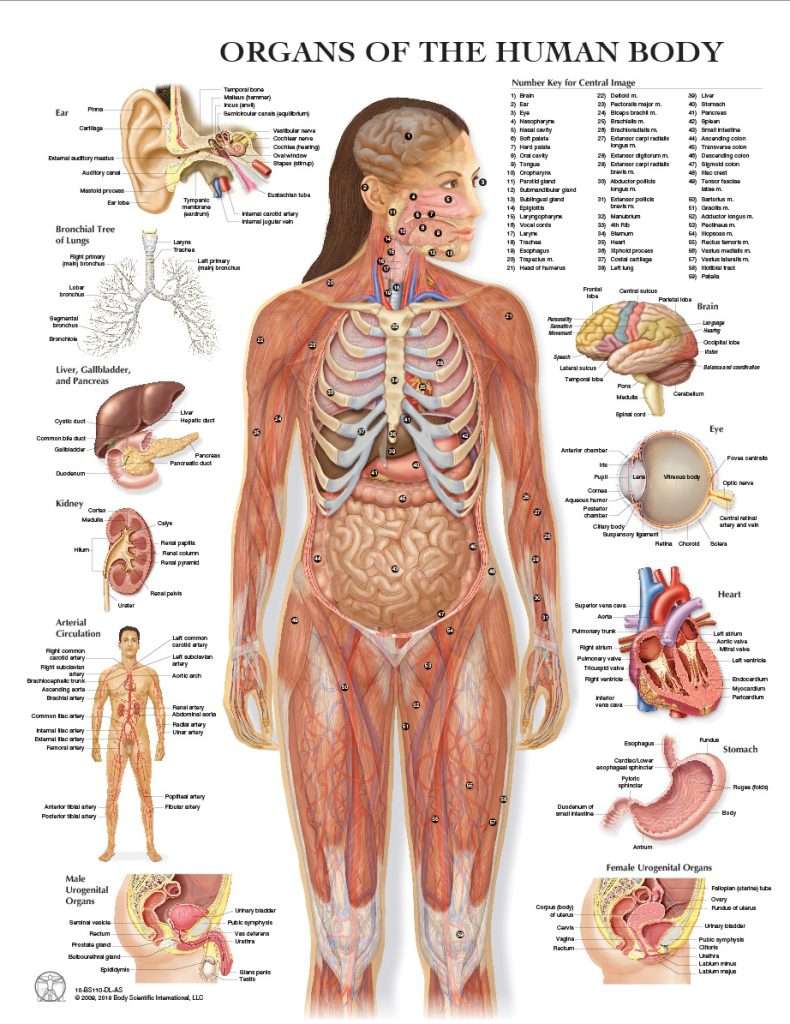
10 Sample Biology Questions and Answers
1. Cell Biology
Question: What are the three key components of the Cell Theory? Answer: The three key components of the Cell Theory are:
- All living things are composed of one or more cells.
- The cell is the basic unit of life.
- All cells arise from pre-existing cells.
2. Genetics
Question: In genetics, what term describes an organism that has two different alleles for a particular trait (e.g., Bb for eye color)? Answer: Heterozygous. This means the organism possesses two different forms (alleles) of a gene for a specific trait.
3. Photosynthesis
Question: What are the two main products of the process of photosynthesis? Answer: Glucose (a sugar, which is a form of stored chemical energy) and Oxygen gas.
4. Classification (Taxonomy)
Question: List the seven main levels of classification in order, from the broadest category to the most specific. Answer: Kingdom, Phylum, Class, Order, Family, Genus, Species.
5. Biochemistry
Question: Which major type of organic molecule acts as an enzyme and is made up of amino acid subunits? Answer: Proteins. Enzymes are biological catalysts, nearly all of which are proteins, that speed up chemical reactions in cells.
6. Organ Systems
Question: What is the primary function of the xylem tissue in plants? Answer: The primary function of the xylem is to transport water and dissolved minerals from the roots, up the stem, to the leaves and other parts of the plant.
7. Cellular Respiration
Question: Where in a eukaryotic cell does the majority of ATP (adenosine triphosphate) production occur? Answer: In the Mitochondria, specifically during the electron transport chain and chemiosmosis, which are the final stages of aerobic cellular respiration.
8. Ecology
Question: Define a decomposer and give one example of this type of organism. Answer: A decomposer is an organism, like a bacterium or fungus, that breaks down dead or decaying organisms and organic waste. They are essential for recycling nutrients back into the ecosystem.
9. Cell Structure
Question: Name two major structures found in a typical plant cell that are not found in a typical animal cell. Answer:
- Cell Wall (provides structural support and protection).
- Chloroplasts (site of photosynthesis). (A large central vacuole is also typically present in plant cells but is usually much smaller or absent in animal cells.)
10. Homeostasis
Question: What is the term for the process by which living organisms maintain a relatively stable internal environment despite changes in the external surroundings? Answer: Homeostasis.
English
Q1: What is the primary purpose of a thesis statement in an essay? A1: The primary purpose of a thesis statement is to clearly state the main argument or controlling idea of the entire essay. It acts as a roadmap for the reader, indicating what the essay will prove or discuss.
Q2: Identify the figure of speech in the sentence: “The wind howled its lonely song.” A2: The figure of speech is personification, which gives human qualities or actions (howled, song) to non-human things (the wind).
Q3: What is the difference between allusion and illusion? A3: An allusion is an indirect or passing reference to a person, event, or thing, often from history or literature (e.g., “He was a real Romeo”). An illusion is a deceptive appearance or a false idea (e.g., a mirage or a magic trick).
Q4: In grammar, what part of speech modifies a verb, an adjective, or another adverb? A4: An adverb modifies a verb (e.g., ran quickly), an adjective (e.g., very tall), or another adverb (e.g., ended too soon).
Q5: Briefly explain the concept of theme in literature. A5: Theme is the central, underlying message, idea, or deeper meaning that an author explores in a work of literature. It is generally a universal truth or observation about human nature or life (e.g., the struggle between good and evil, the complexity of love).
Q6: Correct the following sentence for subject-verb agreement: “Each of the students are required to submit their paper.” A6: “Each of the students is required to submit their paper.” The subject is the singular pronoun “Each,” so it requires the singular verb “is.” (Note: In modern usage, “their” is often accepted as a singular, gender-neutral pronoun).
Q7: Define epiphany as a literary device. A7: An epiphany is a moment of sudden realization, deep insight, or profound understanding experienced by a character, often triggered by an everyday event. It changes how the character views themselves or the world.
Q8: What type of poetic foot consists of an unstressed syllable followed by a stressed syllable (u /)? A8: This is an iamb (u /). The most common meter in English poetry is iambic pentameter, which has five iambs per line.
Q9: Distinguish between the active voice and the passive voice in a sentence. A9: In the active voice, the subject of the sentence performs the action (e.g., “The student wrote the essay”). In the passive voice, the subject receives the action, and the performer is often introduced by “by” or omitted (e.g., “The essay was written by the student“).
Q10: What is the literary term for the turning point of the action in a story, where the main conflict is faced and changes course? A10: The climax is the turning point, representing the highest point of tension or drama and the point at which the main conflict must be resolved one way or another.
Secure Your Updated AAUA JUPEB PDF Materials Today
Dr. Manny at Manny Spark offers the ultimate 2026 PDF bundle: 10,000+ questions, solutions, for N5,000.
How to Get the AAUA JUPEB Past Questions and Answers from Manny Spark

Securing the Manny Spark AAUA JUPEB Past Questions and Answers past questions and answers PDF is simple and straightforward. Follow these steps to get started:
To get your PDF copy, please reach out via:
Phone: 08039822082
Email: Info@Mannyspark.com
PRICE: N5,000
💻 Quick Purchase Link
[button color=”primary” size=”medium” link=”https://api.whatsapp.com/send/?phone=2348039822082&text=DR+MANNY+I+WANT+TO+BUY+AAUA+JUPEB+PAST+QUESTIONS” icon=”” target=”false” nofollow=”false”]CLICK HERE TO BUY AAUA JUPEB PAST QUESTIONS AND ANSWERS[/button
Economics
- Question: What is the fundamental economic problem that all societies face? Answer: The fundamental economic problem is scarcity, which means that human wants are practically unlimited, but the resources available to satisfy those wants (land, labor, capital, and entrepreneurship) are limited.
- Question: What are the two main branches of economics, and what does each primarily study? Answer: The two main branches are Microeconomics and Macroeconomics. Microeconomics studies the behavior of individual economic agents (like households and firms) and individual markets. Macroeconomics studies the economy as a whole, focusing on aggregate phenomena like national income, unemployment, and inflation.
- Question: What is opportunity cost? Answer: Opportunity cost is the value of the next best alternative that must be forgone as a result of making a particular choice. For instance, the opportunity cost of attending college is the income you could have earned if you had worked instead.
- Question: State the Law of Demand. Answer: The Law of Demand states that, ceteris paribus (all other things being equal), as the price of a good or service increases, the quantity demanded decreases, and conversely, as the price decreases, the quantity demanded increases. There is an inverse relationship between price and quantity demanded.
- Question: What is Gross Domestic Product (GDP)? Answer: GDP is the total monetary or market value of all the finished goods and services produced within a country’s borders in a specific time period (usually a year or a quarter). It is a key indicator of a country’s economic health and size.
- Question: What is inflation, and why is it generally a concern if it is too high? Answer: Inflation is the rate at which the general level of prices for goods and services is rising, and consequently, the purchasing power of currency is falling. High inflation is a concern because it erodes the real value of money and savings, creates uncertainty for businesses, and can lead to economic instability.
- Question: What is a market equilibrium? Answer: Market equilibrium is a state where the quantity of a good or service demanded by consumers equals the quantity supplied by producers. At this point, there is no surplus or shortage, and the market price is stable (the equilibrium price).
- Question: Name the four factors of production. Answer: The four factors of production are Land (natural resources), Labor (human effort), Capital (machinery, buildings, equipment), and Entrepreneurship (the human resource that combines the other factors to create a product or service).
- Question: In the context of national economies, what are the three main basic economic questions that must be answered? Answer: The three basic economic questions are: What to produce? (What goods and services should be made?), How to produce? (What resources and methods should be used?), and For whom to produce? (How should the goods and services be distributed among the population?).
- Question: What is the primary difference between Fiscal Policy and Monetary Policy? Answer: Fiscal Policy refers to the use of government spending and taxation to influence the economy (controlled by the government/treasury). Monetary Policy refers to the actions taken by a central bank to manipulate the money supply and credit conditions, usually through managing interest rates, to stimulate or restrain economic activity.

Advanced Study Techniques Using Past Questions
Build a schedule: Week 1-4 sciences, timed mocks. Use active recall, spaced repetition. Apps like Anki for formulas.
Table: Weekly Plan over 12 weeks.
Group studies, online forums.
“Strategic study turns effort into excellence.” – Dr. Manny.
Common Mistakes to Avoid in AAUA JUPEB Exams
Neglecting practicals, poor time management, ignoring essays. Tips to fix.
Avoid common AAUA JUPEB exam mistakes like running out of time by practicing under timed conditions. Another pitfall is not answering the question properly; ensure you understand what’s asked. Don’t simply memorize facts; focus on understanding concepts and practicing past questions. Finally, poor time management during preparation and panicking during the exam can severely affect your score
Benefits of JUPEB Over Other Pre-Degree Programs in Nigeria
Vs. IJMB: JUPEB more widely accepted. Vs. Pre-degree: Direct entry vs. 100-level.
The major benefit of JUPEB is securing Direct Entry (DE) admission into 200 Level in most Nigerian and some foreign universities, bypassing the 100 Level.
In contrast to many pre-degree programs, which typically grant admission into 100 Level in the same institution, the JUPEB result is widely accepted across various universities and doesn’t expire after one year

Campus Life and Support Systems at AAUA for JUPEB Students
Hostels, counseling, scholarships for indigenes.
Student Testimonials and Success Stories
“Thanks to Dr. Manny’s materials, I scored 14 points!” – student.
Key Takeaways for Mastering AAUA JUPEB
- Focus on high-yield topics.
- Practice daily.
- Seek guidance from experts like Dr. Manny.
- Balance health and study.
Share this:
- Share on Facebook (Opens in new window) Facebook
- Share on X (Opens in new window) X
- Share on LinkedIn (Opens in new window) LinkedIn
- Share on Pinterest (Opens in new window) Pinterest
- Share on Telegram (Opens in new window) Telegram
- Share on WhatsApp (Opens in new window) WhatsApp
- Share on Threads (Opens in new window) Threads
- Email a link to a friend (Opens in new window) Email
- Share on Reddit (Opens in new window) Reddit
- Share on Tumblr (Opens in new window) Tumblr
- Share on Mastodon (Opens in new window) Mastodon
Related
Related posts:




 Message Dr. MANNY on WhatsApp
QUICK TRANSFERS, Pay into this Account:
1481900827 | ACCESS BANK | EMMANUEL OLUWASEUN OTOBOR
Once your payment is successful kindly send the “PAST QUESTION” you need, your “ACCOUNT NAME” and “EMAIL ADDRESS” to 08039822082. or info@mannyspark.com

About Dr. Manny
Otobor Emmanuel is a certified Radiographer, Website Developer, and Digital Marketing Manager. Through Manny Spark, he supports students with reliable exam materials and past questions for JAMB, WAEC, NECO, JUPEB, IJMB, Pre-Degree, School of Nursing, Master’s, and PhD programs. He also provides quality tutorials for O’Level, A’Level, and pre-clinical medical classes.
View all posts by Dr. Manny