



QUICK TRANSFERS, Pay into this Account:
1481900827 | ACCESS BANK | EMMANUEL OLUWASEUN OTOBOR
Once your payment is successful kindly send the “PAST QUESTION” you need, your “ACCOUNT NAME” and “EMAIL ADDRESS” to 08039822082. or info@mannyspark.com


BSc Nursing Salary in Nigeria
Welcome to this in-depth exploration of BSc Nursing salaries in Nigeria. As a healthcare professional and the founder of Manny Spark, am passionate about educating aspiring and practicing nurses on the realities of the profession in our country. Manny Spark is dedicated to providing reliable insights into healthcare careers, helping you navigate the complexities of nursing with confidence. Whether you’re a student considering a BSc in Nursing or a registered nurse looking to understand your earning potential, this article draws from the latest data and expert perspectives to offer a clear picture.
In Nigeria, nursing remains a cornerstone of the healthcare system, with BSc-qualified nurses playing pivotal roles in patient care, administration, and public health. However, salaries can vary widely based on several factors, which we’ll dissect here. If you have questions or need personalized advice, feel free to reach out to me at Manny Spark via 08039822082 or 09051720414. Let’s dive into the details to empower your career decisions.

What is BSc Nursing in Nigeria?
The Bachelor of Science in Nursing (BSc Nursing or B.NSc) is a four- to five-year undergraduate degree program that equips students with advanced knowledge in nursing science, clinical skills, and healthcare management. Unlike diploma programs, a BSc in Nursing emphasizes evidence-based practice, research, and leadership, preparing graduates for higher responsibilities in hospitals, clinics, and community health settings.
In Nigeria, the program is regulated by the Nursing and Midwifery Council of Nigeria (NMCN), ensuring standards align with global best practices. Graduates must pass the council’s licensing exam to become Registered Nurses (RNs). This degree not only opens doors to better-paying roles but also serves as a foundation for postgraduate studies in specialties like midwifery or public health nursing.
Key benefits of pursuing a BSc in Nursing include enhanced critical thinking skills, exposure to modern medical technologies, and opportunities for international mobility. According to recent data from the NMCN, over 10,000 nurses graduate annually, contributing to Nigeria’s healthcare workforce.
Top Universities Offering BSc Nursing Programs in Nigeria
Nigeria boasts several accredited universities offering BSc Nursing programs, each with unique locations, facilities, and additional offerings. These institutions are spread across the country, providing access to quality education in diverse environments. Below, we highlight some top ones, including their specific locations and what they offer beyond the core curriculum.
University of Nigeria, Nsukka (UNN)
Located in Nsukka, Enugu State, in the southeastern region of Nigeria, UNN is nestled in a serene, academic-focused town known for its hilly terrain and vibrant student community. The university’s Department of Nursing Sciences offers a five-year B.NSc program that integrates classroom learning with extensive clinical rotations at affiliated hospitals like the University of Nigeria Teaching Hospital (UNTH) in Ituku-Ozalla.
Beyond academics, UNN provides extracurriculars such as research opportunities in tropical diseases, community outreach programs in rural Enugu villages, and partnerships with international organizations for exchange programs. Students benefit from modern simulation labs, libraries with digital resources, and sports facilities. The program’s emphasis on ethics and cultural competence prepares nurses for Nigeria’s diverse population.
As one UNN nursing alumnus shared, “The hands-on training at UNTH transformed my understanding of patient care, making me ready for real-world challenges.”

BSc Nursing Salary in Nigeria
University of Ibadan (UI)
Situated in Ibadan, Oyo State, in southwestern Nigeria, UI is Nigeria’s oldest university, located in a bustling metropolitan area with a rich historical backdrop, including landmarks like the Cocoa House. The Faculty of Nursing offers a rigorous B.NSc program, focusing on advanced clinical skills and research.
UI stands out with its offerings like postgraduate pathways, collaborations with the University College Hospital (UCH) for practical training, and workshops on healthcare policy. Students access state-of-the-art anatomy labs, e-learning platforms, and extracurricular clubs in health advocacy. The location in Ibadan provides exposure to urban health issues, such as managing infectious diseases in densely populated areas.
UI’s program has produced over 5,000 nurses since inception, many holding leadership positions in Nigerian hospitals.
American University of Nigeria (AUN), Yola
AUN is based in Yola, Adamawa State, in northeastern Nigeria, a region characterized by its savanna landscape and proximity to the Mandara Mountains. This private university offers a B.NSc program modeled after American standards, emphasizing liberal arts alongside nursing.
What sets AUN apart are its offerings like entrepreneurship courses for nurses interested in healthcare startups, community service projects addressing local issues like maternal health in IDP camps, and access to a modern health center on campus. The program includes international faculty, simulation-based learning, and opportunities for study abroad. Yola’s location fosters resilience training in underserved areas.
A Nigerian nurse quoted in a recent interview said, “Studying at AUN opened my eyes to global nursing practices, far beyond what I expected in Nigeria.”
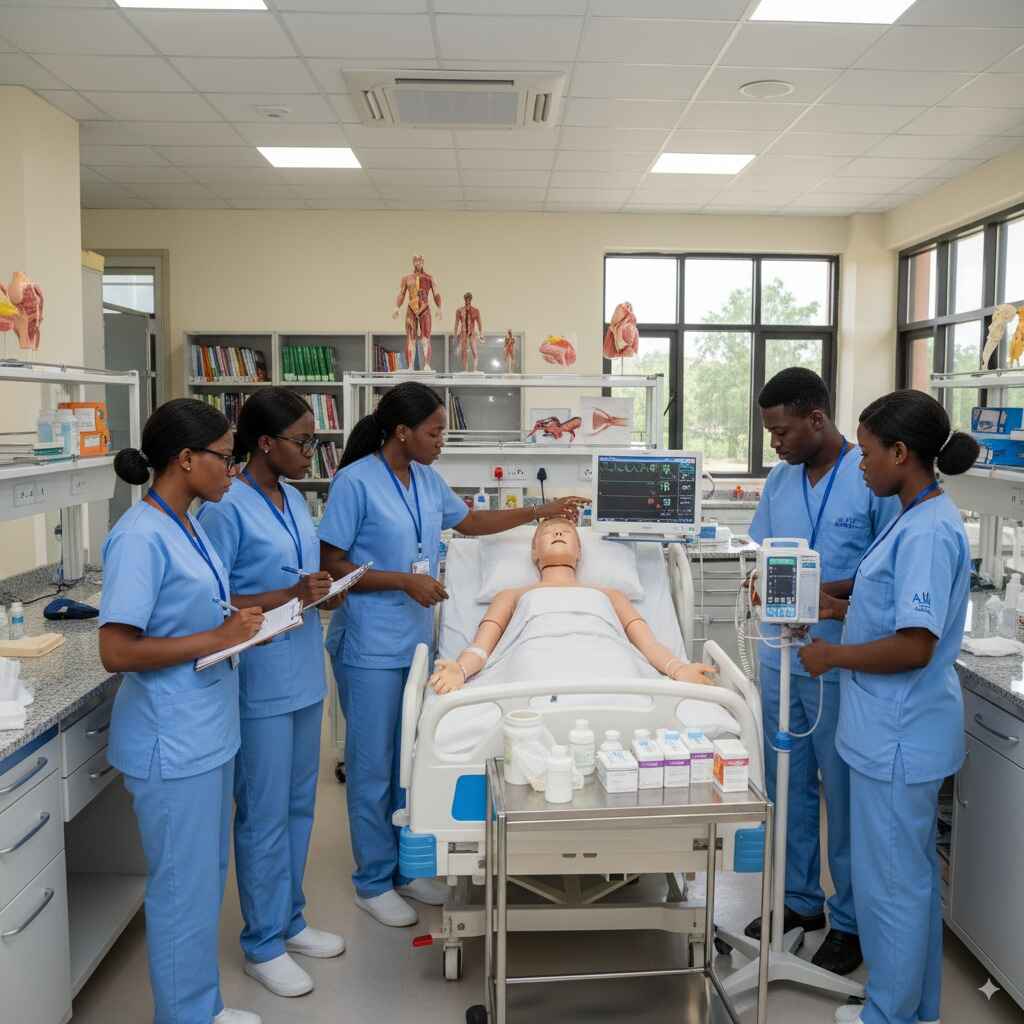
Other Notable Institutions
- Miva Open University: Online-based but with practical sites across Nigeria, offering flexible learning for working students. It includes modules on digital health tools.
- Trinity University, Yaba, Lagos: In the heart of Lagos, southwestern Nigeria, focusing on urban healthcare with ties to local clinics for internships.
- Skyline University Nigeria, Kano: Located in Kano, northern Nigeria, emphasizing Islamic-compatible healthcare and community programs in arid regions.
These universities not only provide academic excellence but also holistic development, including leadership training and ethical education.
The Path to Becoming a BSc Nurse in Nigeria
Becoming a BSc nurse involves several steps, starting with secondary education. Prospective students need credits in English, Mathematics, Biology, Chemistry, and Physics in WAEC/NECO exams. Admission is through JAMB UTME, with cut-off scores varying by university (typically 200+).
The program spans 4-5 years, including theoretical courses in anatomy, physiology, and nursing ethics, plus clinical placements. Post-graduation, interns complete a one-year mandatory service, often in government hospitals, earning stipends around ₦50,000-₦100,000 monthly.
Licensure via NMCN exams is crucial, as it certifies you as an RN. Challenges include competitive admissions and resource shortages, but the reward is a fulfilling career.
Salary Structure for BSc Nurses in Nigeria
BSc Nursing salaries in Nigeria reflect economic conditions, with government roles offering more stability and private ones varying by facility. Data from sources like PayScale and Glassdoor indicate averages around ₦2 million annually, but let’s break it down.
Government Sector Salaries
Government nurses operate under the Consolidated Health Salary Structure (CONHESS). BSc graduates typically start at CONHESS Level 7-9.
- Entry-level (0-2 years): ₦80,000 – ₦120,000 per month (annual: ₦960,000 – ₦1,440,000).
- Mid-level (3-5 years): ₦130,000 – ₦170,000 per month (annual: ₦1,560,000 – ₦2,040,000).
- Senior-level (6+ years): ₦180,000 – ₦250,000 per month (annual: ₦2,160,000 – ₦3,000,000).
- Specialists: ₦250,000 – ₦400,000+ per month.
These figures include basic pay but exclude allowances.
Private Sector Salaries
Private hospitals, often in urban areas, pay based on negotiation and facility prestige.
- Entry-level: ₦50,000 – ₦90,000 per month (annual: ₦600,000 – ₦1,080,000).
- Mid-level: ₦100,000 – ₦150,000 per month (annual: ₦1,200,000 – ₦1,800,000).
- Senior-level: ₦150,000 – ₦200,000 per month (annual: ₦1,800,000 – ₦2,400,000).
- Specialists: ₦200,000 – ₦300,000+ per month.
A nurse in a Lagos private clinic shared, “My salary started at ₦60,000, but with bonuses, it feels rewarding despite the demands.”
Comparison of Government vs. Private Salaries
Here’s a table for clarity:
| Experience Level | Government Monthly Salary (₦) | Private Monthly Salary (₦) | Key Differences |
|---|---|---|---|
| Entry-Level | 80,000 – 120,000 | 50,000 – 90,000 | Government offers better entry pay and security. |
| Mid-Level | 130,000 – 170,000 | 100,000 – 150,000 | Private may include performance incentives. |
| Senior-Level | 180,000 – 250,000 | 150,000 – 200,000 | Government has structured promotions. |
| Specialist | 250,000 – 400,000+ | 200,000 – 300,000+ | Specialists earn more in elite private facilities. |
Data sourced from recent surveys. This comparison highlights why many prefer government jobs for long-term stability.
Factors Influencing BSc Nursing Salaries in Nigeria
Several elements determine your earnings as a BSc nurse. Experience is paramount; entry-level pay rises with years on the job. Educational qualifications, like a BSc vs. diploma, boost starting salaries by 20-30%.
Location plays a role—urban areas pay more due to cost of living. Specialization, such as in oncology, can add ₦50,000+ monthly. Employer type (government vs. private) affects base pay and benefits.
Economic factors like inflation and strikes impact adjustments; nurses have struck for better pay amid rising costs. Poor conditions also drive migration, reducing local supply and potentially increasing salaries for those who stay.
A factor often overlooked is negotiation skills—private roles allow bargaining. For more on negotiation, read our internal post Salary Negotiation Tips for Nigerian Nurses..
Regional Variations in Nursing Salaries Across Nigeria
Salaries differ by region due to economic disparities. In Lagos (Southwest), a bustling commercial hub with ports and skyscrapers, entry-level BSc nurses earn ₦100,000-₦150,000 in private hospitals, thanks to high demand in facilities like Lagos University Teaching Hospital.
Abuja (North Central), the capital with modern infrastructure, offers government roles at ₦120,000+ entry, with allowances for federal workers. Rural areas here pay less but include hardship bonuses.
In Port Harcourt (South-South), oil-rich with riverside views, salaries reach ₦130,000 for mid-level due to industrial health needs.
Northern regions like Kano see lower averages (₦70,000-₦110,000 entry), but institutions like Skyline University offer training perks.
Southeastern areas, e.g., Enugu, align with national averages but emphasize community health.
One nurse from Abuja noted, “The federal allowances make up for the high living costs here.”
Specializations in Nursing and Their Impact on Earnings
Specializing post-BSc can significantly boost salaries. Midwifery: Focuses on maternal care, earning ₦200,000-₦350,000 in government settings.
Critical Care Nursing: In ICUs, pays ₦250,000+ due to high stress.
Pediatric Nursing: Dealing with children, averages ₦180,000-₦300,000.
Oncology Nursing: Cancer care specialists earn up to ₦400,000 in specialized centers.
To specialize, pursue postgraduate diplomas from NMCN-approved schools. Specializations not only increase pay but also job satisfaction through focused expertise.
Table of Specializations:
| Specialization | Average Monthly Salary (₦) | Key Skills Offered |
|---|---|---|
| Midwifery | 200,000 – 350,000 | Prenatal care, delivery assistance |
| Critical Care | 250,000 – 400,000 | Ventilator management, emergency response |
| Pediatrics | 180,000 – 300,000 | Child health assessment, vaccination programs |
| Oncology | 220,000 – 400,000 | Chemotherapy administration, patient counseling |
These fields address Nigeria’s health priorities, like high maternal mortality.
For specialization options, explore NMCN’s Specialization Programs.
Allowances and Benefits for BSc Nurses
Beyond base salary, allowances enhance earnings. In government, hazard allowance (₦15,000-₦30,000) covers risks. Call duty adds ₦10,000-₦40,000 for on-call shifts.
Private sectors offer bonuses like performance incentives (up to ₦50,000 quarterly). Both provide maternity leave, pension (government), and uniform allowances (₦5,000-₦15,000).
Rural posting allowance (₦20,000-₦50,000) incentivizes remote work. A Gombe nurse said, “Allowances are what keep us going; without them, the base pay feels insufficient.”
Benefits include training opportunities, health insurance in some facilities, and paid leave.
Career Progression and Advancement Opportunities
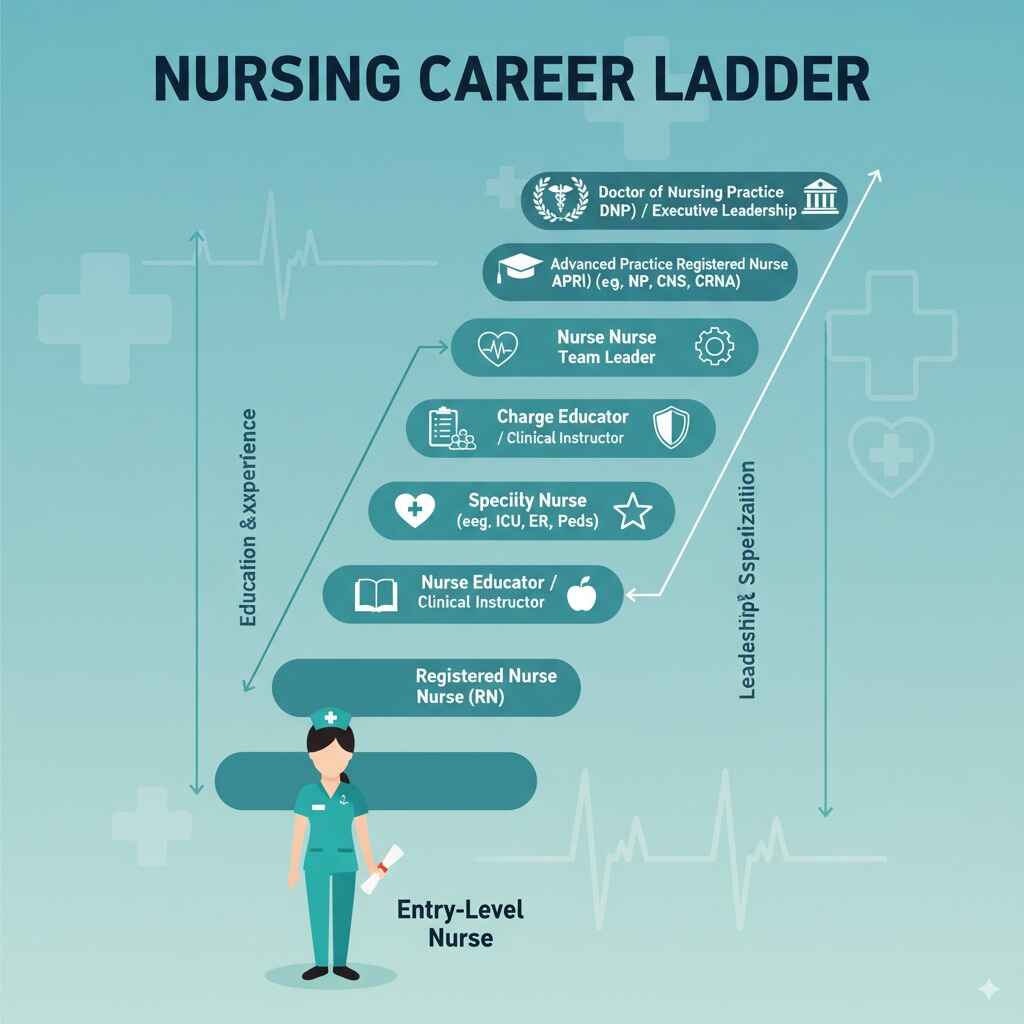
Career growth for BSc nurses involves promotions every 3-5 years in government, moving from staff nurse to chief nursing officer. Private paths include managerial roles.
Advancement requires continuous education, like MSc in Nursing. Opportunities include teaching at universities or consulting for NGOs.
Networking through unions like NANNM is key. Many progress to international roles, but staying in Nigeria offers leadership in reforms.
BSc Nursing Salary in Nigeria
Challenges Facing BSc Nurses in Nigeria
Nigerian nurses face low wages relative to workload, with some earning ₦40,000-₦50,000 in private settings. Harsh conditions, including shortages and burnout, lead to strikes.
Migration (“japa”) drains talent; over 42,000 left recently. Poor infrastructure and lack of equipment compound issues.
A nurse lamented, “We sacrifice much for less pay, preferring overseas jobs.” Unions demand better CONHESS adjustments.
Opportunities for BSc Nurses in Nigeria
Despite challenges, opportunities abound. Growing private healthcare, like in Lagos, creates jobs. Public health initiatives, e.g., vaccination drives, need skilled nurses.
Entrepreneurship via clinics or Manny Spark-like consultancies is rising. International aid programs offer roles in NGOs.
Digital health is emerging, with tele-nursing paying premiums. Government reforms may increase salaries post-strikes
Key Takeaways for Aspiring and Current BSc Nurses
Here are essential points to remember:
- Pursue a BSc for better starting salaries: Averages ₦80,000+ in government vs. lower for diplomas.
- Specialize to boost earnings: Fields like critical care can double your pay.
- Consider location: Urban areas like Lagos offer higher pay but higher costs.
- Factor in allowances: They can add 20-50% to your income.
- Stay informed on unions: Advocate for better conditions through NANNM.
- Network and upskill: Continuous learning leads to promotions.
- Contact experts: Reach Dr. Manny at Manny Spark (08039822082 or 09051720414) for guidance.
 Message Dr. MANNY on WhatsApp
QUICK TRANSFERS, Pay into this Account:
1481900827 | ACCESS BANK | EMMANUEL OLUWASEUN OTOBOR
Once your payment is successful kindly send the “PAST QUESTION” you need, your “ACCOUNT NAME” and “EMAIL ADDRESS” to 08039822082. or info@mannyspark.com
