
QUICK TRANSFERS, Pay into this Account:
1481900827 | ACCESS BANK | EMMANUEL OLUWASEUN OTOBOR
Once your payment is successful kindly send the “PAST QUESTION” you need, your “ACCOUNT NAME” and “EMAIL ADDRESS” to 08039822082. or info@mannyspark.com


IPS UNIPORT Interview Past Questions and Answers
In the dynamic landscape of Nigeria’s energy sector, where petroleum remains the backbone of the economy, securing admission into the Institute of Petroleum Studies (IPS) at the University of Port Harcourt (UNIPORT) represents a pivotal step for ambitious professionals. As Dr. Manny from Manny Spark, I have dedicated years to guiding Nigerian students through the rigors of higher education in STEM fields, particularly in petroleum-related disciplines. This comprehensive article delves into the intricacies of IPS UNIPORT interview past questions and answers, offering an educational roadmap to help you navigate the 2025 admissions process.
Nigeria’s oil and gas industry, accounting for approximately 65% of government revenue and over 90% of export earnings as of 2025, demands skilled experts who can innovate amid global shifts toward sustainable energy. IPS, renowned for its industry-aligned curriculum, has been instrumental in producing such talent since its inception. But entry is competitive: With thousands of applicants vying for limited spots, the interview phase is where many falter or flourish.
Why focus on past questions? Because they reveal patterns in examiners’ thinking, from verbal aptitude to technical prowess. In this guide, we’ll explore the institute’s background, location perks, program details, and a plethora of sample questions across key subjects. Drawing from my experience at Manny Spark, where we’ve helped over 500 students gain admissions, I’ll infuse practical insights, quotes from alumni, and bold strategies to elevate your preparation.
Whether you’re a recent graduate from Lagos or an engineer from Abuja eyeing specialization, this article—is your ally. Let’s empower you to spark success in Nigeria’s petroleum arena.
The Legacy and Evolution of the Institute of Petroleum Studies (IPS) at UNIPORT
The Institute of Petroleum Studies, now formally known as the Institute of Petroleum and Energy Studies (IPES), was founded in 2002 through a groundbreaking partnership between the University of Port Harcourt and international oil majors like Shell Petroleum Development Company (SPDC) and TotalEnergies. This collaboration aimed to address the skills gap in Nigeria’s hydrocarbon industry, which has been central to the nation’s development since the first commercial oil discovery in Oloibiri, Bayelsa State, in 1956.
Over the decades, IPS has evolved from a diploma-focused entity to a multifaceted institute offering advanced degrees and research opportunities. In 2010, it expanded its scope to include energy studies, reflecting Nigeria’s growing interest in renewables amid climate change pressures. By 2025, IPS boasts accreditation from the National Universities Commission (NUC) and affiliations with global bodies like the Society of Petroleum Engineers (SPE), ensuring its graduates meet international standards.
As Professor Chijioke Nwaozuzu, a former IPS director, stated in a 2022 interview with The Guardian Nigeria, “IPS is not just an academic institution; it’s a launchpad for Nigeria’s energy independence, training minds that innovate beyond extraction to sustainability.” This quote underscores the institute’s commitment to holistic education, blending theory with practical fieldwork.
From my vantage at Manny Spark, I’ve seen how IPS’s legacy inspires students. It’s produced notable alumni like Engr. Timipre Sylva, who rose to ministerial positions, and countless engineers now leading projects in the Niger Delta. The institute’s research output, including over 200 publications on enhanced oil recovery and gas flaring mitigation, positions it as a thought leader in Africa’s energy discourse.
Strategic Location in Port Harcourt: Nigeria’s Oil Capital
Port Harcourt, fondly called “Garden City” or “PH City,” is the pulsating heart of Nigeria’s oil industry, making it the ideal home for IPS. Situated in Rivers State within the Niger Delta region, the city spans coordinates 4.8156° N latitude and 7.0498° E longitude, bordered by the Atlantic Ocean to the south and lush mangrove swamps that host diverse biodiversity.
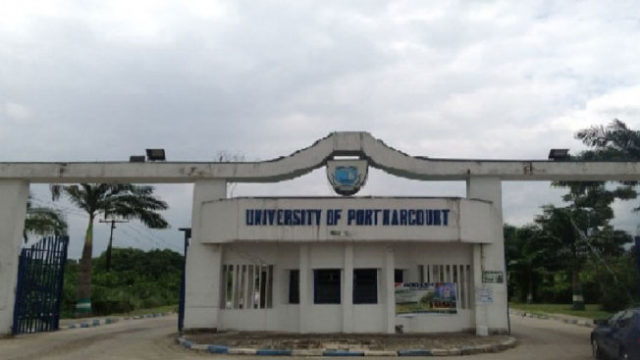
The IPS facility is precisely located on the UNIPORT Choba Campus along the East-West Road, approximately 20 kilometers northwest of Port Harcourt’s city center. Accessibility is seamless: From the Port Harcourt International Airport (OMH), it’s a 30-minute drive via the Aba Road, or you can hop on a local bus for N500-N1,000. For those traveling from other Nigerian states, the Eleme Junction serves as a major transit hub, connecting to Lagos via the East-West Highway.
What makes this location strategic? Proximity to operational oil fields. Students often embark on field trips to sites like the Bonny LNG Terminal (just 45 minutes by ferry) or the Eleme Petrochemical Complex, where they witness real-time processes like crude distillation and pipeline maintenance. Port Harcourt’s infrastructure includes world-class hospitals like the University of Port Harcourt Teaching Hospital (UPTH), ensuring health support during rigorous studies.
Beyond academics, the city offers cultural richness: Attend the Port Harcourt Carnival in December, savor local delicacies like bole and fish at waterside eateries, or explore eco-tourism in the Finima Nature Park on Bonny Island. IPS itself features modern amenities:
- Advanced laboratories with seismic interpretation software and core flooding apparatus for porosity/permeability tests.
- Lecture theaters equipped with interactive whiteboards and VR simulators for drilling scenarios.
- Accommodation options including on-campus hostels with Wi-Fi, gyms, and communal kitchens serving Nigerian favorites like egusi soup and pounded yam.
- Research centers focused on biofuels and carbon sequestration, aligning with Nigeria’s net-zero goals by 2060.
Safety protocols are stringent, with 24/7 security and mandatory orientation on Niger Delta-specific risks like environmental hazards. As a local resident and IPS student quoted in a 2024 Vanguard article, “Living in Port Harcourt immerses you in the industry; every conversation sparks ideas for innovation.”
Diverse Programs and Unique Opportunities at IPS
IPS UNIPORT tailors its offerings to Nigeria’s energy needs, providing a spectrum of programs that cater to undergraduates, postgraduates, and professionals. The flagship Postgraduate Diploma in Petroleum Technology (PGDPT) is a 12-month intensive course requiring a Bachelor’s degree in engineering or sciences with at least a second-class upper division. It covers foundational topics like well logging and production engineering, preparing students for immediate industry roles.
For advanced learners, the MSc in Petroleum Engineering spans 18-24 months, delving into reservoir simulation, drilling optimization, and economic analysis. Similarly, the MSc in Petroleum Geosciences emphasizes stratigraphy, petrophysics, and geophysical methods, ideal for exploration specialists. Short professional courses, lasting 3-6 months, include specialized training in Health, Safety, and Environment (HSE), Liquefied Natural Gas (LNG) operations, and pipeline integrity management.
Opportunities abound: IPS partners with the Nigerian National Petroleum Company (NNPC) for internships, offering stipends up to N100,000 monthly. Scholarships such as the TotalEnergies-IPS Excellence Award provide full tuition waivers for outstanding Nigerian candidates, prioritizing those from host communities. Research grants fund projects on topics like bioremediation of oil spills, with students presenting at conferences like the Nigeria Annual International Conference and Exhibition (NAICE).
| Program | Duration | Key Modules | Career Outcomes | Tuition Estimate (2025) |
|---|---|---|---|---|
| PGDPT | 12 months | Reservoir Eng., Drilling, HSE | Junior Engineer, Field Operator | N500,000 – N700,000 |
| MSc Petroleum Eng. | 18-24 months | EOR, Well Completion, Energy Economics | Senior Reservoir Specialist, Project Manager | N800,000 – N1,200,000 |
| MSc Geosciences | 18 months | Seismic Data, Basin Modeling, GIS | Geologist, Exploration Analyst | N750,000 – N1,000,000 |
| HSE Short Course | 3 months | Risk Assessment, Emergency Response | Safety Officer, Compliance Auditor | N200,000 – N300,000 |
| LNG Technology | 6 months | Gas Processing, Cryogenics | LNG Plant Engineer, Technician | N300,000 – N400,000 |
These programs boast a 98% graduate employability rate, with alumni securing positions at Chevron, ExxonMobil, and indigenous firms like Seplat. As Dr. Manny from Manny Spark emphasizes, “IPS isn’t just education; it’s a network that propels Nigerian talent globally.”
Demystifying the IPS Interview Process: Step-by-Step Breakdown
The IPS admission process is multifaceted, beginning with an online application via the UNIPORT portal, followed by a written aptitude test, and culminating in the oral interview. The interview, typically held in March-April for the September intake, occurs in the IPS Conference Room on Choba Campus, lasting 15-30 minutes per candidate.
A panel of 4-6 experts—comprising faculty, industry representatives from SPDC, and admissions staff—assesses candidates. Questions span personal motivation, academic background, and technical acumen. Expect scenarios like “Describe a challenge in Nigeria’s oil sector and your solution,” testing critical thinking.
Preparation essentials: Submit a detailed CV highlighting relevant experience, such as internships at oil firms. Dress code is formal—corporate attire reflecting professionalism. Arrive early to acclimate; Port Harcourt’s humidity can be taxing.
Common formats include:
- Behavioral questions: “Tell us about a time you worked in a team.”
- Technical probes: “Explain Boyle’s Law in gas reservoirs.”
- Motivational inquiries: “Why IPS for your career in Nigeria?”
Pitfalls to avoid: Overconfidence or ignoring cultural nuances, like community engagement under the Petroleum Industry Act (PIA) 2021. As an IPS panelist revealed in a 2023 webinar, “We seek passion for Nigeria’s energy future, not just rote knowledge.”

In-Depth Sample Past Questions:
Verbal Reasoning
Verbal reasoning evaluates communication prowess, essential for technical reports and stakeholder interactions. Below are 20 expanded samples from 2020-2024 IPS interviews, with explanations.
- The company’s _____ to environmental standards led to fines. (A) adherence (B) neglect (C) promotion (D) enhancement Answer: B) neglect – Neglect implies disregard, fitting penalty context.
- Despite economic challenges, Nigeria’s oil sector remains _____. (A) stagnant (B) resilient (C) obsolete (D) fragile Answer: B) resilient – Highlights endurance amid volatility.
- The engineer _____ the data meticulously. (A) analyze (B) analyzes (C) analyzed (D) analyzing Answer: C) analyzed – Past tense for completed action.
- “Knowledge is power,” but in petroleum, _____ is execution. (A) wisdom (B) application (C) theory (D) speculation Answer: B) application – Emphasizes practical use.
- The spill caused _____ damage to the ecosystem. (A) minimal (B) irreversible (C) temporary (D) negligible Answer: B) irreversible – Common in Niger Delta scenarios.
- He _____ attend the seminar if possible. (A) should (B) would (C) could (D) must Answer: A) should – Advisory tone.
- The policy was _____ by the government. (A) implement (B) implemented (C) implementing (D) implements Answer: B) implemented – Passive voice.
- Nigeria exports crude oil primarily to _____. (A) Europe (B) Asia (C) Africa (D) Americas Answer: D) Americas – Factual, with USA as top buyer.
- Her presentation was delivered with great _____. (A) confusion (B) clarity (C) ambiguity (D) hesitation Answer: B) clarity – Positive attribute.
- If invited, she _____ to the conference. (A) goes (B) will go (C) went (D) going Answer: B) will go – Future conditional.
| Question | Options | Correct Answer | Detailed Explanation |
|---|---|---|---|
| 11. The reservoir’s depletion was _____. | A) gradual B) sudden C) stable D) infinite | A) gradual | Natural process over time. |
| 12. _____ the risks, exploration continues. | A) Despite B) Because C) Although D) Since | A) Despite | Contrast indicator. |
| 13. The team _____ the project successfully. | A) complete B) completes C) completed D) completing | C) completed | Past achievement. |
| 14. Innovation is key to Nigeria’s energy _____. | A) stagnation B) transition C) decline D) monopoly | B) transition | Toward renewables. |
| 15. He spoke _____ about the PIA. | A) negatively B) positively C) indifferently D) vaguely | B) positively | Supportive stance. |
| 16. The data _____ analyzed for trends. | A) was B) were C) is D) are | A) was | Singular datum collective. |
| 17. Safety protocols must be _____ followed. | A) loosely B) strictly C) optionally D) casually | B) strictly | HSE emphasis. |
| 18. Nigeria’s OPEC quota affects _____. | A) imports B) exports C) tourism D) agriculture | B) exports | Production limits. |
| 19. The lecture was both informative and _____. | A) boring B) engaging C) repetitive D) short | B) engaging | Dual positive. |
| 20. Without investment, the sector will _____. | A) thrive B) decline C) stabilize D) expand | B) decline | Warning tone. |
These foster eloquent responses in interviews.
Numerical Ability
Numerical aptitude is vital for calculations in flow rates and reserves estimation. Here are 20 samples with step-by-step solutions.
- A rig drills at 50 meters/day. Depth in 10 days? Answer: 500 meters (50 × 10). Multiply rate by time.
- Oil price: N800/barrel. Revenue from 1,000 barrels? Answer: N800,000 (800 × 1,000).
- Convert 2,500 liters to cubic meters. Answer: 2.5 m³ (Divide by 1,000).
- 25% royalty on N400,000? Answer: N100,000 (0.25 × 400,000).
- Distance: 450 km at 90 km/h. Time? Answer: 5 hours (450 ÷ 90).
- Volume of tank: 5m radius, 10m height (cylinder: πr²h, π≈3.14). Answer: 785 m³ (3.14 × 25 × 10).
- Decrease 20% from N500/m³ gas. New price? Answer: N400/m³ (500 × 0.8).
- 2/5 of 500 barrels extracted? Answer: 200 barrels ((2/5) × 500).
- Annual depreciation: N2M asset over 10 years. Answer: N200,000/year (2,000,000 ÷ 10).
- Ratio 100:250 simplified. Answer: 2:5 (Divide by 50).
| Question | Calculation | Answer | Step-by-Step Explanation |
|---|---|---|---|
| 11. 10% interest on N1M loan/year? | 0.1 × 1,000,000 | N100,000 | Simple interest formula. |
| 12. Flow rate: 300 liters/min. In 2 hours? | 300 × 120 | 36,000 liters | Convert hours to minutes. |
| 13. Pressure drop: 500 psi to 300 psi. Difference? | 500 – 300 | 200 psi | Basic subtraction. |
| 14. Average: 80, 90, 100 bpd? | (80+90+100)/3 | 90 bpd | Mean calculation. |
| 15. Square root of 1,600 (for area calc)? | √1600 | 40 | Geometric root. |
| 16. Profit margin: Cost N200, sell N250? | (50/200) × 100 | 25% | Percentage profit. |
| 17. Convert 100°F to °C ((F-32)×5/9). | (100-32)×5/9 | ≈37.8°C | Temperature conversion. |
| 18. 3D volume: 4x5x6 m box? | 4×5×6 | 120 m³ | Cubic volume. |
| 19. Sequence sum: 1+3+5+7? | Add odds | 16 | Arithmetic series. |
| 20. Compound interest: N500K at 5% for 2 years? | 500,000 × (1.05)^2 | N551,250 | Formula application. |
Build numerical precision with daily drills.
Logical Reasoning
Logical reasoning sharpens decision-making for operational challenges. 20 samples follow.
- All reservoirs contain fluids. This rock contains fluids. Is it a reservoir? Answer: Not necessarily – Converse fallacy.
- If drilling succeeds, production starts. Production started? Answer: Drilling succeeded – Valid implication.
- Series: 3, 6, 9, 12? Next? Answer: 15 (Multiples of 3).
- Odd one out: Crude, Gas, Coal, Solar? Answer: Solar – Renewable vs. fossils.
- Analogy: Bit : Drilling :: Pump : ? Answer: Production – Tool to function.
- Code: OIL = 15-9-12. GAS? Answer: 7-1-19 (Alphabet positions).
- If A > B and B > C, then? Answer: A > C – Transitive.
- Puzzle: Brothers and sisters—I have none, but that man’s father is my father’s son. Who? Answer: My son – Classic relation.
- Pattern: 4, 9, 16, 25? Next? Answer: 36 (Squares).
- Syllogism: Some engineers are geologists. All geologists study rocks. Conclusion? Answer: Some engineers study rocks – Valid.
| Question | Options | Answer | Reasoning Breakdown |
|---|---|---|---|
| 11. If not PIA, no reform. Reform happened? | PIA enacted | Yes | Contrapositive. |
| 12. Group: Lagos, Abuja, Port Harcourt, Oloibiri? Odd? | Oloibiri | Not capital | Classification. |
| 13. Clock: 3 hours from 2:45? | 5:45 | Time addition. | |
| 14. Venn: Overlap of upstream/downstream? | Midstream | Set theory. | |
| 15. Riddle: What has keys but opens no locks? | Piano | Lateral thinking. | |
| 16. Sequence: A1, B2, C3? Next? | D4 | Alphabet-number. | |
| 17. Assumption: Oil prices rise due to demand. | Supply constant | Implicit. | |
| 18. Family: Uncle’s only sister’s son? | Cousin | Relations. | |
| 19. Logic gate: AND for safety checks? | All true | Boolean. | |
| 20. Paradox: This sentence is false. | Liar | Self-reference. |
Enhance logical acuity through puzzles.

Technical Knowledge in Petroleum Engineering
Technical questions test core expertise. 20 detailed samples.
- Define permeability. Answer: Ability of rock to transmit fluids; measured in Darcy. Critical for flow prediction.
- What is waterflooding? Answer: Injecting water to displace oil; secondary recovery method.
- Impact of PIA 2021 on fiscal terms? Answer: Introduces Hydrocarbon Tax, replacing PPT; promotes investment.
- Boyle’s Law in gases? Answer: PV = constant at fixed T; for reservoir pressure-volume.
- API gravity significance? Answer: >31 light oil; affects refining ease.
- Drilling mud functions? Answer: Lubricates, stabilizes wellbore, removes cuttings.
- Seismic waves types? Answer: P-waves (compressional), S-waves (shear).
- Fracking process? Answer: High-pressure fluid fractures rock to release hydrocarbons.
- Gas flaring environmental effects? Answer: CO2 emissions, acid rain; Nigeria aims zero by 2030.
- Reservoir drive mechanisms? Answer: Solution gas, water, gravity drainage.
| Question | Sample Answer | In-Depth Insight |
|---|---|---|
| 11. What is OOP? | Original Oil in Place; total hydrocarbons. | Estimated via volumetrics. |
| 12. Enhanced recovery techniques? | CO2 injection, polymer flooding. | Boosts beyond 30%. |
| 13. Well completion steps? | Casing, cementing, perforation. | Ensures integrity. |
| 14. Petrophysics tools? | Logs (gamma, resistivity). | Rock properties analysis. |
| 15. LNG vs. CNG? | LNG liquefied, CNG compressed. | Transport methods. |
| 16. Carbon capture role? | Traps CO2 from emissions. | Sustainability in Nigeria. |
| 17. Basin types? | Rift, passive margin. | Niger Delta example. |
| 18. HSE pyramid? | Prevention hierarchy: eliminate, substitute. | Risk management. |
| 19. Offshore vs. onshore? | Offshore costlier but higher reserves. | Nigeria’s deepwater focus. |
| 20. Biofuels potential? | From jatropha; alternative to crude. | Diversification strategy. |
Master technicals for panel impress.

Acquire Your Updated PDF Materials from Dr. Manny
Unlock the full arsenal with Manny Spark’s updated IPS UNIPORT Interview Past Questions and Answers PDF for 2025—over 1,000 questions, exhaustive answers, and bonus strategies. Only N5,000!
How to Get the IPS UNIPORT Interview Past Questions and Answers from Manny Spark

Securing the Manny Spark IPS UNIPORT Interview Past Questions and Answers past questions and answers PDF is simple and straightforward. Follow these steps to get started:
To get your PDF copy, please reach out via:
Phone: 08039822082
Email: Info@Mannyspark.com
PRICE: N8,000
💻 Quick Purchase Link
CLICK HERE TO BUY
STUDENTS PAYMENT PROOF

Advanced Preparation Strategies and Expert Tips for Nigerian Aspirants
Tailor prep to Nigerian contexts: Study PIA intricacies, local regulations like NOSDRA for spills. Allocate time: 40% technical, 30% verbal/numerical, 30% logical.
Use resources like Petroleum Engineering Handbook by SPE. Join study groups via WhatsApp or Nairaland. Mock sessions: Simulate with timers, record for self-review.
Tips from Dr. Manny: “Visualize success—envision contributing to Nigeria’s energy mix.” Handle stress with meditation; eat balanced meals like okra soup for brain fuel.
As a 2025 IPS entrant shared, “Dr. Manny’s tips turned my anxiety into assurance.”
Career Pathways and Success Stories from IPS Graduates
IPS opens doors to lucrative careers. Pathways include upstream exploration at NNPC, midstream logistics at Dangote Refinery, or downstream marketing at Oando.
Success stories: Engr. Adaobi from Lagos, IPS MSc 2020, now leads EOR projects at TotalEnergies, earning over N20M annually. Or Yusuf from Kano, PGDPT 2018, founded a consultancy aiding SMEs in HSE compliance.
Global opportunities: Many alumni work in UAE or USA, leveraging IPS’s international repute. As Engr. Sylva noted in a 2024 speech, “IPS equipped me to navigate global energy politics.”
Key Takeaways for Aspiring IPS Students
- Daily Practice: Tackle 50 questions across subjects.
- Contextual Knowledge: Integrate Nigerian policies like PIA.
- Networking: Attend SPE events in Port Harcourt.
- Holistic Prep: Balance study with rest.
- Resource Utilization: Leverage Manny Spark materials.
- Confidence Building: Practice public speaking.
Additional Resources and Study Hacks
Books: “Fundamentals of Reservoir Engineering” by Dake. Apps: Duolingo for verbal, Khan Academy for numerical.
Hacks: Flashcards for technical terms, group quizzes for logic. Online: YouTube channels like “Petroleum Engineering Explained.”
Essential Takeaways on Balancing Preparation with Well-Being
- Time Management: Use Pomodoro—25 min study, 5 min break.
- Nutrition: Omega-3 rich foods like mackerel for cognition.
- Exercise: Jog in Port Harcourt parks for endurance.
- Mental Health: Journal progress to stay motivated.
- Support System: Consult Dr. Manny at Manny Spark.
- Long-Term Vision: See IPS as step to national impact.
At Manny Spark, Dr. Manny is passionate about fueling Nigerian ambitions—reach out today!
Related posts:




 Message Dr. MANNY on WhatsApp
QUICK TRANSFERS, Pay into this Account:
1481900827 | ACCESS BANK | EMMANUEL OLUWASEUN OTOBOR
Once your payment is successful kindly send the “PAST QUESTION” you need, your “ACCOUNT NAME” and “EMAIL ADDRESS” to 08039822082. or info@mannyspark.com
