


RRBN First Professional Exam Past Questions and Answers

QUICK TRANSFERS, Pay into this Account:
1481900827 | ACCESS BANK | EMMANUEL OLUWASEUN OTOBOR
Once your payment is successful kindly send the “PAST QUESTION” you need, your “ACCOUNT NAME” and “EMAIL ADDRESS” to 08039822082. or info@mannyspark.com


RRBN First Professional Exam Past Questions and Answers
The road to becoming a professional radiographer in Nigeria is paved with intense academic rigor and clinical excellence. For every 300 Level student, the RRBN First Professional Exam represents the first major crossroad. It is the moment where theory meets practice, and where the “student” begins to emerge as a “professional.”
At Manny Spark, we understand that this period is often filled with anxiety. How do you cover the massive syllabus? Which past questions are relevant? What does the Board look for during the Viva Voce? This detailed guide, curated by Dr. Manny, is designed to be your definitive companion in crushing this exam and securing your clinical future.
The Significance of the RRBN First Professional Exam
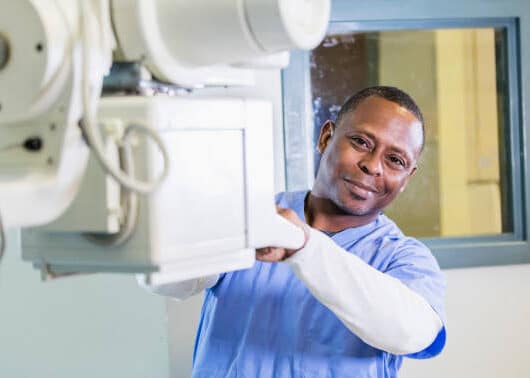
In the Nigerian university system, the 300 Level is the “bridge year.” For Radiography students, this is when you transition from basic medical sciences (like Biochemistry and General Physiology) into the specialized world of Medical Imaging.
Passing the Radiographers Registration Board of Nigeria (RRBN) First Professional Examination is not just a school requirement; it is a national licensing milestone. It validates that you possess the foundational knowledge required to enter the hospital wards and X-ray departments for your clinical postings.
“Failure to prepare is preparing to fail, especially in a profession where accuracy is measured in millimeters and radiation doses are measured in milligrays.” — Dr. Manny, Manny Spark.
Decoding the RRBN: History, Mission, and Mandate
The Radiographers Registration Board of Nigeria (RRBN) is a regulatory parastatal under the Federal Ministry of Health. It was established by Decree No. 42 of 1987, which is now recognized as Cap R1 Laws of the Federation of Nigeria 2004.
The Mission
The Board’s primary mission is to promote and enhance the image of the Radiography profession in Nigeria and the West African sub-region. They do this by:
-
Setting high standards for academic and professional education.
-
Ensuring ethical standards are maintained across all imaging centers.
-
Protecting the public from the hazards of ionizing radiation by ensuring only qualified personnel handle equipment.
Manny Spark has long aligned with these goals by providing high-quality educational resources that ensure students don’t just “pass” but actually “know” the profession.
Physical Locations: RRBN Headquarters and Zonal Offices
Students often need to visit the Board for registration, document verification, or to collect their induction letters. Knowing the specific location of the place is vital.
The Headquarters (Abuja)
-
Location: Federal Secretariat Complex, Phase 1, Annex III, Block 5B, 4th Floor, Central Business District (CBD), Abuja.
-
Key Services: Policy formulation, Registrar’s office, and national records.
Zonal Offices Across Nigeria
The RRBN maintains several zonal offices to ensure that its services reach every corner of the country.
| Zone | Specific Location / Address |
| Lagos | Murtala Muhammed Way, Central Medical Library Compound, Yaba, Lagos. |
| Enugu | Federal Secretariat Complex, Room 042-045, Independence Layout, Enugu. |
| Port Harcourt | Federal Secretariat Complex, Room 501, 5th Floor, Aba Road, PH. |
| Kano | Fed. Secretariat Complex, No. 1 Murtala Muhammed Way, off Katsina Road, Kano. |
| Sokoto | 184-186, Federal Secretariat Complex, Kaduna Road, Sokoto. |
| Awka | 47, Abakaliki Street, Awka, Anambra State. |
| Calabar | Room B13-16, Federal Secretariat Complex, Calabar, Cross River. |
| Maiduguri | Federal Secretariat Complex, Along Jos/Kano Road, Maiduguri, Borno. |
A Professional Roadmap: Services Beyond Exams

The RRBN does much more than just conduct exams. As a student under the Manny Spark mentorship program, you should be aware of the career opportunities the Board facilitates:
-
Professional Development Programs: The Board runs the Institute of Radiography, which offers Post-Graduate Diplomas (PGD) in Ultrasound, MRI, CT, and Radiation Therapy.
-
Accreditation: They visit universities like UNN, UNILAG, UNIZIK, BUK, and others to ensure the radiography labs and classrooms meet global standards.
-
Internship Coordination: After your final exam, the Board oversees your 12-month internship training, which is a prerequisite for full registration.
-
Monitoring and Inspection: They identify and close down illegal diagnostic centers that operate without licensed radiographers.
The Exam Blueprint: Detailed Syllabus Breakdown
To succeed, you must know what you are fighting. The First Professional Exam usually consists of four core papers and the dreaded Viva Voce.
Paper I: Radiographic Anatomy & Physiology
This is not just “General Anatomy.” It focuses on Radiographic Anatomy—identifying structures on an X-ray film. You must master the skeletal system, the circulatory system, and the respiratory system as they appear under radiation.
Paper II: Radiation Physics & Equipment
This covers the “How.” How are X-rays produced? How does the X-ray tube work? You will study the Inverse Square Law, the Line Focus Principle, and the physics of image formation.
Paper III: Care of Patients & Hospital Practice
This is the “Soft Skills” and “Ethics” paper. It covers infection control, basic nursing in the X-ray department, and how to handle emergencies (like contrast media reactions).
Paper IV: Radiographic Technique
This is the “Execution” paper. It describes how to position a patient for various X-ray examinations, including centering points and cassette sizes.
Radiographic Anatomy & Physiology: Deep Dive
In the RRBN exams, anatomy is often tested through “Surface Landmarks.” If you don’t know where the T7 or L4 vertebra is, you cannot center your X-ray beam accurately.
Essential Landmarks Table
| Vertebral Level | Anatomical Landmark | Importance in Technique |
| C1 | Mastoid Tip | Centering for Open Mouth Odontoid |
| C4/C5 | Thyroid Cartilage | Centering for Cervical Spine |
| T2/T3 | Suprasternal Notch | Upper border of Chest X-ray |
| T7 | Inferior Angle of Scapula | Centering for PA Chest |
| L4 | Iliac Crest | Centering for Lumbar Spine / KUB |
| S2 | ASIS | Centering for Pelvis / Hip |
Frequent Past Questions (Anatomy)
Q: Trace the path of blood from the Median Cubital Vein to the Right Kidney.
-
Answer: Median cubital vein → Basilic vein → Axillary vein → Subclavian vein → Brachiocephalic vein → Superior vena cava → Right atrium → Right ventricle → Pulmonary artery → Lungs (oxygenation) → Pulmonary veins → Left atrium → Left ventricle → Aorta → Renal arteries → Kidneys.
Q: What is the significance of the “Surgical Neck” of the Humerus?
-
Answer: It is a frequent site of fracture and is in close proximity to the axillary nerve and posterior circumflex humeral artery.
Q: Identify the parts of the Urinary System.
-
Answer: Two Kidneys, two Ureters, one Urinary Bladder, and one Urethra.
Radiation Physics & Equipment: Simplifying the Complex
Physics is the foundation of our profession. At Manny Spark, we believe that if you understand the X-ray tube, you understand half of the exam.
The X-ray Tube Components
-
Cathode: The negative electrode. Contains the filament (source of electrons).
-
Anode: The positive electrode. Usually a rotating tungsten disc where X-rays are produced.
-
Glass Envelope: Creates a vacuum to prevent electrons from colliding with air molecules.
High-Yield Physics Concepts
-
Thermionic Emission: The boiling off of electrons from the heated filament.
-
Bremsstrahlung Radiation: “Braking radiation” produced when an electron is slowed down by the nuclear field of a tungsten atom.
-
Characteristic Radiation: Produced when an incident electron knocks out an inner-shell electron of the target atom.
-
The Inverse Square Law: The intensity of radiation is inversely proportional to the square of the distance from the source.
$$I_1 / I_2 = (d_2 / d_1)^2$$
Takeaway: If you double your distance from the X-ray source, you reduce your radiation dose to one-fourth (1/4). This is a vital safety fact!
Care of Patients & Hospital Practice
The Board wants to ensure you won’t kill a patient in the X-ray room. Ethics and safety are paramount.
Emergency Management in the X-ray Department
If a patient faints (Syncope) during an IVU procedure:
-
Stop the injection immediately.
-
Place the patient in the Trendelenburg position (feet elevated above the head).
-
Maintain an open airway and check vitals.
-
Call for the crash cart and medical assistance.
Vital Signs Normal Ranges (Adults)
-
Blood Pressure: 120/80 mmHg.
-
Pulse Rate: 60–100 beats per minute.
-
Respiration Rate: 12–20 breaths per minute.
-
Temperature: 37°C.
Italicized Note: Always mention the “Consent” process. You must explain the procedure to the patient and get their permission before touching them.
Radiographic Techniques: The Positioning Masterclass
This is where students often struggle with “Centering Points.” Dr. Manny recommends visualizing the anatomy under the skin.
Common X-ray Projections and Parameters
| Examination | Projection | Centering Point | Cassette Size |
| Chest | PA | T7 (Midsagittal Plane) | 14×17 inches |
| Hand | PA | 3rd Metacarpophalangeal Joint | 8×10 inches |
| Knee | AP | 1cm distal to Apex of Patella | 10×12 inches |
| Skull | Lateral | 2cm superior and anterior to EAM | 10×12 inches |
| Abdomen (KUB) | AP Supine | Level of Iliac Crests | 14×17 inches |
Positioning Rules to Remember
-
Always use two projections: Usually, an AP/PA and a Lateral at 90 degrees to each other.
-
Remove artifacts: Bra straps, necklaces, and buttons must be removed as they can mimic pathology.
-
Diaphragmatic movement: For Chest X-rays, take the exposure on Full Inspiration to ensure 10 posterior ribs are visible.
The Viva Voce: Surviving the Oral Examination
The Viva is a 10–15 minute face-to-face interaction with external examiners from the Board.
“In the Viva, your confidence is as important as your content. The examiners are checking if you can handle the pressure of a real clinical emergency.” — Manny Spark Tips.
Common Viva Questions
-
“Show me how to center for a Lateral Cervical Spine.”
-
“What is the grid ratio, and why do we use one?”
-
“Define ALARA and explain how you apply it today.”
-
“Identify this structure on the film (pointing to the Psoas muscle shadow).”
Manny Spark Advice: If you don’t know the answer, do not “guess” blindly. Say, “I am not entirely sure of that specific detail, but I know it relates to [related topic]…” This shows honesty and professional maturity.
Sample RRBN Objective Questions & Comprehensive Answers
To give you a taste of the real exam, here are some curated questions from the Manny Spark PDF bank.
1. Which of the following is part of the Axial Skeleton?
A. Femur
B. Clavicle
C. Sternum (Correct)
D. Radius
2. What determines the energy or “penetrability” of the X-ray beam?
A. mAs
B. kVp (Correct)
C. Focal spot size
D. Grid ratio
3. In a PA Chest X-ray, the distance from the tube to the film (FFD/SID) should be:
A. 100 cm
B. 150 cm
C. 180 cm (Correct – to minimize heart magnification)
D. 200 cm
4. The functional unit of the kidney is the:
A. Neuron
B. Nephron (Correct)
C. Alveoli
D. Myocardium
5. Which of these is a non-stochastic (deterministic) effect of radiation?
A. Cancer
B. Genetic mutation
C. Skin erythema (Correct – it has a threshold dose)
D. Leukemia
The Manny Spark Strategy: Success Tips by Dr. Manny
Having mentored hundreds of students through the RRBN process, Dr. Manny has identified the common traits of top performers:
-
Early Preparation: Don’t wait for the “Exam Timetable” to be posted. Start studying the moment you enter 300L.
-
Past Question Mastery: The Board often revisits key concepts. Use the Manny Spark Past Question Compendium to identify patterns.
-
Practical Practice: Spend time in the X-ray lab. Practice positioning on your classmates until it becomes muscle memory.
-
Healthy Mindset: Eat well, sleep, and avoid the “last-minute” caffeine-fueled crashes.

Key Takeaways for Every Candidate
-
RRBN Location: Headquartered in Abuja, with zonal offices in Yaba, Enugu, Kano, and more.
-
The Big Four: Focus heavily on Anatomy, Physics, Care of Patients, and Technique.
-
Radiation Safety: The Board loves candidates who prioritize the ALARA principle.
-
Professionalism: Your dress code and speech during the Viva matter as much as your written answers.
-
Resources: Leverage the expertise of brands like Manny Spark to get the edge.
How to Access Manny Spark’s Premium Study Materials
Ready to take your preparation to the next level? Dr. Manny provides specialized coaching and a massive database of solved past questions for the RRBN First Professional Exam.
Contact Details:
-
Phone/WhatsApp: 08039822082 or 08056553153
-
Brand Name: Manny Spark
-
Official Mentor: Dr. Manny
Whether you are in UNN, UNIZIK, UNILAG, or BUK, we have materials tailored to the specific nuances of your training. Reach out today for the Manny Spark RRBN Success PDF and start your journey to a 100% pass rate.
[button color=”primary” size=”medium” link=”https://api.whatsapp.com/send/?phone=2348039822082&text=DR+MANNY+I+WANT+TO+BUY+RRBN+FIRST+PROFESSIONAL+EXAM+PQ” icon=”” target=”false” nofollow=”false”]CLICK HERE TO BUY RRBN FIRST PROFESIONAL EXAM PAST QUESTIONS[/button]
Related posts:



 Message Dr. MANNY on WhatsApp
QUICK TRANSFERS, Pay into this Account:
1481900827 | ACCESS BANK | EMMANUEL OLUWASEUN OTOBOR
Once your payment is successful kindly send the “PAST QUESTION” you need, your “ACCOUNT NAME” and “EMAIL ADDRESS” to 08039822082. or info@mannyspark.com
