


QUICK TRANSFERS, Pay into this Account:
1481900827 | ACCESS BANK | EMMANUEL OLUWASEUN OTOBOR
Once your payment is successful kindly send the “PAST QUESTION” you need, your “ACCOUNT NAME” and “EMAIL ADDRESS” to 08039822082. or info@mannyspark.com


State Universities vs Federal Universities in Nigeria: Which is Better After JAMB
Securing admission into a Nigerian university after the Joint Admissions and Matriculation Board (JAMB) examination is more competitive than ever. With approximately 2.03 million candidates registering for the Unified Tertiary Matriculation Examination (UTME), and only a fraction gaining spots, the debate between opting for a federal or state university intensifies. Federal universities, funded nationally, often provide broader resources, while state universities focus on regional development. This detailed guide, based on the latest data from sources like the National Universities Commission (NUC) and JAMB, aims to equip you with accurate information to make an informed choice.
At Manny Spark, Dr. Manny and our team offer specialized educational consulting for Nigerian students navigating post-JAMB decisions. As Dr. Manny explains, “Your university choice should reflect not just your JAMB score but also long-term affordability and career alignment.” Reach out to Manny Spark at 08039822082 or 09051720414 for expert guidance tailored to your needs.
Nigeria’s higher education landscape in 2025 includes around 300 universities, with 73 federal and 63 state institutions, according to recent reports from the NUC and media outlets. This expansion addresses growing demand but brings challenges like funding and quality assurance. We’ll explore admissions, costs, academic standards, and more, using verified 2025 data to ensure accuracy.

State Universities vs Federal Universities in Nigeria
[Insert Image: A diverse group of Nigerian students on a university campus, engaging in discussions amid lecture halls and green spaces]
Whether your UTME score is above 300 or closer to the minimum, understanding these university types is essential. Let’s proceed with a step-by-step analysis.
Understanding JAMB and Its Role in 2025 Nigerian University Admissions
Established in 1978, the Joint Admissions and Matriculation Board (JAMB) oversees entrance examinations for tertiary institutions in Nigeria. In 2025, JAMB registered over 2.03 million candidates for the UTME, with 1,955,069 actually sitting for the exam. Key highlights include a minimum cut-off mark of 150 for universities, as approved in the 2025 Policy Meeting, and a policy barring candidates under 16 years old from admission.
Why focus on post-JAMB decisions? After results are released, candidates can utilize the Central Admissions Processing System (CAPS) to accept offers or change institutions. Out of the candidates, over 1.5 million scored below 200, limiting their options to less competitive programs or institutions. Federal universities typically adhere strictly to merit-based quotas (45%), while state universities prioritize indigenes (up to 70%).
According to JAMB’s 2025 statistics, only 0.63% (about 12,000) scored 300 and above, making high-demand courses in top federal universities highly competitive. Additionally, 41,027 underage candidates registered, but the new age policy affects their eligibility.
What Are Federal Universities in Nigeria? A Detailed Overview
Federal universities are established and primarily funded by the Nigerian federal government through the Ministry of Education and agencies like the Tertiary Education Trust Fund (TETFund). As of 2025, there are 73 federal universities, including specialized institutions focused on technology, agriculture, and health sciences.
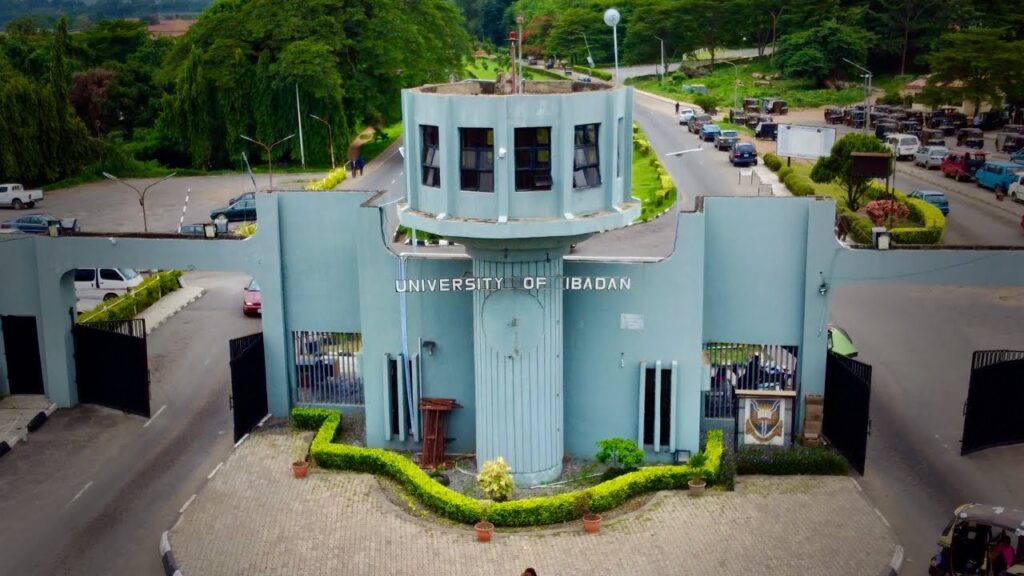
For instance, the University of Ibadan (UI), located in Ibadan, Oyo State, southwestern Nigeria, is the oldest, founded in 1948. It offers over 100 undergraduate and postgraduate programs in fields like medicine, engineering, humanities, and social sciences. UI’s research centers include those for infectious diseases and African studies, attracting international collaborations.
Ahmadu Bello University (ABU) in Zaria, Kaduna State, northern Nigeria, covers over 7,000 hectares and specializes in veterinary medicine, agriculture, and Islamic studies, aligning with the region’s cultural and economic needs. The University of Lagos (UNILAG), situated in Akoka, Lagos State, southwestern Nigeria, excels in business administration, mass communication, and marine sciences, benefiting from its urban coastal location.
Other examples include the Federal University of Technology, Akure (FUTA) in Akure, Ondo State, southwestern Nigeria, known for engineering, cybersecurity, and renewable energy programs. Bayero University Kano (BUK) in Kano State, northwestern Nigeria, offers strong programs in law, pharmacy, and Hausa studies.
Federal universities promote national unity by admitting students from all 36 states and the Federal Capital Territory (FCT), with quotas ensuring equitable access.
State Universities vs Federal Universities in Nigeria
What Are State Universities in Nigeria? An In-Depth Analysis
State universities, numbering 63 in 2025, are owned and funded by individual state governments to meet local educational and developmental priorities. These institutions often provide more accessible options for residents through indigene quotas.
Lagos State University (LASU), located in Ojo, Lagos State, southwestern Nigeria, offers programs in entrepreneurship, film and media studies, and public health, with strong ties to the entertainment and tech industries in Lagos. Rivers State University (RSU) in Port Harcourt, Rivers State, south-south Nigeria, focuses on petroleum engineering, environmental sciences, and maritime studies, reflecting the Niger Delta’s oil economy.
Ebonyi State University (EBSU) in Abakaliki, Ebonyi State, southeastern Nigeria, emphasizes agriculture, mining engineering, and health sciences, including research in crop improvement and community medicine. Delta State University (DELSU) in Abraka, Delta State, south-south Nigeria, is renowned for pharmacy, education, and fine arts, with facilities supporting creative industries.
Ekiti State University (EKSU) in Ado-Ekiti, Ekiti State, southwestern Nigeria, provides programs in geology, tourism management, and indigenous languages like Yoruba studies.
State universities frequently collaborate with local industries for internships, enhancing practical skills relevant to state economies.
Key Differences Between State and Federal Universities: A Comprehensive Comparison
To aid decision-making, here’s an accurate comparison based on 2025 data from NUC, JAMB, and rankings sources:
| Aspect | Federal Universities | State Universities |
|---|---|---|
| Ownership | Federal Government | State Governments |
| Number (2025) | 73 | 63 |
| Funding Sources | National budget, TETFund allocations (over ₦1 trillion cumulatively) | State budgets, tuition fees, private partnerships |
| Admission Quotas | 45% merit, 35% catchment areas, 20% educationally less developed states (ELDS) | 60-70% for indigenes, remainder on merit |
| Tuition Fees (Approx.) | ₦15,000 – ₦100,000 per year (subsidized) | ₦50,000 – ₦300,000 per year (lower for indigenes) |
| Research Emphasis | National and global issues (e.g., UI’s health research) | Regional challenges (e.g., RSU’s environmental studies) |
| Strike Frequency | Higher due to national ASUU disputes (e.g., ongoing 2025 warning strike) | Variable, often influenced by state-specific issues |
| Enrollment Scale | Larger (e.g., UNN: over 50,000 students) | Medium (e.g., LASU: around 35,000 students) |
| Specialized Offerings | Broad interdisciplinary (e.g., ABU’s veterinary programs) | Niche local (e.g., EBSU’s mining technology) |
Admission Processes: How JAMB Scores Influence Entry in 2025
Post-UTME, admissions rely on CAPS. For federal universities like the University of Nigeria, Nsukka (UNN) in Enugu State, southeastern Nigeria, the baseline is 150, but competitive courses like medicine require 250+. State universities, such as Olabisi Onabanjo University (OOU) in Ago-Iwoye, Ogun State, southwestern Nigeria, may accept 150-180 for arts, prioritizing indigenes.
In 2025, JAMB’s age policy mandates 16 years minimum, affecting thousands. Catchment policies in federal unis favor nearby states, while state unis reserve slots for locals.
Bold tip: Monitor university portals for post-UTME dates and requirements. For quota details, see our internal link to admission quotas guide.
[Insert Image: Flowchart illustrating the JAMB admission process, from UTME registration to CAPS acceptance]
Funding and Tuition Fees: Accurate Breakdown for 2025
Federal universities benefit from substantial TETFund support, keeping fees low. For example, the University of Benin (UNIBEN) in Benin City, Edo State, south-south Nigeria, charges around ₦70,000 for freshers, including ancillary fees. Overall, federal fees range from ₦15,000 to ₦100,000 annually, with recent adjustments due to economic factors.
State universities vary by state funding. Imo State University (IMSU) in Owerri, Imo State, southeastern Nigeria, fees are ₦70,000 for indigenes but up to ₦180,000 for non-indigenes. Cheaper options like Gombe State University (GSU) in Gombe State, northeastern Nigeria, charge ₦69,500 for locals.
“Economic pressures have led to fee hikes, but scholarships mitigate costs,” observes Dr. Manny of Manny Spark. Contact us at 08039822082 for detailed fee consultations.
Academic Quality, Accreditation, and 2025 Rankings
All universities are accredited by the NUC to maintain standards. In 2025 rankings from SCImago Institutions Rankings, top public unis include UI (1st among publics), UNN (3rd overall, 2nd public), and UNILAG (4th overall, 3rd public). Times Higher Education 2026 rankings (based on 2025 data) place UNILAG at =1, with Bayero University and UI tied at =3 among publics.
Here’s a table of top 10 public universities per EduRank 2025:
| Rank | University | Type | Key Strengths |
|---|---|---|---|
| 1 | University of Ibadan | Federal | Research, medicine, humanities |
| 2 | University of Lagos | Federal | Business, mass communication |
| 3 | University of Nigeria | Federal | Sciences, engineering |
| 4 | Obafemi Awolowo University | Federal | Law, pharmacy |
| 5 | Ahmadu Bello University | Federal | Veterinary, agriculture |
| 6 | University of Ilorin | Federal | Education, agriculture |
| 7 | University of Benin | Federal | Medicine, arts |
| 8 | University of Port Harcourt | Federal | Petroleum, environmental sciences |
| 9 | Federal Univ of Technology Akure | Federal | Engineering, tech innovation |
| 10 | Lagos State University | State | Entrepreneurship, media |
Campus Facilities and Infrastructure: What Students Can Expect
Federal universities often feature advanced infrastructure. The University of Ilorin (UNILORIN) in Ilorin, Kwara State, north-central Nigeria, has solar-powered facilities, digital libraries, and sports arenas, supported by TETFund.
State universities invest in relevant amenities. DELSU includes ICT centers and art studios, though rural locations may experience power issues.
Bold highlight: Federal institutions average better staff-student ratios (1:30) and research labs, per NUC data.
[Insert Image: Interior of a modern university library in Nigeria, with students using computers and bookshelves in the background]
Location and Accessibility: Mapping Universities Across Nigeria
Federal universities are distributed for national equity. FUTMINNA in Minna, Niger State, north-central Nigeria, is accessible via highways and focuses on mining and cybersecurity amid a semi-arid landscape.
State universities are state-bound. Kaduna State University (KASU) in Kaduna, northern Nigeria, is urban, offering social sciences in a culturally diverse setting.
By zone: Northwest has 17 federal (highest), Southwest 15 state (highest). Accessibility varies—airports near UNIPORT (federal) in Port Harcourt, roads for BSU (state) in Makurdi, Benue State, north-central Nigeria.
Consider environments: Tropical in southern unis like UNICAL in Calabar, Cross River State, south-south Nigeria, ideal for biodiversity studies.
Extracurricular Activities and Student Life: Enriching Experiences
Federal universities like Obafemi Awolowo University (OAU) in Ile-Ife, Osun State, southwestern Nigeria, host national festivals, debate clubs, and student unions promoting activism.
State universities emphasize community. EKSU features cultural troupes and sports leagues, fostering local heritage.
Italics quote: “Extracurriculars enhance holistic development,” from a UNILAG student leader.
Learn more in our internal link to campus life essentials.
Career Prospects and Alumni Networks: Long-Term Outcomes
Federal graduates often secure national roles. UNILAG alumni dominate banking and media, with robust networks.
State alumni excel locally—LASU grads in Lagos government and entertainment.
Per NUC, employment rates average 70% for federal, 65% for state within a year.
Bold advice: Utilize internships; federal link to national agencies, state to regional firms.
Challenges Faced by Federal Universities in 2025
ASUU’s two-week warning strike starting October 13, 2025, over pay and funding, disrupts calendars. Underfunding (only 5-7% of national budget for education) leads to overcrowding and infrastructure decay.
Political interference affects leadership, though TETFund provides some relief.
Challenges Faced by State Universities in 2025
Inconsistent state funding causes salary delays and poor facilities in rural areas. While less prone to national strikes, local disputes occur.
Rapid expansion risks quality, with NUC monitoring accreditation.
Expert Quotes and Insights on Choosing the Right Path
JAMB Registrar Prof. Ishaq Oloyede states, “Choose institutions based on quotas and preferences.” An ASUU official notes, “Federal provide national exposure, but strikes are a reality.”
Dr. Manny of Manny Spark adds, “Prioritize affordability and location—contact us at 09051720414 for personalized insights.”
Case Studies: Success Stories from Graduates
Chimamanda Ngozi Adichie, UNN (federal) alumna, attributes her literary success to robust humanities programs.
Funke Akindele, LASU (state) graduate, leveraged performing arts for her Nollywood career.
A FUTA engineer won a global tech award; an EBSU agronomist developed sustainable farming techniques.
[Insert Image: Portraits of notable Nigerian alumni, including authors and entertainers]
Key Takeaways for Aspiring Students Post-JAMB
- Align with Scores: 300+ for top federal; 150-200 for state flexibility.
- Factor Costs: Federal for subsidies; state for indigene discounts.
- Location Impact: Federal for diversity; state for proximity.
- Quality Metrics: Federal lead rankings; state offer niche expertise.
- Address Challenges: Plan for strikes; apply for scholarships.
- Seek Guidance: Consult Manny Spark via 08039822082 for accurate advice.
Related posts:



 Message Dr. MANNY on WhatsApp
QUICK TRANSFERS, Pay into this Account:
1481900827 | ACCESS BANK | EMMANUEL OLUWASEUN OTOBOR
Once your payment is successful kindly send the “PAST QUESTION” you need, your “ACCOUNT NAME” and “EMAIL ADDRESS” to 08039822082. or info@mannyspark.com
